A Natural Solution for California's Herds: African Catfish Peptides

California's cattle producers and agricultural communities are all too familiar with the rising challenge of antibiotic resistance, making common bacterial infections harder to treat in livestock. But imagine a future where we could tackle these infections with a natural, powerful alternative. Our research points to just that: antimicrobial peptides (AMPs) found in African catfish.

We're really excited about these peptides because African catfish thrive in pathogen-rich freshwater, naturally producing these robust immune compounds in their skin mucus as a defense. This natural origin makes them highly appealing alternatives to synthetic drugs.

Predicted Safety and Potent Action

One of the most compelling aspects of these AMPs is their predicted safety for mammals. Our initial computer analyses suggest that various catfish AMPs are generally recognized as safe (GRAS). We predict they'll be absorbed in the human intestine without causing liver, brain, or heart toxicity. Furthermore, lab tests on a promising peptide, NACAP-II, confirmed it was non-hemolytic, meaning it didn't damage rabbit red blood cells—a strong indicator of its potential safety for mammalian cells.

Beyond safety, these peptides demonstrate effectiveness against problematic bacteria. One study revealed NACAP-II's strong activity against Extended-Spectrum Beta-Lactamase (ESBL)-producing Escherichia coli—a critical concern for both animal and human health due to its resistance to many common antibiotics. Another peptide, ACAP-IV, also showed antibacterial activity against E. coli and Staphylococcus aureus. We believe these AMPs work by directly disrupting bacterial cell membranes, a mechanism that makes it harder for bacteria to develop resistance compared to how they resist traditional antibiotics.


UC Master Gardeners of Placer County: Article

Gardening in a Changing Climate

December 4, 2025
By Peggy Beltramo, UC Master Gardener of Placer CountyFrom The Curious Gardener, Spring 2021 We have always had gardeners who marked the seasons and the weather where they gardened. From a historical perspective, Thomas Jefferson was an early climate record keeper. He tracked precipitation and…
View Article
UC Master Gardeners of Placer County: Article

Garden Design: Where Do I Start?

December 4, 2025
By Annette Wyrick, UC Master Gardener of Placer CountyFrom The Curious Gardener, Summer 2021               During the past year, we have been at home more and this has given us an opportunity to look at and use our gardens throughout the seasons. While the garden has…
View Article
UC Master Gardeners of Placer County: Article

Definitions of Light Requirements

December 4, 2025
By Trish Grenfell, UC Master Gardeners of Placer CountyQ: One of the characteristics I try to consider when purchasing a plant is its light requirements but the terms used to describe the necessary light can be confusing. In particular, what is the difference between “part shade” and “part sun” or do…
View Article
Primary Image
glossy green leafed plant
Under the Solano Sun: Article

Goldfish Plant

December 4, 2025
By Jennifer M Baumbach
Blog article by Michelle SchlegelLast Saturday, I was walking through a large greenhouse filled with unusual and rare plants. These greenhouse plants were protected from direct sun, extreme temperatures, and the environment was quite humid. Despite the lack of direct sunlight, the cacti and succulents were…
View Article
UC Master Gardeners of Placer County: Article

Site Conditions of a Shade Garden

December 4, 2025
Article and photos by Annette Wyrick, UC Master Gardeners of Placer CountyFrom The Curious Gardener, Winter 2020Most gardeners have one trouble spot in the garden, and it is almost always in the shade. You may have tried planting different plants, but they just do not thrive. Let’s tackle these tricky garden…
View Article
Event Primary Image
apples
UC Cooperative Extension Sonoma County: Event

UCCE Apple Webinar

Event Date
Jan 28, 2026

1:00-1:30 Fungal Disease Identification & Organic Managementwith Akif Eskalen, PhD (UCCE) 1:30-2:00 Fire Blight Identification & Organic Managementwith Jim Adaskaveg, PhD (UC Riverside) 2:00-2:30 Codling Moth Identification & Organic Managementwith Jhalendra Rijal, PhD (UCCE) 2:30…
UC Cooperative Extension Sonoma County
View Event
Event Primary Image
Mandarins
UC Cooperative Extension Sonoma County: Event

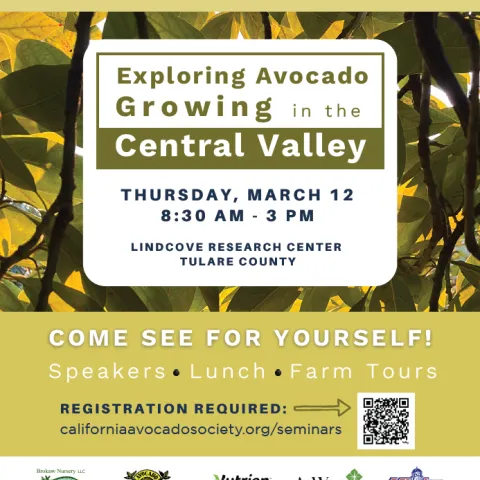
UCCE Citrus & Avocado Webinar

Event Date
Jan 14, 2026

This is a free educational webinar! We will cover key considerations for commercial production, scaling up, sustainable management practices, & economic viability. with Ben Faber (UCCE Ventura & Santa Barbara),Rebecca Bozzelli & Ross Cannard (7 Moons Farm, Sonoma),Robert Abbott (Abbott Ranch…
UC Cooperative Extension Sonoma County
View Event
Event Primary Image
peach tree
UC Cooperative Extension Sonoma County: Event

UCCE Peach Webinar

Event Date
Jan 6, 2026

This is a free educational webinar! We will cover peach tree basics, rootstocks & scions, site selection, pruning & thinning, sunburn & frost protection, nutrient & water management, & IPM for key pests.
UC Cooperative Extension Sonoma County
View Event
UC Master Gardeners of Placer County: Article

Choosing Climate Adapted Plants: USDA Hardiness Map Revised

December 4, 2025
By Lynn Lorenson, UC Master Gardener of Nevada CountyFrom The Curious Gardener, Spring 2012Forget those blankets, plastic sheets, and pine-bough teepees. Learn to love where you live. Choose plants to fit the climate. You will be rewarded with a healthy, beautiful landscape. References are found in…
View Article
UC Master Gardeners of Placer County: Article

Mysterious Mistletoe

December 4, 2025
Laurie Meyerpeter, UC Master Gardener of Placer CountyFrom The Curious Gardener, Winter 2012Mistletoe. It’s weird, it’s poisonous, it’s a parasite, and yet we love mistletoe so much we manufacture plastic likenesses of the plant to hang it in our homes every winter! Is that weird or…
View Article