A Natural Solution for California's Herds: African Catfish Peptides

California's cattle producers and agricultural communities are all too familiar with the rising challenge of antibiotic resistance, making common bacterial infections harder to treat in livestock. But imagine a future where we could tackle these infections with a natural, powerful alternative. Our research points to just that: antimicrobial peptides (AMPs) found in African catfish.

We're really excited about these peptides because African catfish thrive in pathogen-rich freshwater, naturally producing these robust immune compounds in their skin mucus as a defense. This natural origin makes them highly appealing alternatives to synthetic drugs.

Predicted Safety and Potent Action

One of the most compelling aspects of these AMPs is their predicted safety for mammals. Our initial computer analyses suggest that various catfish AMPs are generally recognized as safe (GRAS). We predict they'll be absorbed in the human intestine without causing liver, brain, or heart toxicity. Furthermore, lab tests on a promising peptide, NACAP-II, confirmed it was non-hemolytic, meaning it didn't damage rabbit red blood cells—a strong indicator of its potential safety for mammalian cells.

Beyond safety, these peptides demonstrate effectiveness against problematic bacteria. One study revealed NACAP-II's strong activity against Extended-Spectrum Beta-Lactamase (ESBL)-producing Escherichia coli—a critical concern for both animal and human health due to its resistance to many common antibiotics. Another peptide, ACAP-IV, also showed antibacterial activity against E. coli and Staphylococcus aureus. We believe these AMPs work by directly disrupting bacterial cell membranes, a mechanism that makes it harder for bacteria to develop resistance compared to how they resist traditional antibiotics.
UC Cooperative Extension Imperial County: Article

Advances in Irrigation Tools & Technologies Workshop

February 18, 2025
Join us for the upcoming Advances in Irrigation Tools and Technologies Workshop Date: February 27, 2025 Time: 8:00am - 2:30pm (PST) Location: Barbara Worth Country Club, 2050 Country Club Dr.
View Article
UC Master Gardener Program of Riverside County: Article

Garden Views, 2025.01 - Jan/Feb 2025

February 18, 2025
In This Issue: Update for the Master Gardener Riverside County (MGRC) Organization Development Project; Book Review, Dirt to Soil from Patti Reed; No Child Left Inside by Kim Coons-Leonard; Celebrate our Master Gardener Volunteer Hours; Peanut Patch Harvest from Burt Boss; Update on Trees for Tomorr...
View Article
Primary Image
UC Davis alumnus (2024) Allen Chew recently created a logo for the Bio Boot Camps that incorporates the yellow-billed magpie, Pica nuttalli, the symbol of MWFB, with the California dogface butterfly, Zerene eurydice, the symbol of the Bohart Museum.
Bug Squad: Article

UC Davis Bio Boot Camps: Where Science Matters

February 17, 2025
By Kathy Keatley Garvey
The UC Davis Bio Boot camps: Where science matters. The deadline for science-driven teens to apply for the 2025 UC Davis Bio Boot Camps is Saturday, March 1.
View Article
Primary Image
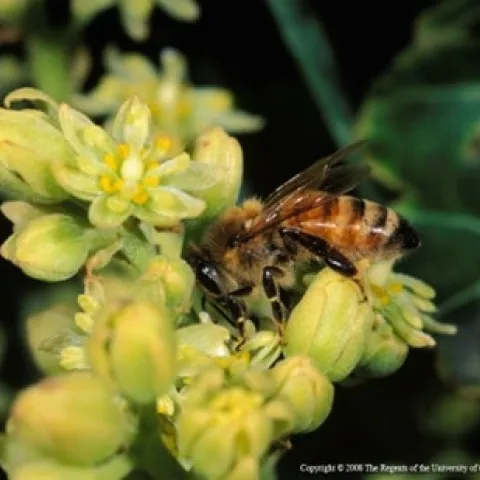
Photo of a bee on a flower
HOrT COCO-UC Master Gardener Program of Contra Costa: Article

A New Law Concerning Neonicotinoids

February 17, 2025
By Help Desk Team
On January 1 of this year a new law went into effect in California, greatly limiting the use of a pesticide class known as neonicotinoids. Originally developed in the 1980's, these pesticides became the most widely used class of insecticides in the world.
View Article
Primary Image
Anytime Bob's in the garden is a good time to chat about roses.
Spill the Beans: Article

March is Rose Madness Time

February 17, 2025
Roses have been around quite a while, first debuting in fossil records dating back 60-70 million years. Even Confucius loved and wrote about roses. Of more historical inerest, Alexander the Great is credited with introducing cultivated roses to the rest of Europe.
View Article

Design your own map of the UC ANR system - without GIS!

February 16, 2025
By Andy Lyons
Maps created with the new PowerPoint template from IGIS Have you ever wanted to include a map of the ANR network in your PowerPoint presentation or proposal, but just couldn't find the right one? Or maybe you have some map clipart that is pretty close, but want to tweak the colors or labels.
View Article