A Natural Solution for California's Herds: African Catfish Peptides

California's cattle producers and agricultural communities are all too familiar with the rising challenge of antibiotic resistance, making common bacterial infections harder to treat in livestock. But imagine a future where we could tackle these infections with a natural, powerful alternative. Our research points to just that: antimicrobial peptides (AMPs) found in African catfish.

We're really excited about these peptides because African catfish thrive in pathogen-rich freshwater, naturally producing these robust immune compounds in their skin mucus as a defense. This natural origin makes them highly appealing alternatives to synthetic drugs.

Predicted Safety and Potent Action

One of the most compelling aspects of these AMPs is their predicted safety for mammals. Our initial computer analyses suggest that various catfish AMPs are generally recognized as safe (GRAS). We predict they'll be absorbed in the human intestine without causing liver, brain, or heart toxicity. Furthermore, lab tests on a promising peptide, NACAP-II, confirmed it was non-hemolytic, meaning it didn't damage rabbit red blood cells—a strong indicator of its potential safety for mammalian cells.

Beyond safety, these peptides demonstrate effectiveness against problematic bacteria. One study revealed NACAP-II's strong activity against Extended-Spectrum Beta-Lactamase (ESBL)-producing Escherichia coli—a critical concern for both animal and human health due to its resistance to many common antibiotics. Another peptide, ACAP-IV, also showed antibacterial activity against E. coli and Staphylococcus aureus. We believe these AMPs work by directly disrupting bacterial cell membranes, a mechanism that makes it harder for bacteria to develop resistance compared to how they resist traditional antibiotics.

Primary Image
Catchweed bedstraw. photo by Jennifer Baumbach
The Savvy Sage: Article

Weed Management

March 26, 2024
The warming weather of spring heralds the sprouting of the garden. And though you may have meticulously planned your vegetable and flower garden, not everything that sprouts will be welcomed. Thus, it is helpful to be able to identify and manage some common weeds found in the home garden.
View Article
Primary Image
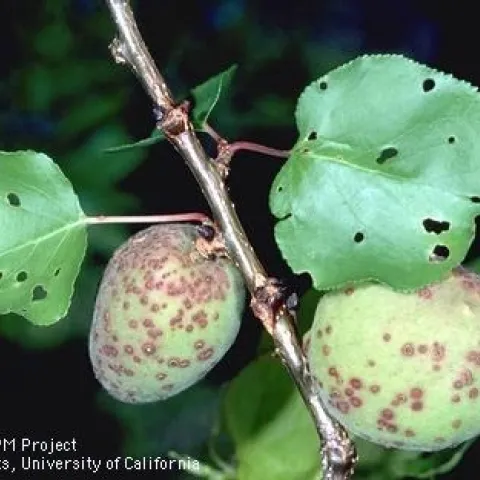
Leaves with round holes in them and green fruit with red spots on them.
Pests in the Urban Landscape: Article

Wet Weather Tree Diseases

March 26, 2024
By Belinda Messenger-Sikes
After years of drought, we welcome rain in California. But we also recognize that rain can help spread a number of plant diseases. Rain and wind can splash bacteria and fungi from infected leaves, branches, and blossoms to uninfected parts of the tree.
View Article
Primary Image
IMG 5155
UC Small Grains Blog: Article

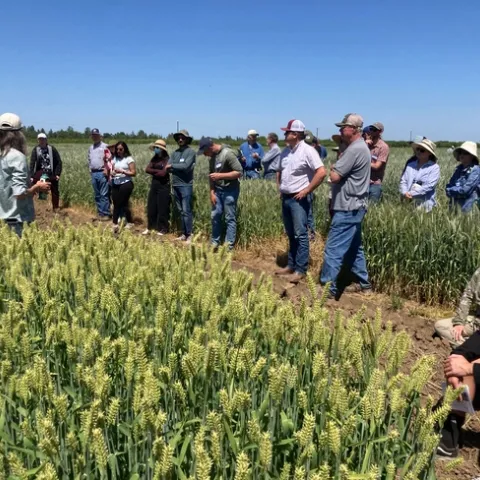
Save the date! 5/9/24 field day at UC Davis

March 26, 2024
By Mark E Lundy
Please mark your calendars for a May 9th, 2024 field day at the UC Davis Department of Plant Sciences Field Facility. Program will start in the morning and include lunch with presentations on small grain variety development and agronomic management of small grain crops.
View Article
Primary Image
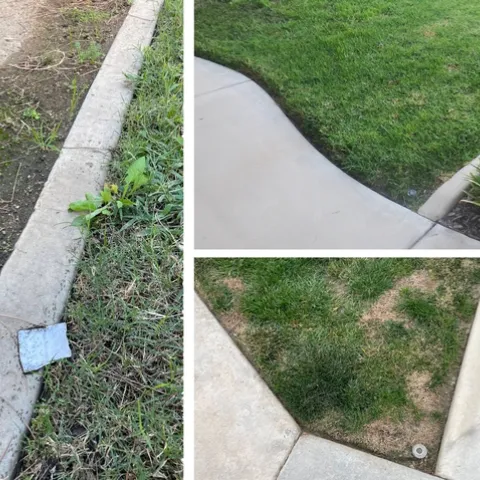
Figure 4. Examples of lawn-concrete interface in residential settings. The picture on the left shows one of the lawn-concrete sites tested in the experiment. Photos by Dong-Hwan Choe.
Pests in the Urban Landscape: Article

Strategic Placement of Ant Baits

March 26, 2024
By Dong Hwan Choe
Ants are one of the major seasonal pests around structures in California's urban environments. Pest management companies throughout the state report that ants are responsible for a significant proportion of their pest control services.
View Article
Primary Image
IMG 0685
UC Small Grains Blog: Article

4/18/2024 Field Day: Cool Season Cropping Systems in the San Joaquin Valley

March 26, 2024
By Nicholas E Clark, Mark E Lundy
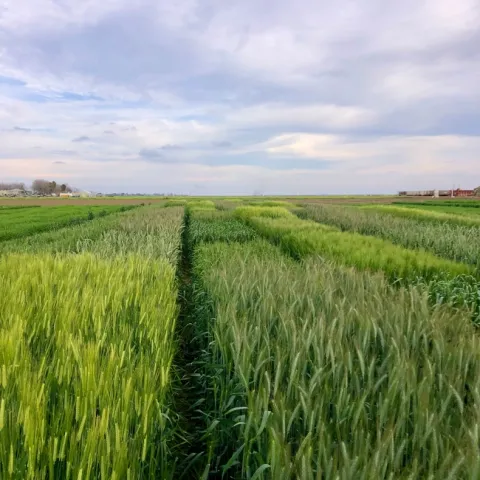
UC COOPERATIVE EXTENSION FIELD DAY Cool Season Cropping Systems in the San Joaquin Valley 4/18/2024 9:45 AM 12:30 PM Location: Westside Research and Extension Center 17353 W Oakland Ave, Five Points, CA 93624 CEU (available): CCA: 0.5 SWM, 0.5 IPM, & 1.0 CM CDFA INMP: 0.5 N Mgmt. & 1.0 Irrig.
View Article
Primary Image
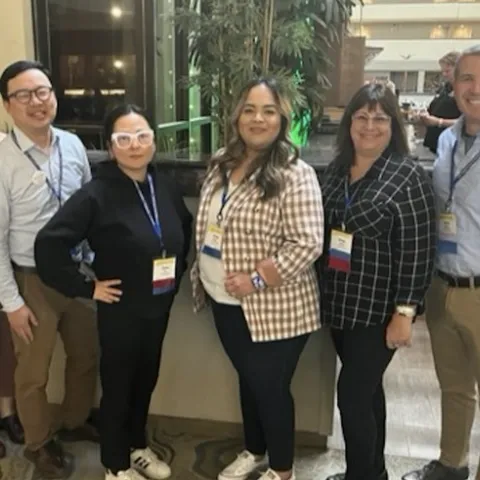
Current SAC members Monica Drazba, Mike Hsu, Dohee Kim, Rosa Vargas, Shirley Salado and Scott Brayton.
ANR Employee News: Article

Staff Assembly Council is accepting applications for FY 2024-25

March 26, 2024
By Pamela S Kan-Rice
Make a difference for our UC ANR staff by joining Staff Assembly Council! Contribute to policies, programs and processes that can enhance the staff experience at ANR. The deadline to apply is Monday, April 29, at 5 p.m.. To learn more about Staff Assembly Council, visit: https://staffassembly.ucanr.
View Article
Primary Image
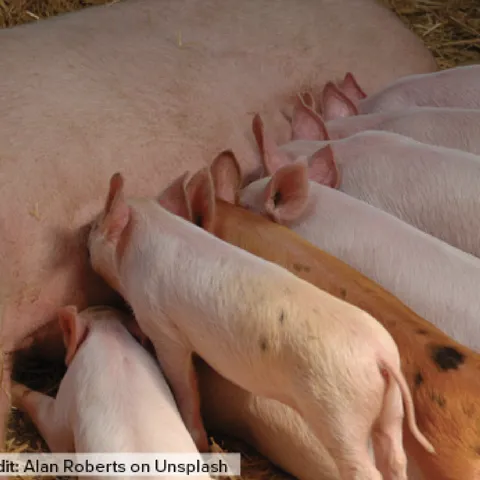
7 piglets nurse on sow
Food Blog: Article

Pork prices may reflect uncertainty around Prop 12

March 26, 2024
By Pamela S Kan-Rice
En espaol Since being passed by California voters in 2018, Proposition 12, a farm animal welfare law, has faced a series of legal challenges that have led to uncertainty and delays in the implementation and enforcement of its requirements for the treatment of breeding pigs.
View Article
Primary Image
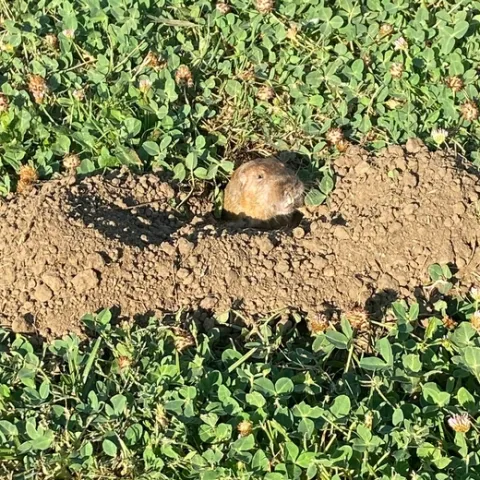
A gopher poking it's head out of a mound of dirt in a lawn.
Pests in the Urban Landscape: Article

Managing Pocket Gophers

March 26, 2024
By Niamh M Quinn, Roger A Baldwin, Carolyn Whitesell
Pocket gophers can cause significant damage to valuable turf, girdle trees, and chew irrigation lines. Their mounds can create tripping hazards and lead to erosion concerns when found on slopes.
View Article