A Natural Solution for California's Herds: African Catfish Peptides

California's cattle producers and agricultural communities are all too familiar with the rising challenge of antibiotic resistance, making common bacterial infections harder to treat in livestock. But imagine a future where we could tackle these infections with a natural, powerful alternative. Our research points to just that: antimicrobial peptides (AMPs) found in African catfish.

We're really excited about these peptides because African catfish thrive in pathogen-rich freshwater, naturally producing these robust immune compounds in their skin mucus as a defense. This natural origin makes them highly appealing alternatives to synthetic drugs.

Predicted Safety and Potent Action

One of the most compelling aspects of these AMPs is their predicted safety for mammals. Our initial computer analyses suggest that various catfish AMPs are generally recognized as safe (GRAS). We predict they'll be absorbed in the human intestine without causing liver, brain, or heart toxicity. Furthermore, lab tests on a promising peptide, NACAP-II, confirmed it was non-hemolytic, meaning it didn't damage rabbit red blood cells—a strong indicator of its potential safety for mammalian cells.

Beyond safety, these peptides demonstrate effectiveness against problematic bacteria. One study revealed NACAP-II's strong activity against Extended-Spectrum Beta-Lactamase (ESBL)-producing Escherichia coli—a critical concern for both animal and human health due to its resistance to many common antibiotics. Another peptide, ACAP-IV, also showed antibacterial activity against E. coli and Staphylococcus aureus. We believe these AMPs work by directly disrupting bacterial cell membranes, a mechanism that makes it harder for bacteria to develop resistance compared to how they resist traditional antibiotics.

Primary Image
photos by Erin Mahaney

California Fuchsia

March 26, 2024
A native groundcover with brilliant, red, trumpet-shaped flowers? Yes, please! When we re-landscaped our backyard a few years ago, the landscaper suggested a California fuchsia, Epilobium 'Everett's Choice,' as a groundcover in a few locations.
View Article
Primary Image
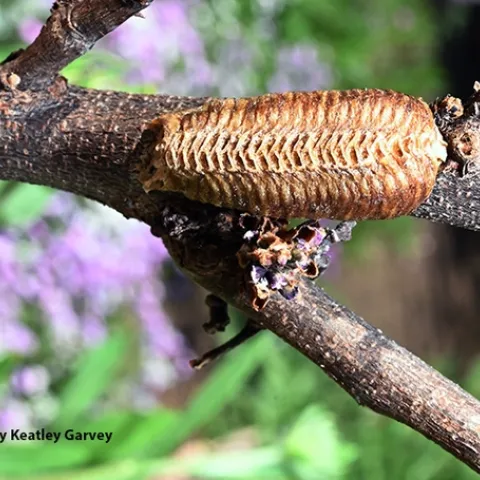
An egg case or ootheca of a praying mantis. Mama, a Stagmomantis limbata, deposited it on a redbud tree.(Photo by Kathy Keatley Garvey)
Bug Squad: Article

Ootheca! Ootheca! Ootheca!

March 26, 2024
By Kathy Keatley Garvey
If you've been pruning bushes or trees, check to see if a praying mantis egg case (ootheca) is attached to a limb. If you do, you're in luck! A mantis deposits her egg case in late summer or fall, and usually on twigs, stems, a wooden stake or fence slat, but sometimes even on a clothespin.
View Article
Primary Image
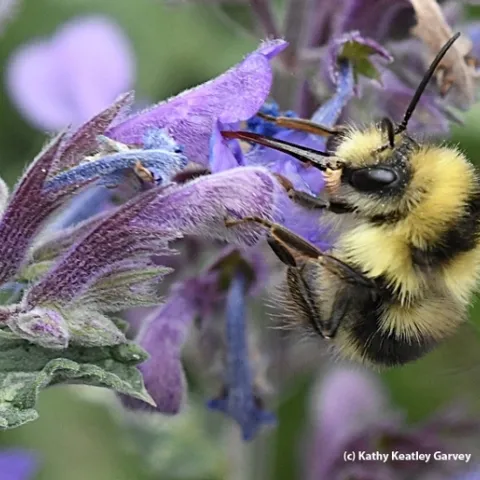
Yellow and black bumble bee on a purple flower.
The Stanislaus Sprout: Article

Precious Pollinators

March 25, 2024
By Anne E Schellman
Do all bees live in hives? If asked, many people would say yes. You might be surprised to learn only honeybees and bumblebees are social and live in hives. The rest are solitary, with seventy percent living in the ground! Bees are pollinators.
View Article
Kern County: Article

Kern UCCE/DWR Weekly Crop Water Use Report 03-25-2024

March 25, 2024
Please see below link to access "How To Use Weekly Crop Water Use (ET) Reports to Assist Farm Water Management" How to Use Weekly Crop Water Use Report Please see below link to access "Weekly ET Report 03-25-2024" ET Report 03-25-2024 Please see disclaimer link below: University of California Divisi...
View Article
Primary Image
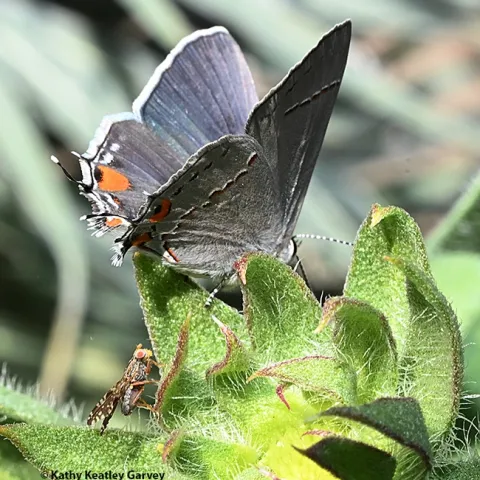
A fruit fly, Neotephritis finalis, peers up at a gray hairstreak butterfly, Strymon melinus, in a bed of Coreopsis. (Photo by Kathy Keatley Garvey)
Bug Squad: Article

Presenting: A Butterfly and a Fly

March 25, 2024
By Kathy Keatley Garvey
A gray butterfly and a fruit fly... Each has "fly" in its name but one is a member of the order Lepidoptera and the other, order Diptera. Etymology does not agree with entomology.
View Article
Primary Image
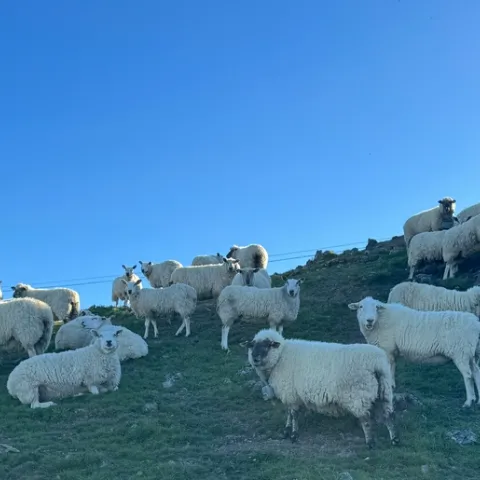
Photo Mar 17 2024, 9 12 27 AM
Ranching in the Sierra Foothills: Article

Spring 2024 Workshops!

March 25, 2024
By Daniel K Macon
We have several outstanding workshops coming up in the next three weeks! Contact me at dmacon@ucanr.edu or (530) 889-7385 for more information! Livestock Health & Wildfire Webinar (Thursday, March 28 - 6:00pm-7:30pm) - Virtual: Join Extension Veterinarians Dr. Gaby Maier, Dr. Rosie Busch, and Dr.
View Article