A Natural Solution for California's Herds: African Catfish Peptides

California's cattle producers and agricultural communities are all too familiar with the rising challenge of antibiotic resistance, making common bacterial infections harder to treat in livestock. But imagine a future where we could tackle these infections with a natural, powerful alternative. Our research points to just that: antimicrobial peptides (AMPs) found in African catfish.

We're really excited about these peptides because African catfish thrive in pathogen-rich freshwater, naturally producing these robust immune compounds in their skin mucus as a defense. This natural origin makes them highly appealing alternatives to synthetic drugs.

Predicted Safety and Potent Action

One of the most compelling aspects of these AMPs is their predicted safety for mammals. Our initial computer analyses suggest that various catfish AMPs are generally recognized as safe (GRAS). We predict they'll be absorbed in the human intestine without causing liver, brain, or heart toxicity. Furthermore, lab tests on a promising peptide, NACAP-II, confirmed it was non-hemolytic, meaning it didn't damage rabbit red blood cells—a strong indicator of its potential safety for mammalian cells.

Beyond safety, these peptides demonstrate effectiveness against problematic bacteria. One study revealed NACAP-II's strong activity against Extended-Spectrum Beta-Lactamase (ESBL)-producing Escherichia coli—a critical concern for both animal and human health due to its resistance to many common antibiotics. Another peptide, ACAP-IV, also showed antibacterial activity against E. coli and Staphylococcus aureus. We believe these AMPs work by directly disrupting bacterial cell membranes, a mechanism that makes it harder for bacteria to develop resistance compared to how they resist traditional antibiotics.
UC Cooperative Extension San Diego County : Article

Issue 001

July 6, 2022
Summer, July 2022, Issue 001...
View Article
ANR Contracts & Grants Updates: Article

California Forests: Targeted Headwater Resilience Implementation and Monitoring Grant Program, 2022 Request for Proposals due July 21st

July 6, 2022
By Kathleen P Nolan
Dear Colleagues, The National Fish and Wildlife Foundation, partnering with the US Forest Service, US Fish and Wildlife Service, Natural Resources Conservation Service, and the Bezos Earth Fund, has launched the California Forests: Targeted Headwater Resilience Implementation and Monitoring 2022 Req...
View Article
UC Cooperative Extension Imperial County: Article

July 2022

July 6, 2022
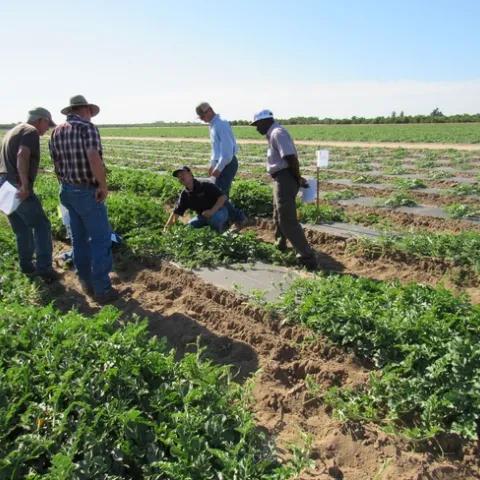
POST-HARVEST NEMATICIDE TREATMENT AND TILLAGE SHOWED PROMISE IN REDUCING THE INITIAL ROOT-KNOT NEMATODE POPULATION ON BELL PEPPER FINDINGS OF RECENT IRRIGATION RESEARCH IN THE DESERT SOUTHWEST CAN ASSIST ALFALFA GROWERS IN THE ERA OF WATER CONSTRAINTS JUNE 2022 CATTLECAL NEWSLETTER UPDATE IMPERIAL V...
View Article
Primary Image
Denise
The Stanislaus Sprout: Article

What the Master Gardener Program Has Taught Me

July 6, 2022
By Anne E Schellman
One of my favorite things about being a Master Gardener is that I never stop learning about gardens, plants, and insects. Talking to 2022 Stanislaus County Master Gardener program students, who were wrapping up their 18-week course, caused me to reflect on what I have learned.
View Article
Primary Image
These scientists will participate in the international symposium, "The Frontiers in Chemical Ecology."
Bug Squad: Article

Congrats to All of the Rising Stars, 'Frontiers in Chemical Ecology'

July 5, 2022
By Kathy Keatley Garvey
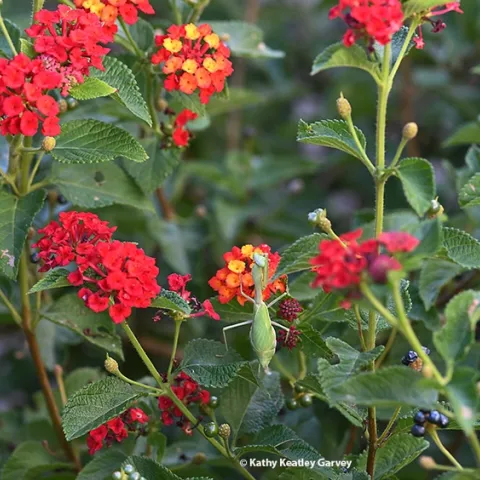
(Editor's Note: The public can sign up for the free- access webinar, sponsored by Bedoukian Research, Inc., here: https://bit.ly/3PeXJhu) If you're a postdoctoral researcher, it's not every day you get to present your work at an international symposium.
View Article