A Natural Solution for California's Herds: African Catfish Peptides

California's cattle producers and agricultural communities are all too familiar with the rising challenge of antibiotic resistance, making common bacterial infections harder to treat in livestock. But imagine a future where we could tackle these infections with a natural, powerful alternative. Our research points to just that: antimicrobial peptides (AMPs) found in African catfish.

We're really excited about these peptides because African catfish thrive in pathogen-rich freshwater, naturally producing these robust immune compounds in their skin mucus as a defense. This natural origin makes them highly appealing alternatives to synthetic drugs.

Predicted Safety and Potent Action

One of the most compelling aspects of these AMPs is their predicted safety for mammals. Our initial computer analyses suggest that various catfish AMPs are generally recognized as safe (GRAS). We predict they'll be absorbed in the human intestine without causing liver, brain, or heart toxicity. Furthermore, lab tests on a promising peptide, NACAP-II, confirmed it was non-hemolytic, meaning it didn't damage rabbit red blood cells—a strong indicator of its potential safety for mammalian cells.

Beyond safety, these peptides demonstrate effectiveness against problematic bacteria. One study revealed NACAP-II's strong activity against Extended-Spectrum Beta-Lactamase (ESBL)-producing Escherichia coli—a critical concern for both animal and human health due to its resistance to many common antibiotics. Another peptide, ACAP-IV, also showed antibacterial activity against E. coli and Staphylococcus aureus. We believe these AMPs work by directly disrupting bacterial cell membranes, a mechanism that makes it harder for bacteria to develop resistance compared to how they resist traditional antibiotics.
Primary Image
Three-spike goosegrass is among the most challenging weeds in orchards. (Photo courtesy of Brad Hanson/UC Davis)
UC Weed Science (weed control, management, ecology, and minutia): Article

Adviser helps growers tackle orchard weed management

March 18, 2021
By Gale Perez
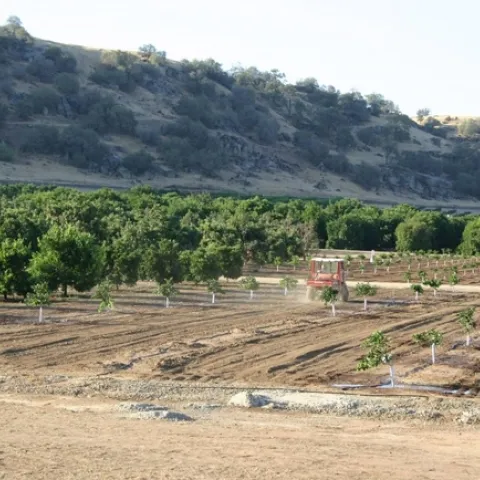
From the Western Farm Press March 17, 2021 By Lee Allen ********** Brad Hanson gets down and dirty in his line of work as a weed specialist with the University of California, Davis Plant Sciences Department, typically conducting field trials in a 400-mile swath of the Central Valley.
View Article
Primary Image
Icy weekend
ANR Adventures: Article

Winter wind down

March 17, 2021
By Wendy Powers
And the UC ANR nominees for the WEDA Award of Excellence are: Loren Oki, Karrie Reid, Darren Haver, and Jared Sisneroz for UC Landscape Plant Irrigation Trials Program and Deanne Meyer, Betsy Karle, Jennifer Heguy, David Lewis, Jeffery Stackhouse, Nicholas Clark, Randi Black, Daniela Bruno, and D.
View Article
UC Cooperative Extension - Madera County: Article

New In A Nutshell Issue

March 17, 2021
Attached is the 2021 March In A Nutshell. This issue includes information on walnut budbreak and bloom, Phytophthora, an orchard recycling how-to guide, nitrogen and zinc fertilization, and information on upcoming webinars.
View Article
Primary Image
photos by Michelle Davis
Under the Solano Sun: Article

Forest Bath

March 17, 2021
Stop for just a moment and think about where you are reading this blog.
View Article
Article

UC ANR forms employee resource groups

March 17, 2021
By Pamela S Kan-Rice
UC ANR forms employee resource groups Dear Colleagues, I'm excited to announce my support of three new employee resource groups that are forming this month to connect and promote relationships among employees and to foster inclusive work environments across UC ANR.
View Article