A Natural Solution for California's Herds: African Catfish Peptides

California's cattle producers and agricultural communities are all too familiar with the rising challenge of antibiotic resistance, making common bacterial infections harder to treat in livestock. But imagine a future where we could tackle these infections with a natural, powerful alternative. Our research points to just that: antimicrobial peptides (AMPs) found in African catfish.

We're really excited about these peptides because African catfish thrive in pathogen-rich freshwater, naturally producing these robust immune compounds in their skin mucus as a defense. This natural origin makes them highly appealing alternatives to synthetic drugs.

Predicted Safety and Potent Action

One of the most compelling aspects of these AMPs is their predicted safety for mammals. Our initial computer analyses suggest that various catfish AMPs are generally recognized as safe (GRAS). We predict they'll be absorbed in the human intestine without causing liver, brain, or heart toxicity. Furthermore, lab tests on a promising peptide, NACAP-II, confirmed it was non-hemolytic, meaning it didn't damage rabbit red blood cells—a strong indicator of its potential safety for mammalian cells.

Beyond safety, these peptides demonstrate effectiveness against problematic bacteria. One study revealed NACAP-II's strong activity against Extended-Spectrum Beta-Lactamase (ESBL)-producing Escherichia coli—a critical concern for both animal and human health due to its resistance to many common antibiotics. Another peptide, ACAP-IV, also showed antibacterial activity against E. coli and Staphylococcus aureus. We believe these AMPs work by directly disrupting bacterial cell membranes, a mechanism that makes it harder for bacteria to develop resistance compared to how they resist traditional antibiotics.
Central Sierra Livestock & Natural Resources: Article

Prescribed Fire for Working Landscapes Workshop and Field Days

March 17, 2021
Good morning! UCCE Placer-Nevada and Central Sierra, along with the Placer Resource Conservation District, are hosting a workshop and field days on using prescribed fire on working rangelands and forestlands, on March 30 and 31 (with live-fire field days to be scheduled in April, weather permitting)...
View Article
Primary Image
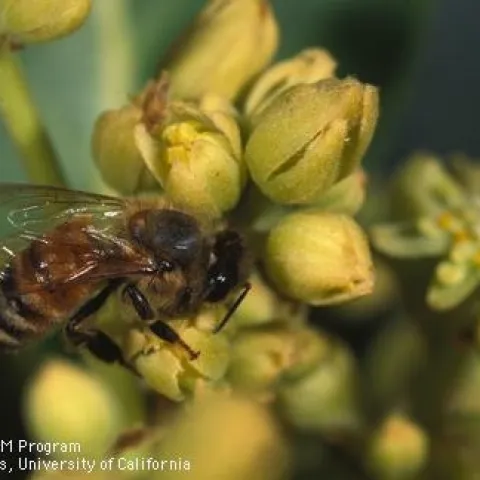
scaffolded avocado
Topics in Subtropics: Article

Heat, Wind, Freeze, Wind, Repeat

March 17, 2021
By Ben A Faber
And what do you get, a defoliated tree. And a defolated tree has no way of moving water through its system. The leaves are not there to transpire and create a flow of water through the tree. When hot day comes and it does not need to be much hotter than 80 deg the bark will heat up and burn.
View Article
Primary Image
The yellow fever mosquito, Aedes aegypti, has been detected in 17 California counties since 2013. (CDC Photo)
Bug Squad: Article

Targeting the Yellow Fever Mosquito in California

March 16, 2021
By Kathy Keatley Garvey
If you've been following the startling spread of the yellow fever mosquito, Aedes aegypti, into California--it's been detected as far north as Shasta County since 2013--then you'll want to read about the innovative research underway by a team of UC Davis scientists led by medical entomologist-geneti...
View Article
Primary Image
Aedes aegypti, the yellow fever mosquito, has been detected in 17 California counties since 2017. (CDC Photo)
Entomology & Nematology News: Article

UC Davis Researchers Examine Pyrethroid Resistance in Spread of Aedes aegypti

March 16, 2021
By Kathy Keatley Garvey
One reason for the successful spread of the yellow fever mosquito, Aedes aegypti, to at least 17 California counties since 2013--from the Mexican border to Shasta County--may be linked to its resistance to pyrethroids, according to newly published UC Davis research examining genetic markers of resis...
View Article
Primary Image
Chaff lining
UC Weed Science (weed control, management, ecology, and minutia): Article

Harvest Weed Seed Control in California: Potential and Limitations

March 16, 2021
Concerns about a growing resistance to herbicides In Mediterranean or arid climates, particularly in areas with marginal soils, crop rotations are often limited to a narrow range of hay, pasture, a handful of winter legumes, or rainy-season grasses.
View Article