A Natural Solution for California's Herds: African Catfish Peptides

California's cattle producers and agricultural communities are all too familiar with the rising challenge of antibiotic resistance, making common bacterial infections harder to treat in livestock. But imagine a future where we could tackle these infections with a natural, powerful alternative. Our research points to just that: antimicrobial peptides (AMPs) found in African catfish.

We're really excited about these peptides because African catfish thrive in pathogen-rich freshwater, naturally producing these robust immune compounds in their skin mucus as a defense. This natural origin makes them highly appealing alternatives to synthetic drugs.

Predicted Safety and Potent Action

One of the most compelling aspects of these AMPs is their predicted safety for mammals. Our initial computer analyses suggest that various catfish AMPs are generally recognized as safe (GRAS). We predict they'll be absorbed in the human intestine without causing liver, brain, or heart toxicity. Furthermore, lab tests on a promising peptide, NACAP-II, confirmed it was non-hemolytic, meaning it didn't damage rabbit red blood cells—a strong indicator of its potential safety for mammalian cells.

Beyond safety, these peptides demonstrate effectiveness against problematic bacteria. One study revealed NACAP-II's strong activity against Extended-Spectrum Beta-Lactamase (ESBL)-producing Escherichia coli—a critical concern for both animal and human health due to its resistance to many common antibiotics. Another peptide, ACAP-IV, also showed antibacterial activity against E. coli and Staphylococcus aureus. We believe these AMPs work by directly disrupting bacterial cell membranes, a mechanism that makes it harder for bacteria to develop resistance compared to how they resist traditional antibiotics.
Stanislaus County: Article

Evapotranspiration Report - 7/16/2020

July 17, 2020
Hello all, Please find the attached document to provide the previous weeks estimated water use report in terms of evapotranspiration for almonds, peaches, walnuts, established vineyard, alfalfa, and pasture in Stanislaus County.
View Article
Primary Image
UC Agriculture and Natural Resources Cooperative Extension rice and wild rice advisor Whitney Brim-DeForest takes a look at plants growing on campus. (Karin Higgins/UC Davis)
UC Weed Science (weed control, management, ecology, and minutia): Article

Rice research continues

July 17, 2020
By Gale Perez
By Kate Armstrong in University Kate Armstrong is a communication major working as a fellow in the UC Davis Office of Strategic Communications. Spring Quarter Snapshot Rice Research Continues While much of the world has stopped, the plants keep on growing.
View Article
Primary Image
California buckwheat flowers sit atop slender, flexible stems, Laura Lukes
The Real Dirt: Article

More on Our Wild Buckwheats: The California Buckwheat

July 17, 2020
Continuing our focus on select species of Eriogonum (wild buckwheat), this week's discussion features California buckwheat (E. fasciculatum). First, here is a quick review of characteristics common to all of California's wild buckwheats.
View Article
Article

UC ANR COVID-19 Update: Modified safety standards

July 16, 2020
By Pamela S Kan-Rice
This week, in response to a trend of increasing COVID-19 cases and potential strains on hospital capacity in many areas of the state, Governor Newsom ordered that certain business sectors and activities must scale back their operations.
View Article
Primary Image
NCPN Open Period
National Clean Plant Network: Article

Fiscal Year 2021 Open Period

July 16, 2020
By Kristen Farrar
NCPN provides high quality asexually propagated plant material tested for targeted plant pathogens and pests to protect the environment and ensure the global competitiveness of specialty crop producers.
View Article
Primary Image
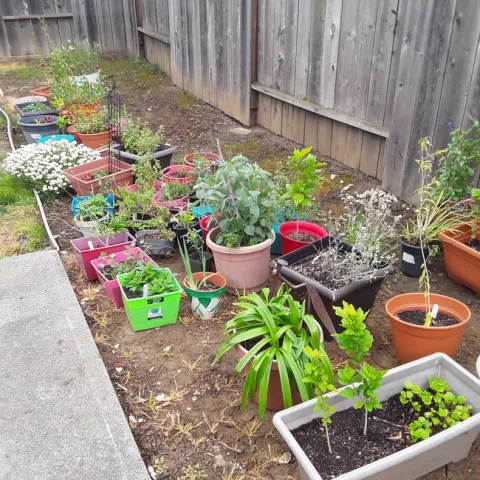
Terry's garden.
The Stanislaus Sprout: Article

Gardening is Not for the Timid

July 16, 2020
By Anne E Schellman
When I began gardening, many moons ago, I had no idea what I was getting myself into. I had this idealized picture in my head of what gardening was all about. A picture of a smiling woman, straw hat on her head, garden trowel in hand, a cute little apron tied around her waist.
View Article
Primary Image
"Well, hello there!" A mature male crab spider, likely a Missumessus species (Thomisidae, crab spider) as identified by UC Davis Professor Jason Bond, peers at the camera from his Tithonia post. (Photo by Kathy Keatley Garvey)
Bug Squad: Article

Spider Alert! Meet a Little Charmer

July 16, 2020
By Kathy Keatley Garvey
Spider alert! Spider alert! Some folks request a "spider alert" because they cringe in horror when they see an image of the eight-legged critter.
View Article