A Natural Solution for California's Herds: African Catfish Peptides

California's cattle producers and agricultural communities are all too familiar with the rising challenge of antibiotic resistance, making common bacterial infections harder to treat in livestock. But imagine a future where we could tackle these infections with a natural, powerful alternative. Our research points to just that: antimicrobial peptides (AMPs) found in African catfish.

We're really excited about these peptides because African catfish thrive in pathogen-rich freshwater, naturally producing these robust immune compounds in their skin mucus as a defense. This natural origin makes them highly appealing alternatives to synthetic drugs.

Predicted Safety and Potent Action

One of the most compelling aspects of these AMPs is their predicted safety for mammals. Our initial computer analyses suggest that various catfish AMPs are generally recognized as safe (GRAS). We predict they'll be absorbed in the human intestine without causing liver, brain, or heart toxicity. Furthermore, lab tests on a promising peptide, NACAP-II, confirmed it was non-hemolytic, meaning it didn't damage rabbit red blood cells—a strong indicator of its potential safety for mammalian cells.

Beyond safety, these peptides demonstrate effectiveness against problematic bacteria. One study revealed NACAP-II's strong activity against Extended-Spectrum Beta-Lactamase (ESBL)-producing Escherichia coli—a critical concern for both animal and human health due to its resistance to many common antibiotics. Another peptide, ACAP-IV, also showed antibacterial activity against E. coli and Staphylococcus aureus. We believe these AMPs work by directly disrupting bacterial cell membranes, a mechanism that makes it harder for bacteria to develop resistance compared to how they resist traditional antibiotics.
The Backyard Gardener: Article

Straight Talk about Starting a Farm in the Eastern Sierra

July 16, 2020
By Dustin W Blakey
I have been working in Cooperative Extension now for a few economic downturns, and a common response to national financial calamity is a desire to become more self-sufficient. This is a completely rational response.
View Article
Primary Image
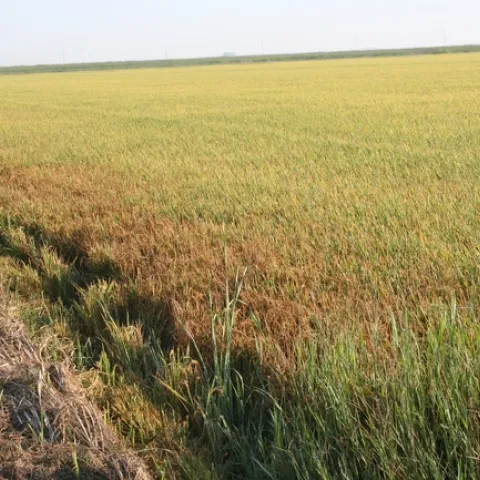
Weedy rice in a rice field in California.
UC Rice Blog: Article

Weedy Rice Survey 2020

July 16, 2020
By Whitney B Brim-Deforest
The UCCE Rice Team will be starting a survey of weedy rice across the rice-growing counties in the next week. We are surveying fields that are known to have weedy rice infestations (from reports from the past 3 years).
View Article
Primary Image
Figure 1. A healthy backyard lawn. (Credit: C Reynolds)
Pests in the Urban Landscape: Article

Lawn Problems: Diseases Are Not Always To Blame

July 16, 2020
By Janet S Hartin
Your customers want their lawns to be beautiful and functional (Figure 1) but dead patches or other problems sometimes occur. Figuring out the cause of turfgrass damage can be a challenge since many plant pathogens affect grasses as well as numerous abiotic (non-living) disorders.
View Article
Primary Image
UC Davis doctoral student Alexandria “Allie” Igwe has received a $138,000 National Science Foundation Postdoctoral Fellowship to work on soil microbial communities and develop novel online tools to increase interest in ecology.
Bug Squad: Article

Allie Igwe: The Road to Success

July 15, 2020
By Kathy Keatley Garvey
The road to success is paved with soil microbial communities. And education, curiosity, determination, and collaboration.
View Article
Blog - Forest Research and Outreach : Article

New mobile app identifies hazardous trees for public safety

July 15, 2020
By Susan D Kocher
Reposted from UCANR news "Trees are poems that the earth writes upon the sky, wrote Kahlil Gibran. But trees falling into power lines have sparked catastrophic fires and falling trees have injured nature lovers.
View Article
Primary Image
El distanciamiento social incrementa el costo de la cosecha de fresas ya que una mayor separación entre los trabajadores retrasa la pizca.
Blog de Alimentos: Article

¿Cómo afecta Covid-19 a la agricultura, medioambiente y los alimentos?

July 15, 2020
By Basilisa M Rawleigh
In English Un nuevo reporte explora los efectos a largo plazo del COVID-19 en las industrias ganadera, de frutas y verduras, fresas, tomates, nueces y vino del estado. El COVID-19 contina afectando partes de la agricultura de California en diferentes formas.
View Article
Primary Image
Laying plastic with a tractor for soil solarization
UC Weed Science (weed control, management, ecology, and minutia): Article

The Heat is On: Soil Solarization

July 15, 2020
By Margaret G Lloyd
From the Small and Organic Farm Advisor Blog ************** The Heat is On: Soil Solarization The days are long and the temperatures are high. This is a great time to solarize the soil in the Central Valley as a way to manage annual weeds and improve the growth of fall crops.
View Article
Primary Image
photos by Brenda Altman
Under the Solano Sun: Article

Wood Chips

July 15, 2020
Wood chips can be expensive if you're buying them by the bag. Imagine getting three to four pickup loads for free! If you have a computer visit Chip drop info@getchipdrop.com they'll hook you up with a nearby arborist who is trying to get rid of their recent wood chips.
View Article