A Natural Solution for California's Herds: African Catfish Peptides

California's cattle producers and agricultural communities are all too familiar with the rising challenge of antibiotic resistance, making common bacterial infections harder to treat in livestock. But imagine a future where we could tackle these infections with a natural, powerful alternative. Our research points to just that: antimicrobial peptides (AMPs) found in African catfish.

We're really excited about these peptides because African catfish thrive in pathogen-rich freshwater, naturally producing these robust immune compounds in their skin mucus as a defense. This natural origin makes them highly appealing alternatives to synthetic drugs.

Predicted Safety and Potent Action

One of the most compelling aspects of these AMPs is their predicted safety for mammals. Our initial computer analyses suggest that various catfish AMPs are generally recognized as safe (GRAS). We predict they'll be absorbed in the human intestine without causing liver, brain, or heart toxicity. Furthermore, lab tests on a promising peptide, NACAP-II, confirmed it was non-hemolytic, meaning it didn't damage rabbit red blood cells—a strong indicator of its potential safety for mammalian cells.

Beyond safety, these peptides demonstrate effectiveness against problematic bacteria. One study revealed NACAP-II's strong activity against Extended-Spectrum Beta-Lactamase (ESBL)-producing Escherichia coli—a critical concern for both animal and human health due to its resistance to many common antibiotics. Another peptide, ACAP-IV, also showed antibacterial activity against E. coli and Staphylococcus aureus. We believe these AMPs work by directly disrupting bacterial cell membranes, a mechanism that makes it harder for bacteria to develop resistance compared to how they resist traditional antibiotics.
Primary Image
The Western Sunset Garden Book 2017 Third Edition
The Coastal Gardener : Article

Climate Zones & Microclimates

April 18, 2020
By Sherida J Phibbs
Do you know your planting zone? Selecting plants is not a one-plant-fits-all approach. Trees, shrubs, plants, vegetables, etc., all have their own climate requirement to grow and produce at their best.
View Article
Primary Image
Female Cone
The Coastal Gardener : Article

Wollemia nobilis at Humboldt Botanical Garden

April 18, 2020
By Sherida J Phibbs
The Wollemia nobilis of Australia have been saved from the raging fires of Australia by special fire crews and air dropped fire retardant in a Top Secret operation.
View Article
Primary Image
Cymbidium Orchid
The Coastal Gardener : Article

A Great Outdoor Orchid for our Coast

April 17, 2020
By Sherida J Phibbs
The Cymbidium (sym-BID-ee-um) orchids are known for their beautiful, long-lasting sprays of flowers and they do well outside. There are two main typesstandards and miniatures. Miniatures only grow where summer nights are above 70F.
View Article
Primary Image
Cardamine californica
The Coastal Gardener : Article

Cardamine Edible - But Not So Tasty

April 17, 2020
By Sherida J Phibbs
Cardamine californica, or Milkmaids, is an herbaceous flowering perennial plant in the family Brassicaceae. It is native to western North America from Washington to Baja California. It is common in a variety of habitats including shady slopes, open woodlands and grasslands.
View Article
Primary Image
AMW
UC Rice Blog: Article

Armyworm trapping season starts

April 17, 2020
By Luis Espino
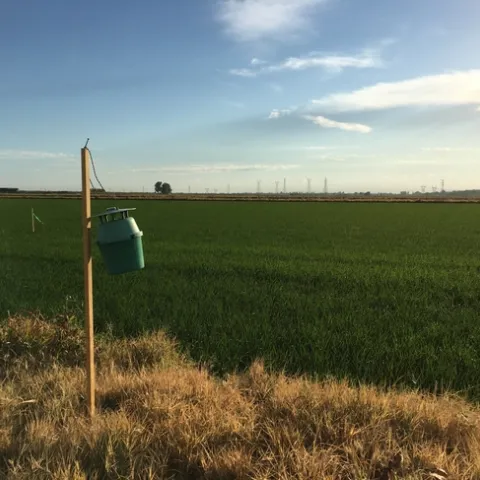
As you know, we have been monitoring armyworm flights with pheromone traps across the valley since 2018. This year, the first set of traps were put out on 4/10 near Princeton, and today we put out a few more. We checked the first traps today, and we got an average of 2 moths per night per trap.
View Article
Primary Image
crab spider 2
UC Cooperative Extension, Ventura County: Article

Eat or Be Eaten

April 17, 2020
By Annemiek M Schilder
In this weekly blog, Dr. Annemiek Schilder, Director, UCCE Ventura County and Hansen Agricultural Research and Extension Center, shares her observations about the natural world across the seasons. As she says: "Gently observing your surroundings with curiosity will teach you some amazing things.
View Article
Primary Image
Olivia Winokur, who researches Aedes aegypti mosquitoes, is the co-author of research published in several journals, including PLOS Neglected Tropical Diseases. Her first first-author paper, “Impact of Temperature on the Extrinsic Incubation Period of Zika Virus in Aedes aegypti” was just published in March. (CDC Photo of Aedes aegypti)
Bug Squad: Article

Olivia Winokur: Newly Selected Fellow of Professors for the Future

April 17, 2020
By Kathy Keatley Garvey
She's an doctoral student in entomology now, but look for Olivia Winokur to be a professor engaging in research, teaching and public service. She's been making her mark in all three since enrolling in 2016 in the UC Davis Department of Entomology and Nematology's Ph.D.
View Article