A Natural Solution for California's Herds: African Catfish Peptides

California's cattle producers and agricultural communities are all too familiar with the rising challenge of antibiotic resistance, making common bacterial infections harder to treat in livestock. But imagine a future where we could tackle these infections with a natural, powerful alternative. Our research points to just that: antimicrobial peptides (AMPs) found in African catfish.

We're really excited about these peptides because African catfish thrive in pathogen-rich freshwater, naturally producing these robust immune compounds in their skin mucus as a defense. This natural origin makes them highly appealing alternatives to synthetic drugs.

Predicted Safety and Potent Action

One of the most compelling aspects of these AMPs is their predicted safety for mammals. Our initial computer analyses suggest that various catfish AMPs are generally recognized as safe (GRAS). We predict they'll be absorbed in the human intestine without causing liver, brain, or heart toxicity. Furthermore, lab tests on a promising peptide, NACAP-II, confirmed it was non-hemolytic, meaning it didn't damage rabbit red blood cells—a strong indicator of its potential safety for mammalian cells.

Beyond safety, these peptides demonstrate effectiveness against problematic bacteria. One study revealed NACAP-II's strong activity against Extended-Spectrum Beta-Lactamase (ESBL)-producing Escherichia coli—a critical concern for both animal and human health due to its resistance to many common antibiotics. Another peptide, ACAP-IV, also showed antibacterial activity against E. coli and Staphylococcus aureus. We believe these AMPs work by directly disrupting bacterial cell membranes, a mechanism that makes it harder for bacteria to develop resistance compared to how they resist traditional antibiotics.

Primary Image
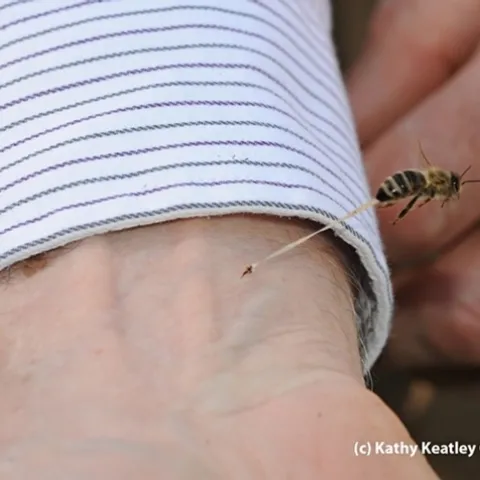
Bohart Museum of Entomology director Lynn Kimsey led a virtual tour of the insect museum. (Photo by Kathy Keatley Garvey)
Entomology & Nematology News: Article

A Virtual UC Davis Picnic Day, Entomology-Style

April 20, 2020
By Kathy Keatley Garvey
What's a picnic without insects? And what's the canceled 105th annual UC Davis Picnic without virtual insects? The Department of Entomology and Nematology annually hosts dozens of insect-themed Picnic Day events at Briggs Hall and at the Bohart Museum of Entomology.
View Article
UCCE in the County of San Luis Obispo: Article

Rancher Wisdom can be Improved with Science

April 20, 2020
Hello- Please see the attached article "RANCHER WISDOM CAN BE IMPROVED WITH SCIENCE" written by Jeannette Warnert, UC ANR and follow the link below to see the video. https://ucanr.
View Article
Primary Image
Professor Lynn Kimsey, director of the Bohart Museum of Entomology, gives a pre-Picnic Day virtual tour of the insect museum. (Photo by Kathy Keatley Garvey)
Bug Squad: Article

The Insects Around Us: From UC Davis Picnic Day to Your Computer

April 20, 2020
By Kathy Keatley Garvey
If you missed the 105th annual UC Davis Picnic, you're not alone. We missed it, too. So did the ants and other insects. The Department of Entomology and Nematology annually hosts dozens of popular Picnic Day events at Briggs Hall and at the Bohart Museum of Entomology.
View Article
Primary Image
Some plants look great, others not so much
ANR Adventures: Article

It's Monday, right?

April 20, 2020
By Wendy Powers
Happy Monday! It doesn't feel like Monday. Saturday felt' like Sunday and I woke up early this morning thinking how slow the weekend was going by. I don't recall having that concern before. Then I realized it was over problem solved. Yardwork was front and center over the weekend.
View Article
Monterey County: Article

Thrips-Webinar on April 22nd

April 20, 2020
Dear all, Richard Smith, Daniel Hasegawa and I are putting together a ZOOM Webinar on Wednesday, April 22nd from 10am to 12pm to discuss the current status and research on INSV and Thrips in the Salinas Valley.
View Article
Primary Image
Suelo recogido desde las ruedas del tractor y el rotavator (tiller) y recolectado en una lona de plástico.
Fresas y Moras: Article

Moviendo patógenos a través de la maquinaria

April 20, 2020
By Mark P Bolda
Las enfermedades del suelo estn causadas por patgenos que residen en el suelo, tales como los hongos Fusarium oxysporum, Macrophomina phaseolina y Verticillium dahliae. Estos patgenos son capaces de sobrevivir en el suelo por largos periodos de tiempo gracias a que forman estructuras de resistencia.
View Article
Primary Image
Coveralls should be worn for applications where contact with spray residue is likely. Photo by Katrina Hunter
ANR News Releases: Article

PPE in short supply for farm work during the COVID-19 crisis

April 20, 2020
By Pamela S Kan-Rice
While most Californians are staying home to slow the spread of the novel coronavirus, California farmers, farmworkers and other agricultural professionals are out in the fields and packing houses working to produce food.
View Article