A Natural Solution for California's Herds: African Catfish Peptides

California's cattle producers and agricultural communities are all too familiar with the rising challenge of antibiotic resistance, making common bacterial infections harder to treat in livestock. But imagine a future where we could tackle these infections with a natural, powerful alternative. Our research points to just that: antimicrobial peptides (AMPs) found in African catfish.

We're really excited about these peptides because African catfish thrive in pathogen-rich freshwater, naturally producing these robust immune compounds in their skin mucus as a defense. This natural origin makes them highly appealing alternatives to synthetic drugs.

Predicted Safety and Potent Action

One of the most compelling aspects of these AMPs is their predicted safety for mammals. Our initial computer analyses suggest that various catfish AMPs are generally recognized as safe (GRAS). We predict they'll be absorbed in the human intestine without causing liver, brain, or heart toxicity. Furthermore, lab tests on a promising peptide, NACAP-II, confirmed it was non-hemolytic, meaning it didn't damage rabbit red blood cells—a strong indicator of its potential safety for mammalian cells.

Beyond safety, these peptides demonstrate effectiveness against problematic bacteria. One study revealed NACAP-II's strong activity against Extended-Spectrum Beta-Lactamase (ESBL)-producing Escherichia coli—a critical concern for both animal and human health due to its resistance to many common antibiotics. Another peptide, ACAP-IV, also showed antibacterial activity against E. coli and Staphylococcus aureus. We believe these AMPs work by directly disrupting bacterial cell membranes, a mechanism that makes it harder for bacteria to develop resistance compared to how they resist traditional antibiotics.

Primary Image
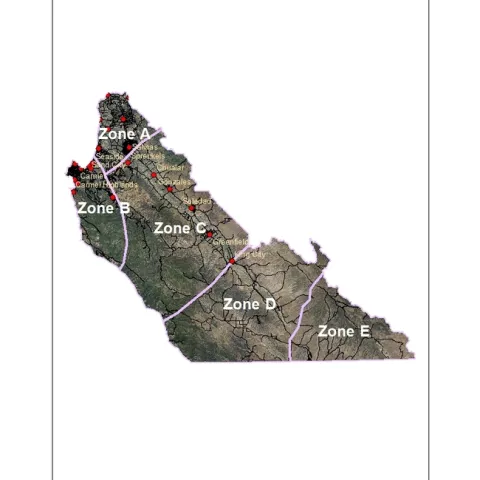
Plant trivia - try to name this plant
ANR Adventures: Article

Solstice week activity

June 18, 2018
By Wendy Powers
In between finishing up the merit and promotion packages, I did some gardening this weekend. My favorite plant on the property was in bloom.
View Article
Napa Master Gardener Column: Article

Roots, by Robert Williams.

June 18, 2018
When we look at a plant or tree, the bright foliage, tempting fruit or majestic stature might be the first thing we notice. But quietly humming along are the root systems that make all of these things possible. Most roots live below ground and are difficult to observe firsthand.
View Article
Primary Image
1
UC CalFresh Fresno/Madera Counties: Article

Intern Reflection Series: Anna Miller

June 18, 2018
Fresno and Madera Counties' UC CalFresh Nutrition Education Program has a long-standing partnership with the Fresno State Dietetic Internship Program. This blog post is part of our Intern Reflections Series.
View Article
Primary Image
Canned food 1
UC Master Gardeners- Diggin' it in SLO: Article

Preserve The Summer Harvest

June 18, 2018
Preserve Your Summer Harvest By Rosemary Orr UCCE Master Food Preserver June in San Luis Obispo County is a wonderful time of the year to start preserving our summer's bounty of fruit. You are invited to join UC Master Food Preservers for their Introduction to Canning class.
View Article
Article

LISTEN: “Peppers” On In The Garden Radio

June 18, 2018
Bell, Thai, Banana, Cayenne, Italian, Sweet, Hot, Hotter, and HOTTEST! You name it! You can grow it. Know how you want to use your peppers and judge the variety using the Scoville scale. Even a sweet bell pepper has 100 Scoville Heat Units (SHUs). A TAM Jalapeno only has 1500 SHUs.
View Article
The Biochar Blog: Article

Portable pyrolysis units

June 18, 2018
By Milton E Mcgiffen
Jose Aguiar forwarded me the link to Air Burners portable pyrolysis unit: https://airburners.com/?gclid=EAIaIQobChMI97GkhvLd2wIV1H5iCh3ToA1SEAEYASAAEgJatfD_BwE I do not mean to promote their unit over others, rather mention how important portable units could become.
View Article
Livestock, Range and Natural Resources: Article

Summer 2018

June 18, 2018
In this issue: News Briefs Recap: Forage Outcomes Know Your Thistles Wild Horses in California Virulent Newcastle Disease Druggie Chickens...
View Article
Livestock, Range and Natural Resources: Article

Verano 2018

June 18, 2018
En este nmero: Noticias Breves Resultados de Forraje Conozca los Cardos Caballos Silvestres in California Enfermedad Virulenta de Newcastle Gallinas Drogadictas...
View Article
Primary Image
Prostrate pigweed leaves 2
UC Weed Science (weed control, management, ecology, and minutia): Article

A quick guide to identifying some pigweed species found in California

June 18, 2018
According to the CalFlora website (http://www.calflora.org/), 21 species of amaranths occur (to some extent) in California. While many are non-native, a few, including prostrate pigweed (Amaranthus blitoides) and Palmer amaranth (Amaranthus palmeri), are indigenous.
View Article