A Natural Solution for California's Herds: African Catfish Peptides

California's cattle producers and agricultural communities are all too familiar with the rising challenge of antibiotic resistance, making common bacterial infections harder to treat in livestock. But imagine a future where we could tackle these infections with a natural, powerful alternative. Our research points to just that: antimicrobial peptides (AMPs) found in African catfish.

We're really excited about these peptides because African catfish thrive in pathogen-rich freshwater, naturally producing these robust immune compounds in their skin mucus as a defense. This natural origin makes them highly appealing alternatives to synthetic drugs.

Predicted Safety and Potent Action

One of the most compelling aspects of these AMPs is their predicted safety for mammals. Our initial computer analyses suggest that various catfish AMPs are generally recognized as safe (GRAS). We predict they'll be absorbed in the human intestine without causing liver, brain, or heart toxicity. Furthermore, lab tests on a promising peptide, NACAP-II, confirmed it was non-hemolytic, meaning it didn't damage rabbit red blood cells—a strong indicator of its potential safety for mammalian cells.

Beyond safety, these peptides demonstrate effectiveness against problematic bacteria. One study revealed NACAP-II's strong activity against Extended-Spectrum Beta-Lactamase (ESBL)-producing Escherichia coli—a critical concern for both animal and human health due to its resistance to many common antibiotics. Another peptide, ACAP-IV, also showed antibacterial activity against E. coli and Staphylococcus aureus. We believe these AMPs work by directly disrupting bacterial cell membranes, a mechanism that makes it harder for bacteria to develop resistance compared to how they resist traditional antibiotics.
Primary Image
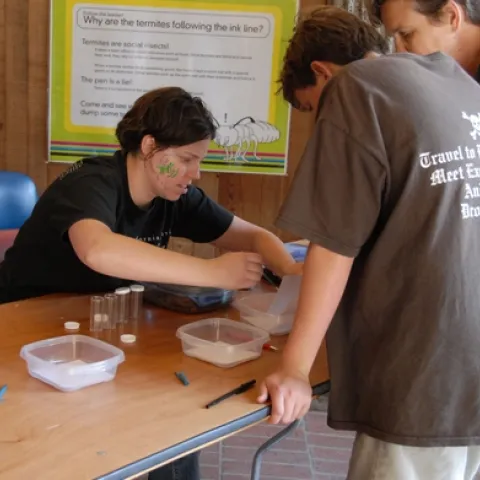
SIGN SAYS IT ALL--This sign at the Bohart Museum of Entomology offers the pros and cons of eating insects. (Photo by Kathy Keatley Garvey)
Bug Squad: Article

I Did Not Want to Know That

November 12, 2008
By Kathy Keatley Garvey
You may not know it, but you've eaten insects. Oh, yes, you have. The other day I meandered over to the Bohart Museum of Entomology, UC Davis campus, and a sign told me that. There it was--plain as day (as if a day can be plain).
View Article
Primary Image
NEWLY EMERGED--A newborn bee struggles to right herself. Note the swath of yellow hair on her thorax. As she ages, the thorax will be smooth and mostly devoid of hair. (Photo by Kathy Keatley Garvey)

Fuzzy Wuzzy Was a Bee

November 11, 2008
By Kathy Keatley Garvey
It's Tuesday, Nov. 11, Veterans' Day. I walked into our bee friendly garden hoping to find a honey bee. One buzzed erratically over the purple sage and rock purslane and disappeared. The rest are nestled in a hive somewhere, trying to ward off the cold.
View Article
Primary Image
IN SUPPORT OF URBAN BEE DIVERSITY--Jaime Pawelek of UC Berkeley’s Department of Organisms and the Environment, discussed “Native California Bees: Looking for Cheap Urban Real Estate” at the Nov. 6 meeting of the Northern California Entomology Society. (Photo by Kathy Keatley Garvey)
Bug Squad: Article

Looking for Cheap Urban Real Estate

November 10, 2008
By Kathy Keatley Garvey
Chances are if you walked up to a group of people and asked "Have you seen a Megachile today?" they'd stare at you blankly. What's a Megachile? It's a native bee, also known as a leafcutter bee. When most people think about bees, they think about honey bees, which are native to Europe.
View Article
Primary Image
PRESENTATION--Entomologist William Roltsch of the California Department of Food and Agriculture discusses the light brown apple moth at the Nov. 6th meeting of the Northern California Entomology Society. (Photo by Kathy Keatley Garvey)
Bug Squad: Article

Good Question

November 7, 2008
By Kathy Keatley Garvey
Most entomologists I know maintain a keen sense of humor.
View Article
Primary Image
MALE LIGHT BROWN APPLE MOTH--The light brown apple moth is a native of Australia. (Photo courtesy of David Williams, principal scientist, Perennial Horticulture, Department of Primary Industries, Victoria, Australia.)

Not Again!

November 6, 2008
By Kathy Keatley Garvey
Not again! The light brown apple moth, also known as "the eat-everything moth" because its larvae dine on about 250 host plants, is back in the news again. We received a press release yesterday (Nov.
View Article
Primary Image
MEDICAL ENTOMOLOGIST--Thomas Scott, professor of entomology at UC Davis, is one of the leading authorities on dengue. (Photo by Kathy Keatley Garvey)
Bug Squad: Article

War on Dengue Fever

November 5, 2008
By Kathy Keatley Garvey
UC Davis medical entomologist Thomas Scott is mentioned in "The War on Dengue Fever," a news article published Nov. 3, 2008 in the New York Times. Scott is a leading expert on dengue fever, a mosquito-borne disease transmitted by Aeges egypti.
View Article
Primary Image
FIRST SPEAKER--Corey Keller, associate curator of photography for the San Francisco Museum of Modern Art, will speak on "Sight Unseen: Picturing the Invisible, 1840 to 1900" from 6:30 to 8 p.m., Wednesday, Nov. 12 in the UC Davis Activities and Recreation Center.

Consilience of Art and Science

November 4, 2008
By Kathy Keatley Garvey
What a series! You won't want to miss the Consilience of Art and Science speaker series that gets under way Nov. 12 and continues through April 9 at the University of California, Davis. The lectures are free and open to the public.
View Article
Primary Image
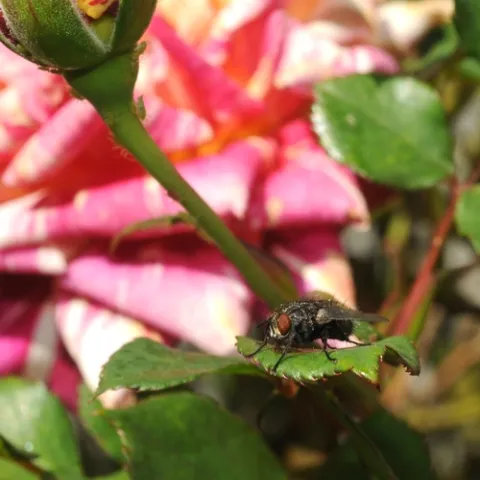
HOVER FLY--A hover fly, mimicking the coloring of a wasp, is nectaring sage. (Photo by Kathy Keatley Garvey)
Bug Squad: Article

Let It Rain

November 3, 2008
By Kathy Keatley Garvey
Ah, rain! Ah, liquid precipitation! Just when we were feeling drought-stressed, the weather forecast turned to rain. I don't know if "the rain in Spain falls mainly on the plain," but the rain in Northern California fell squarely on our bee friendly garden last weekend.
View Article
Primary Image
IN KENYA--UC Davis medical entomologist Thomas Scott, towers above schoolchildren in Kenya in a photo taken in 2004. (He's 6-foot, 6-inches tall.)
Bug Squad: Article

What's Medical Entomology?

October 31, 2008
By Kathy Keatley Garvey
What's medical entomolology? Anyone who's an entomologist or who works in entomology is asked that question periodically. Medical, they know. Entomology? Often not.
View Article