A Natural Solution for California's Herds: African Catfish Peptides

California's cattle producers and agricultural communities are all too familiar with the rising challenge of antibiotic resistance, making common bacterial infections harder to treat in livestock. But imagine a future where we could tackle these infections with a natural, powerful alternative. Our research points to just that: antimicrobial peptides (AMPs) found in African catfish.

We're really excited about these peptides because African catfish thrive in pathogen-rich freshwater, naturally producing these robust immune compounds in their skin mucus as a defense. This natural origin makes them highly appealing alternatives to synthetic drugs.

Predicted Safety and Potent Action

One of the most compelling aspects of these AMPs is their predicted safety for mammals. Our initial computer analyses suggest that various catfish AMPs are generally recognized as safe (GRAS). We predict they'll be absorbed in the human intestine without causing liver, brain, or heart toxicity. Furthermore, lab tests on a promising peptide, NACAP-II, confirmed it was non-hemolytic, meaning it didn't damage rabbit red blood cells—a strong indicator of its potential safety for mammalian cells.

Beyond safety, these peptides demonstrate effectiveness against problematic bacteria. One study revealed NACAP-II's strong activity against Extended-Spectrum Beta-Lactamase (ESBL)-producing Escherichia coli—a critical concern for both animal and human health due to its resistance to many common antibiotics. Another peptide, ACAP-IV, also showed antibacterial activity against E. coli and Staphylococcus aureus. We believe these AMPs work by directly disrupting bacterial cell membranes, a mechanism that makes it harder for bacteria to develop resistance compared to how they resist traditional antibiotics.
Bug Squad: Article

Of Butterfly Patterns and Genetic Codes

November 30, 2017
By Kathy Keatley Garvey
Who knew? You've probably watched those colorful painted ladies (Vanessa cardui) fluttering about in your yard, but have you read the newly published research about their wing color patterns and genetic codes?
View Article
Primary Image
Figure 1. Armyworm bucket trap catches were highest in late June.
SJC and Delta Field Crops: Article

Delta Rice Recap 2017

November 30, 2017
By Michelle M Leinfelder-Miles
The 2017 season was marked by weather extremes, including record winter rainfall and high summer temperatures. Despite those, Delta rice growers generally observed an average to above-average season. Total acreage for the Delta south of the Yolo Bypass was roughly 2900 acres.
View Article
Bug Squad: Article

Lady Beetles: The First Ladies of the Garden Having a Ball

November 29, 2017
By Kathy Keatley Garvey
See those red spots on your milkweed seed pods? Lady beetles (aka ladybugs or "garden heroes") are feasting on aphids. And they're having a ball. We've been watching the critters on our milkweed, Gomphocarpus physocarpus, for the last couple of months.
View Article
Bug Squad: Article

What This Katydid Did...

November 28, 2017
By Kathy Keatley Garvey
It's not a question of whether katydid did or didn't. She did. In answer to what-are-we-going-to-see-next-in-insect-sightings-today-in-our-weird-climate-changing patterns, a katydid appeared on our yellow rose bush on Nov. 21 in Vacaville, Calif. And stayed for several days.
View Article
Primary Image
hyphoderma
Topics in Subtropics: Article

Lemons and Rain, O No!

November 27, 2017
By Ben A Faber
So if you have lemons, read this. And if we have rain, really read this. I think because we prune lemons so much, this is more of a lemon problem, because I've never heard of other citrus getting it. It is a wood decay fungus on a lot of other tree species, though.
View Article
Bug Squad: Article

Once Upon a Monarch...

November 27, 2017
By Kathy Keatley Garvey
We first saw her at 10 a.m. on Oct. 27, 2017. She was eating. That's what monarch caterpillars do best. They eat. A lot. "Where have you been?" I asked. "Where have you been hiding? Your siblings have long gone.
View Article
Primary Image
chimera witches broom citrus
Topics in Subtropics: Article

Really Wierd Citrus Fruit

November 27, 2017
By Ben A Faber
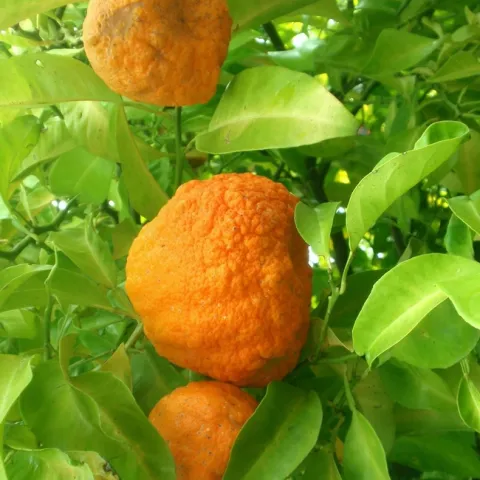
The whole group of plants we lump under the taxonomic classification of citrus are really changeable. It's out of this changeability that we get new varieties. Some of these can be quite fanciful, almost dream like fruit which is where the origin of the name chimera comes from.
View Article
Bug Squad: Article

Guess How Many Are Coming to Dinner?

November 24, 2017
By Kathy Keatley Garvey
Set a plate for one and you might get three more diners. Such was the case recently in a Sonoma garden when a patch Iceland poppy (Papaver nudicaule) drew a posse of hungry honey bees, all elbowing up to the plate. Iceland poppy is irresistible. Ironically, you won't find Iceland poppy in Iceland.
View Article