A Natural Solution for California's Herds: African Catfish Peptides

California's cattle producers and agricultural communities are all too familiar with the rising challenge of antibiotic resistance, making common bacterial infections harder to treat in livestock. But imagine a future where we could tackle these infections with a natural, powerful alternative. Our research points to just that: antimicrobial peptides (AMPs) found in African catfish.

We're really excited about these peptides because African catfish thrive in pathogen-rich freshwater, naturally producing these robust immune compounds in their skin mucus as a defense. This natural origin makes them highly appealing alternatives to synthetic drugs.

Predicted Safety and Potent Action

One of the most compelling aspects of these AMPs is their predicted safety for mammals. Our initial computer analyses suggest that various catfish AMPs are generally recognized as safe (GRAS). We predict they'll be absorbed in the human intestine without causing liver, brain, or heart toxicity. Furthermore, lab tests on a promising peptide, NACAP-II, confirmed it was non-hemolytic, meaning it didn't damage rabbit red blood cells—a strong indicator of its potential safety for mammalian cells.

Beyond safety, these peptides demonstrate effectiveness against problematic bacteria. One study revealed NACAP-II's strong activity against Extended-Spectrum Beta-Lactamase (ESBL)-producing Escherichia coli—a critical concern for both animal and human health due to its resistance to many common antibiotics. Another peptide, ACAP-IV, also showed antibacterial activity against E. coli and Staphylococcus aureus. We believe these AMPs work by directly disrupting bacterial cell membranes, a mechanism that makes it harder for bacteria to develop resistance compared to how they resist traditional antibiotics.
Primary Image
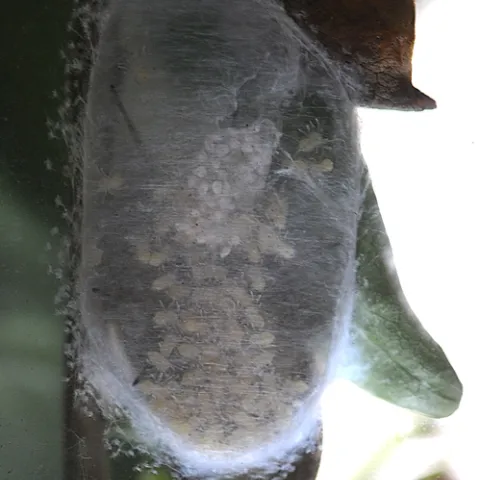
SPIDER COCOON outside the window of John Emery's San Francisco office. (Photo courtesy of John Emery)
Bug Squad: Article

Our Spider Man in San Francisco

June 17, 2009
By Kathy Keatley Garvey
John Emery is a spider man. Oh, hes not a super hero who clings to city skyscrapers and chases villains and rescues damsels in distress. Hes the IT manager for Sue Mills, a company which sells school uniforms. But he's truly a spider man.
View Article
Primary Image
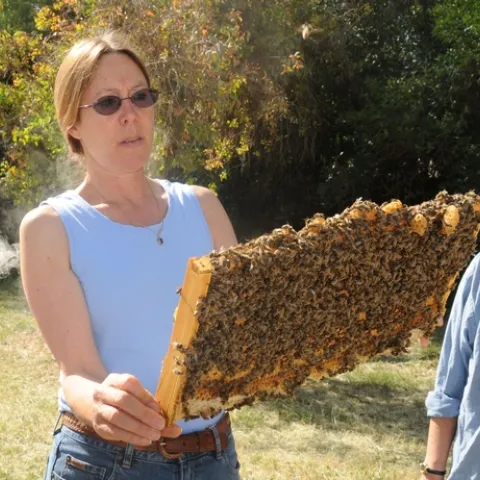
BARE-ARMED, UC Davis bee breeder-geneticist Susan Cobey examines a frame of her much-praised gentle bees. (Photo by Kathy Keatley Garvey)
Bug Squad: Article

The Shirt Off Her Back

June 16, 2009
By Kathy Keatley Garvey
UC Davis bee breeder-geneticist Susan Cobey, manager of the Harry H. Laidlaw Jr., Honey Bee Research Facility, is the kind of person who would give you the shirt off her back. Really. And that's exactly what she did when several visitors recently toured the Laidlaw facility.
View Article
Primary Image
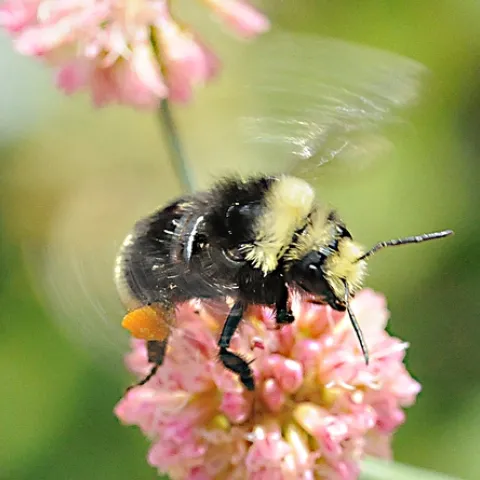
POLLEN-PACKING bumble bee (Bombus vosnesenskii), the most common California bumble bee, buzzes a flower in the Storer Gardens, UC Davis Arboretum. This photo was taken July 13, 2008. (Photo by Kathy Keatley Garvey)
Bug Squad: Article

Where Have All the Bumble Bees Gone?

June 15, 2009
By Kathy Keatley Garvey
The Smithsonian Institution is the place to "bee" on Monday, June 22. UC Davis pollinator specialist and researcher Robbin Thorp will join other bumble bee experts from across the country in a "Plight of the Bumble Bees" public symposium from 10 a.m.
View Article
Primary Image
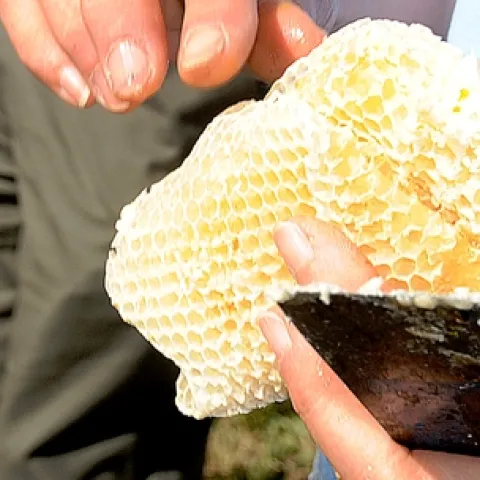
GOLDEN BULLET--really a queen yellowjacket--(see far left) heads for a honeycomb held by bee breeder-geneticist Susan Cobey, manager of the Harry H. Laidlaw Jr. Honey Bee Research Facility at UC Davis. Beekeepers know that when they open a hive, a predatory yellowjacket with a voracious appetite for honey and bees may be in the vicinity. (Photo by Kathy Keatley Garvey)
Bug Squad: Article

Faster Than a Speeding...

June 12, 2009
By Kathy Keatley Garvey
Faster than a speeding bullet... As soon as UC Davis bee breeder-geneticist Susan Cobey opened a beehive and removed a chunk of honeycomb to show visitors, here came the speeding bullet. A fast camera shutter caught what the eye couldn't see. It was a queen yellowjacket taking dead aim at the comb.
View Article
Primary Image
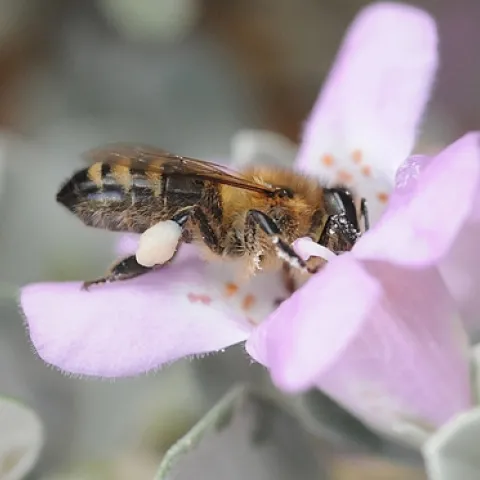
HONEY BEE, packed with pollen, nectars flowers in the UC Davis Arboretum. (Photo by Kathy Keatley)
Bug Squad: Article

Wazzup Aug. 17-20? WAS!

June 11, 2009
By Kathy Keatley Garvey
WAS is not just the first and third person singular past indicative of be. It's the Western Apicultural Society, an organization dedicated to the science and art of rearing honey bees. You'll find scores of commericial beekeepers at the 31st annual WAS Conference, scheduled Aug.
View Article
Primary Image
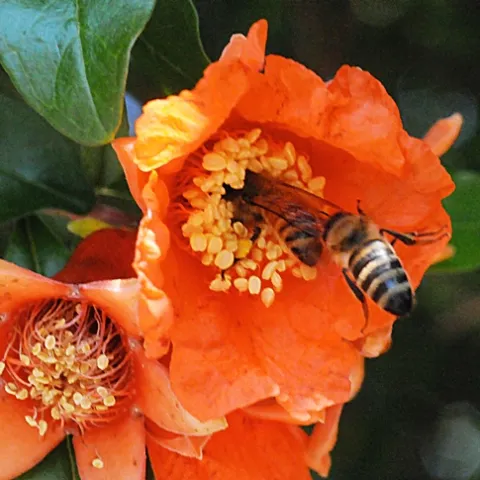
A honey bee works a pomegranate blossom, while another bee moves in right behind her. (Photo by Kathy Keatley Garvey)
Bug Squad: Article

A Beeline for the Pomegranates

June 10, 2009
By Kathy Keatley Garvey
Youre not going to be able to jump on the pomegranate bandwagon with your pockets bulging with gold without a lot of hard work, Kevin Day, farm advisor with UC Cooperative Extension Tulare County, told a reporter for a news story published May 14 in the Western Farm Press. Yes, hard work.
View Article
Primary Image
HONEY BEE GENETICIST Robert Page is a newly elected member of the oldest scientific academy of science, the Germany Academy of Sciences Leopoldina. Former chair of the UC Davis Department of Entomology, he's now a professor and administrator at Arizona State University.
Bug Squad: Article

A 'Page' of History

June 8, 2009
By Kathy Keatley Garvey
Honey bee geneticist Robert E. Page Jr. is in good company. Good company, indeed. Think scientists Marie Curie, Albert Einstein and Charles Darwin. Page, who received his doctorate in entomology from UC Davis in 1980 and then became a noted geneticist at the Harry H. Laidlaw Jr.
View Article
Primary Image
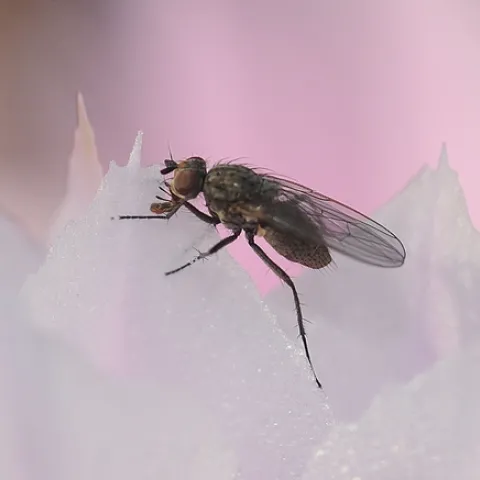
A FLY on a cactus flower: an almost ethereal image. (Photo by Kathy Keatley Garvey)
Bug Squad: Article

Fly by Day

June 5, 2009
By Kathy Keatley Garvey
UC Davis forensic entomologist Robert Kimsey loves flies. So, every chance I get, I shoot an image for him. Many of the images wind up in his classroom PowerPoint presentations. "Keep 'em coming," he says. So, I shoot flies. Yes, indeed. I shoot flies. No, I am not a candidate for a 12-step program.
View Article
Primary Image
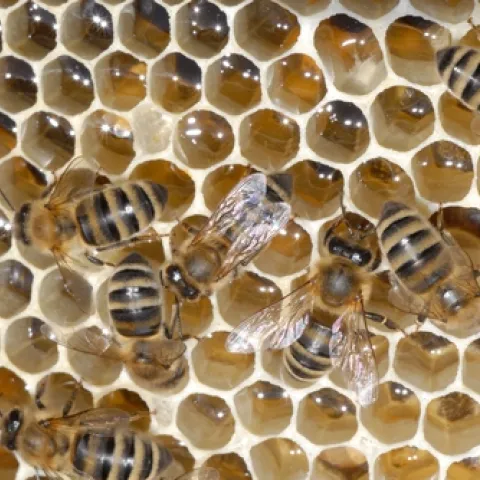
WORKER BEES keep the hive humming. (Photo by Kathy Keatley Garvey)
Bug Squad: Article

The Calamity of CCD

June 4, 2009
By Kathy Keatley Garvey
Colony collapse disorder (CCD), the mysterious phenomonen characterized by honey bees abandoning their hives, is still with is, and the cause is still mysterious.
View Article