A Natural Solution for California's Herds: African Catfish Peptides

California's cattle producers and agricultural communities are all too familiar with the rising challenge of antibiotic resistance, making common bacterial infections harder to treat in livestock. But imagine a future where we could tackle these infections with a natural, powerful alternative. Our research points to just that: antimicrobial peptides (AMPs) found in African catfish.

We're really excited about these peptides because African catfish thrive in pathogen-rich freshwater, naturally producing these robust immune compounds in their skin mucus as a defense. This natural origin makes them highly appealing alternatives to synthetic drugs.

Predicted Safety and Potent Action

One of the most compelling aspects of these AMPs is their predicted safety for mammals. Our initial computer analyses suggest that various catfish AMPs are generally recognized as safe (GRAS). We predict they'll be absorbed in the human intestine without causing liver, brain, or heart toxicity. Furthermore, lab tests on a promising peptide, NACAP-II, confirmed it was non-hemolytic, meaning it didn't damage rabbit red blood cells—a strong indicator of its potential safety for mammalian cells.

Beyond safety, these peptides demonstrate effectiveness against problematic bacteria. One study revealed NACAP-II's strong activity against Extended-Spectrum Beta-Lactamase (ESBL)-producing Escherichia coli—a critical concern for both animal and human health due to its resistance to many common antibiotics. Another peptide, ACAP-IV, also showed antibacterial activity against E. coli and Staphylococcus aureus. We believe these AMPs work by directly disrupting bacterial cell membranes, a mechanism that makes it harder for bacteria to develop resistance compared to how they resist traditional antibiotics.

UC Weed Science (weed control, management, ecology, and minutia): Article

Herbicide Injury on Tomato

June 5, 2017
We are a little over a month into the processing tomato season. I have received a couple of farm calls regarding herbicide damage or symptoms originally thought to be diseases. The first was trifluralin injury to young tomato plants.
View Article
Bug Squad: Article

An Insect Assembled by a Committee?

June 2, 2017
By Kathy Keatley Garvey
This is an insect that looks as if it were assembled by a dysfunctional committee: long angular legs, long antennae, and beady eyes on a thin green body. All hail the katydid. It's usually camouflaged, disguised as a leaf in the vegetation--Nature's gift. But in our pollinator garden, we see them.
View Article
Primary Image
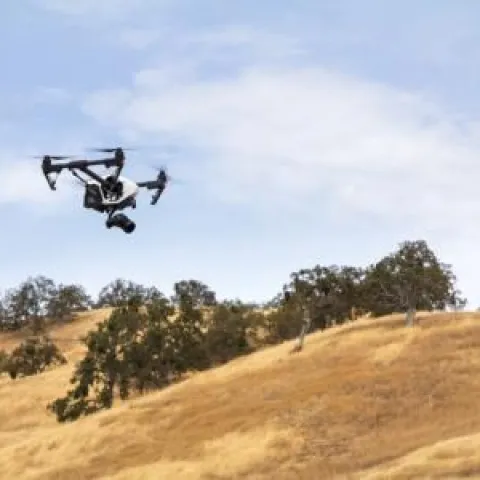
IGIS Academic Coordinator Sean Hogan teaches a workshop on drone technology at CalGIS 2017
IGIS: Article

Reflections from CalGIS 2017

June 2, 2017
By Andy Lyons, Sean D Hogan
Last week we enjoyed attending the CalGIS 2017 conference in Oakland. This year the meeting was co-hosted with LocationCon, so it was larger than usual and had a good mix of participants from government, non-profits, academic and consulting companies.
View Article
Primary Image
digger bees 2
Topics in Subtropics: Article

Digging Digger Bees

June 2, 2017
By Ben A Faber
Diadasia bituberculata Digger Bee The hills are alive with the sound of BEE-EEZZE. And often they are found crawling on the ground, as is the case of Digger Bees.
View Article
Bug Squad: Article

The Beauty of a Carpenter Bee's Wings

May 31, 2017
By Kathy Keatley Garvey
There's an old saying applicable to child-rearing: "First you give them roots, and then you give them wings." Roots. Wings. Roots to ground them, to love them unconditionally. And wings for them to lift off and launch new beginnings.
View Article
UC Weed Science (weed control, management, ecology, and minutia): Article

Weeds, Defined (mostly)

May 30, 2017
By Chris J McDonald
Ralph Waldo Emerson, called a weed a plant whose virtues that have not yet been discovered. I disagree, and yet generally speaking he is correct, what we call a weed is in the eye of the beholder, a plant that it is not helpful, useful or wanted.
View Article
UC Weed Science (weed control, management, ecology, and minutia): Article

Spray materials for automated thinners and weeders

May 30, 2017
By Richard F Smith
Automated lettuce thinners that use a spray mechanism to remove unwanted lettuce plants and weeds have been widely adopted in the Salinas Valley and desert production districts.
View Article