A Natural Solution for California's Herds: African Catfish Peptides

California's cattle producers and agricultural communities are all too familiar with the rising challenge of antibiotic resistance, making common bacterial infections harder to treat in livestock. But imagine a future where we could tackle these infections with a natural, powerful alternative. Our research points to just that: antimicrobial peptides (AMPs) found in African catfish.

We're really excited about these peptides because African catfish thrive in pathogen-rich freshwater, naturally producing these robust immune compounds in their skin mucus as a defense. This natural origin makes them highly appealing alternatives to synthetic drugs.

Predicted Safety and Potent Action

One of the most compelling aspects of these AMPs is their predicted safety for mammals. Our initial computer analyses suggest that various catfish AMPs are generally recognized as safe (GRAS). We predict they'll be absorbed in the human intestine without causing liver, brain, or heart toxicity. Furthermore, lab tests on a promising peptide, NACAP-II, confirmed it was non-hemolytic, meaning it didn't damage rabbit red blood cells—a strong indicator of its potential safety for mammalian cells.

Beyond safety, these peptides demonstrate effectiveness against problematic bacteria. One study revealed NACAP-II's strong activity against Extended-Spectrum Beta-Lactamase (ESBL)-producing Escherichia coli—a critical concern for both animal and human health due to its resistance to many common antibiotics. Another peptide, ACAP-IV, also showed antibacterial activity against E. coli and Staphylococcus aureus. We believe these AMPs work by directly disrupting bacterial cell membranes, a mechanism that makes it harder for bacteria to develop resistance compared to how they resist traditional antibiotics.
UC Weed Science (weed control, management, ecology, and minutia): Article

Non-chemical weed control strategies for concrete block pavements

November 15, 2013
By Gale Perez
Abstract: Reduction in herbicide use in non-agricultural areas is being imposed by a growing number of governments, triggering the development of alternative strategies for weed prevention and control.
View Article
Primary Image
Israel 6
Topics in Subtropics: Article

When to Prune Avocados and Suggestions of How to Prune

November 15, 2013
By Ben A Faber
In the past avocados were rarely pruned. In fact, if the trees got very big, growers would stump them down to 3-4 feet and then let them regrow. This would often be a disaster, since the trees rapidly grew to stupendous sizes again.
View Article
Primary Image
image 19315
IGIS: Article

NASA shares satellite and climate data on Amazon’s cloud

November 14, 2013
By Maggi Kelly
NASA has announced a partnership with Amazon Web Services that the agency hopes will spark wider collaboration on climate research. In an effort that is in some ways parallel to Google's Earth Engine, NASA has uploaded terabytes of data to Amazon's public cloud and made it available to the anyone.
View Article
Primary Image
This honey bee is doing poorly. (Photo by Kathy Keatley Garvey)
Bug Squad: Article

What's Wrong with My Bees?

November 14, 2013
By Kathy Keatley Garvey
"What's wrong with my bees?" That's a question frequently asked of Extension apiculturist Eric Mussen of the UC Davis Department of Entomology and Nematology. Fact is, he's an "unbee-lievable" wealth of information.
View Article
Primary Image
A ladybug (lady beetle) graces salvia. (Photo by Kathy Keatley Garvey)
Bug Squad: Article

The Beauty and the Beetles

November 13, 2013
By Kathy Keatley Garvey
You've heard of "The Beauty and the Beast?" A fairy tale? How about "The Beauty and the Beetles?" No fairy tale. That's the theme of the open house on Saturday, Nov. 23 from 1 to 4 p.m.
View Article
Primary Image
This bed bug was a popular attraction at a Briggs Hall display during the 2012 UC Davis Picnic Day. (Photo by Kathy Keatley Garvey)
Bug Squad: Article

Bed Bugs: 'Stealthy Blood Feeders'

November 12, 2013
By Kathy Keatley Garvey
Bed bug behavior? Fascinating! Just ask Kenneth Haynes. "Despite their proclivity to hide near to where we sleep and stealthily feed on our blood, bed bugs are extremely fascinating insects," he writes on his website.
View Article
Primary Image
skirting

To skirt or not to skirt, that is the question

November 12, 2013
By Ben A Faber
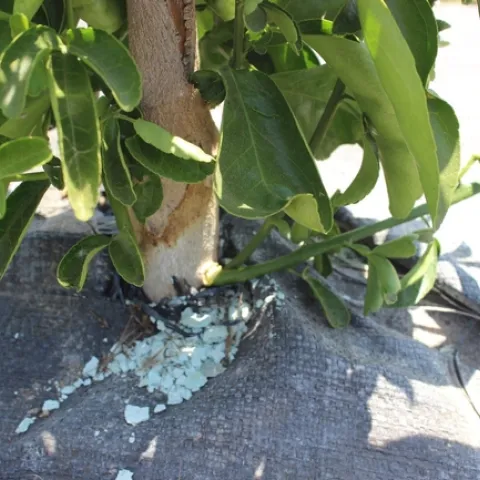
There is a running debate about whether avocado canopies should be skirted up, raised up so that you can see under the canopy. In doing so, the trees tendency is to maintain its bearing volume by increasing a similar amount in height that is lost by removing the bottom layer of canopy.
View Article