A Natural Solution for California's Herds: African Catfish Peptides

California's cattle producers and agricultural communities are all too familiar with the rising challenge of antibiotic resistance, making common bacterial infections harder to treat in livestock. But imagine a future where we could tackle these infections with a natural, powerful alternative. Our research points to just that: antimicrobial peptides (AMPs) found in African catfish.

We're really excited about these peptides because African catfish thrive in pathogen-rich freshwater, naturally producing these robust immune compounds in their skin mucus as a defense. This natural origin makes them highly appealing alternatives to synthetic drugs.

Predicted Safety and Potent Action

One of the most compelling aspects of these AMPs is their predicted safety for mammals. Our initial computer analyses suggest that various catfish AMPs are generally recognized as safe (GRAS). We predict they'll be absorbed in the human intestine without causing liver, brain, or heart toxicity. Furthermore, lab tests on a promising peptide, NACAP-II, confirmed it was non-hemolytic, meaning it didn't damage rabbit red blood cells—a strong indicator of its potential safety for mammalian cells.

Beyond safety, these peptides demonstrate effectiveness against problematic bacteria. One study revealed NACAP-II's strong activity against Extended-Spectrum Beta-Lactamase (ESBL)-producing Escherichia coli—a critical concern for both animal and human health due to its resistance to many common antibiotics. Another peptide, ACAP-IV, also showed antibacterial activity against E. coli and Staphylococcus aureus. We believe these AMPs work by directly disrupting bacterial cell membranes, a mechanism that makes it harder for bacteria to develop resistance compared to how they resist traditional antibiotics.

Primary Image
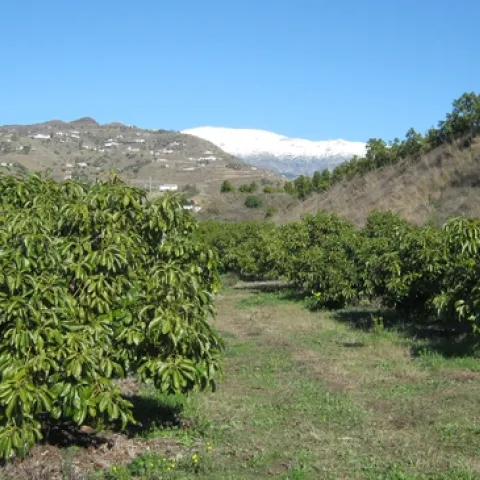
avocado irrigation
Topics in Subtropics: Article

Microirrigation, Fertilizers and Clogging

June 21, 2013
By Ben A Faber
Microirrigation (drip, microsprinkler, fan jet) applies water through small openings and can easily be prone to clogging. For this reason, filtration is used to avoid introducing sediments into the system and all fertilizers are injected before the filters to avoid their clogging the system.
View Article
Primary Image
Honey bee packing white pollen. (Photo by Kathy Keatley Garvey)

Digging the Flowering Artichokes

June 20, 2013
By Kathy Keatley Garvey
What's better than a bee threading through a flowering artichoke? Two bees, a honey bee and a long-horned sunflower bee. Flowering 'chokes are big draws for bees. Plant 'em, let 'em flower, and they will come. Sometimes in droves. Sometimes in diversity. Always amazing.
View Article
Primary Image
Colony collapse disorder--the bee antenna tells it all. (Photo by Kathy Keatley Garvey)

Blossom Buddies

June 19, 2013
By Kathy Keatley Garvey
Honey bees are in trouble. They are dying in record numbers. That's why you should watch "Blossom Buddies," a two-part video segment in the Growing California series, produced by the California Department of Food and Agriculture in partnership with California Grown.
View Article
Primary Image
Newly emerged green bottle fly nectaring on lavender. (Photo by Kathy Keatley Garvey)

A Newly Emerged Green Bottle Fly

June 18, 2013
By Kathy Keatley Garvey
Flies are pollinators, too. It's appropriate during National Pollinator Week to remember that. We spotted this newly emerged green bottle fly (below) nectaring on lavender last week in our yard. It seemed out of place among the honey bees, leafcutter bees and carpenter bees working the blossoms.
View Article
UC Weed Science (weed control, management, ecology, and minutia): Article

Tomatoes, viruses, winds and weeds

June 18, 2013
According to a previous ANR blog post, the 2013 processing tomato crop in California is experiencing worse-than-usual curly top problems, which is caused by a complex of Beet Curly Top Viruses (BCTVs) (Processing tomatoes face critical threat: curly top).
View Article
Primary Image
Male long-horned bee, genus Melissodes, probably Melissodes communis, as identified by Robbin Thorp. It is on salvia (sage). (Photo by Kathy Keatley Garvey)

Long-Horned Bee

June 17, 2013
By Kathy Keatley Garvey
We have long-horned cattle and long-horned grasshoppers.
View Article
Primary Image
A katydid, or "long-horned grasshopper," from family Tettigonliidae. (Photo by Kathy Keatley Garvey)

Hop to It!

June 14, 2013
By Kathy Keatley Garvey
What's that hopping on our patio? At first we thought it was a grasshopper.
View Article