A Natural Solution for California's Herds: African Catfish Peptides

California's cattle producers and agricultural communities are all too familiar with the rising challenge of antibiotic resistance, making common bacterial infections harder to treat in livestock. But imagine a future where we could tackle these infections with a natural, powerful alternative. Our research points to just that: antimicrobial peptides (AMPs) found in African catfish.

We're really excited about these peptides because African catfish thrive in pathogen-rich freshwater, naturally producing these robust immune compounds in their skin mucus as a defense. This natural origin makes them highly appealing alternatives to synthetic drugs.

Predicted Safety and Potent Action

One of the most compelling aspects of these AMPs is their predicted safety for mammals. Our initial computer analyses suggest that various catfish AMPs are generally recognized as safe (GRAS). We predict they'll be absorbed in the human intestine without causing liver, brain, or heart toxicity. Furthermore, lab tests on a promising peptide, NACAP-II, confirmed it was non-hemolytic, meaning it didn't damage rabbit red blood cells—a strong indicator of its potential safety for mammalian cells.

Beyond safety, these peptides demonstrate effectiveness against problematic bacteria. One study revealed NACAP-II's strong activity against Extended-Spectrum Beta-Lactamase (ESBL)-producing Escherichia coli—a critical concern for both animal and human health due to its resistance to many common antibiotics. Another peptide, ACAP-IV, also showed antibacterial activity against E. coli and Staphylococcus aureus. We believe these AMPs work by directly disrupting bacterial cell membranes, a mechanism that makes it harder for bacteria to develop resistance compared to how they resist traditional antibiotics.

Nature's Creatures, Nature's Features

June 22, 2010
By Kathy Keatley Garvey
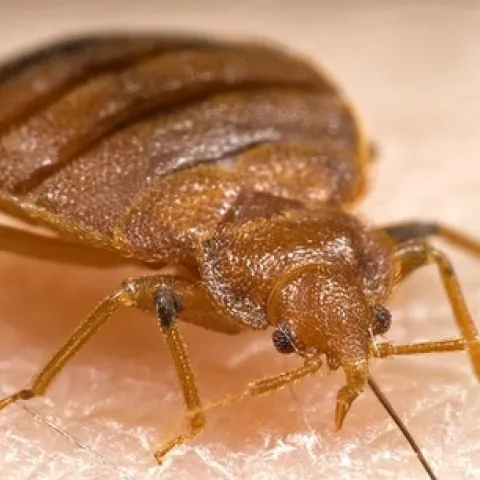
Nature's creatures are nature's features at the Solano County Fair, Vallejo, being held Wednesday, June 23 through Sunday, June 27. Creative exhibitors, in a "this-bug's-for-you" mood, transformed butterflies, ladybugs and bumble bees into arts and crafts projects being displayed in McCormack Hall.
View Article

Not Today

June 21, 2010
By Kathy Keatley Garvey
Not today. Bank robbers rob banks because that's where the money is. Spiders lurk in flowers because that's where the insects are. Whether they spin a sticky web, ambush their prey or just outrun or outmaneuver insects, spiders are there. Waiting.
View Article

Preserving and Protecting Our Pollinators

June 18, 2010
By Kathy Keatley Garvey
You'll be hearing more about the CP2C. What's that? The first-ever Congressional Pollinator Protection Caucus. In keeping with 4th Annual National Pollinator Week, June 21-27, the Pollinator Partnership announced today that both parties of the U.S.
View Article

WAS-Up? A Honey Bee Conference

June 17, 2010
By Kathy Keatley Garvey
WAS-Up? The Western Apicultural Society's annual conference. Two bee specialists at the University of California, Davis, will be among the speakers when the Western Apicultural Society (WAS) meets Aug. 30-Sept. 2 in Salem, Ore.
View Article

Polyester Bee

June 16, 2010
By Kathy Keatley Garvey
Ever heard of a polyester bee? We encountered a plasterer or "polyester" bee on a recent trip to Bodega Bay.
View Article

Eager for Escallonia

June 15, 2010
By Kathy Keatley Garvey
Three little words can help us determine what to plant in a bee friendly garden: "attractive to bees." Escallonia, a fast-growing evergreen shrub often planted as a hedge or screen, is indeed attractive to bees. Bees work the blossoms like there's no tomorrow--and no colony collapse disorder.
View Article

'The Ladybug Shrub'

June 14, 2010
By Kathy Keatley Garvey
Our Artemisia, a silvery-leafed shrub bordering our bee friendly garden, looks quite orange and black these days. It's not for lack of water or some exotic disease. It's the ladybug (aka lady beetle) population. If you look closely, you'll see eggs, larvae and pupae and the adults.
View Article

Acrobatic Bees

June 11, 2010
By Kathy Keatley Garvey
Talk about agility. When you watch a honey bee foraging, it's a lesson in aerial acrobatics. She glides to her target flower, touching down gracefully and accurately. As she gathers nectar, she's vertical, horizontal, upside down and right side up again.
View Article

Everybody Out of the Pool

June 10, 2010
By Kathy Keatley Garvey
It's raining bumble bees in our pool. Yellow-faced bumble bees (Bombus vosnesenskii). And honey bees (Apis mellifera), too. While nectaring lavender, catmint, tower of jewels, sedum and other plants, some of the foragers land in our pool. Talk about no depth perception.
View Article

The Ladybug and the Bee

June 9, 2010
By Kathy Keatley Garvey
It's not often you see a ladybug and a honey bee sharing the same plant. The ladybug, a predator in disguise, devours aphids like a kid does M&Ms. The honey bee, all buzziness, works furiously to collect nectar or pollen for her hive. Sometimes a lavender patch can bring them together.
View Article