A Natural Solution for California's Herds: African Catfish Peptides

California's cattle producers and agricultural communities are all too familiar with the rising challenge of antibiotic resistance, making common bacterial infections harder to treat in livestock. But imagine a future where we could tackle these infections with a natural, powerful alternative. Our research points to just that: antimicrobial peptides (AMPs) found in African catfish.

We're really excited about these peptides because African catfish thrive in pathogen-rich freshwater, naturally producing these robust immune compounds in their skin mucus as a defense. This natural origin makes them highly appealing alternatives to synthetic drugs.

Predicted Safety and Potent Action

One of the most compelling aspects of these AMPs is their predicted safety for mammals. Our initial computer analyses suggest that various catfish AMPs are generally recognized as safe (GRAS). We predict they'll be absorbed in the human intestine without causing liver, brain, or heart toxicity. Furthermore, lab tests on a promising peptide, NACAP-II, confirmed it was non-hemolytic, meaning it didn't damage rabbit red blood cells—a strong indicator of its potential safety for mammalian cells.

Beyond safety, these peptides demonstrate effectiveness against problematic bacteria. One study revealed NACAP-II's strong activity against Extended-Spectrum Beta-Lactamase (ESBL)-producing Escherichia coli—a critical concern for both animal and human health due to its resistance to many common antibiotics. Another peptide, ACAP-IV, also showed antibacterial activity against E. coli and Staphylococcus aureus. We believe these AMPs work by directly disrupting bacterial cell membranes, a mechanism that makes it harder for bacteria to develop resistance compared to how they resist traditional antibiotics.
Primary Image
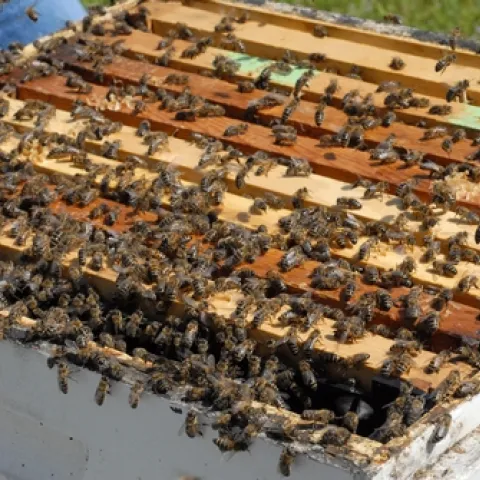
Picture-winged fly (Ceroxys latiusculus) (Photo by Kathy Keatley Garvey)

Tracking the Picture-Winged Fly

March 8, 2010
By Kathy Keatley Garvey
Honey bees, bumble bees, hover flies, parasitoids and common houseflies aren't the only visitors paying their respects to our two nectarine trees. A picture-winged fly (Ceroxys latiusculus) dropped in on Feb. 28 for a quick visit.
View Article
Primary Image
BLACK-FACED BUMBLE BEE (Bombus californicus) gathering pollen in a California poppy. (Photo by Kathy Keatley Garvey)

Saving the Native Bees in Yolo County

March 5, 2010
By Kathy Keatley Garvey
Xerces Society scientists just developed a first-of-its-kind conservation strategy summarizing the threats facing native bees in the diverse landscapes of Yolo County and identifying measures to protect them. And what a great conservation--and conservation--piece this is.
View Article
Primary Image
THIS COLLECTION of bees, by native pollinator specialist Robbin Thorp, shows the wide diversity of bees in Yolo County. (Photo by Kathy Keatley Garvey)

So Many Bees

March 3, 2010
By Kathy Keatley Garvey
Folks accustomed to seeing only honey bees (which are non-natives) buzzing around their yard probably aren't aware that in the United States alone there are some 4000 identified species of native bees. And they probably aren't aware of The Bee Course.
View Article
Primary Image
HONEY BEE nectaring nectarine blossoms. (Photo by Kathy Keatley Garvey)

In the Pink

March 2, 2010
By Kathy Keatley Garvey
It's a peach of a tree, but it isn't a peach. It's a nectarine, a close variety of the peach--the result of a genetic mutation. In between the rain storms, honey bees are nectaring the nectarines and packing pollen, getting ready for the spring hive build-ups.
View Article
Primary Image
ICELAND POPPIES provide color to the backdrop of the old Town Hall in Vacaville, Calif. (Photo by Kathy Keatley Garvey)

Town Hall meeting

March 1, 2010
By Kathy Keatley Garvey
The old Town Hall off Main Street, Vacaville, Calif., is the perfect backdrop for Iceland poppies (Papaver nudicaule) thriving in planters. The Iceland poppies, sometimes called arctic poppies, are native to northern Europe and North America. "Papaver" is the Greek word for "poppy.
View Article
Primary Image
HONEY BEE heads for a Teucrium frutican "Azureum"--also known as a blue bush germander. Note the ant in the middle. (Photo by Kathy Keatley Garvey)

Bee Bliss

February 26, 2010
By Kathy Keatley Garvey
It didn't take long. Last year at this time the field next to the Harry H. Laidlaw Jr. Honey Bee Research Facility on Bee Biology Road at the University of California, Davis stood bleak and barren. Nothing there but scattered patches of grass and a few pocket gophers and ground squirrels.
View Article
Primary Image
HONEY BEE in flight at the Harry H. Laidlaw Jr. Honey Bee Research Facility at the University of California, Davis. Scientists say the bee is more fuel efficient than even the most fuel-efficient car; the bee can get nearly 5 million miles to the gallon. (Photo by Kathy Keatley Garvey)

Fuels Rush In

February 25, 2010
By Kathy Keatley Garvey
How fuelish is the honey bee? Is it as fuel-efficient as say, the new Volkswagen that gets an estimated 170 miles per gallon, more MPG than any other vehicle? National Public Radio recently posted an interesting article on its Web site comparing the VW with the HB (the honey bee, Apis mellifera).
View Article
Primary Image
APICULTURIST ERIC MUSSEN stands amid the almond blossoms at the Harry H. Laidlaw Jr. Honey Bee Research Facility at UC Davis. He is the 2010 winner of the statewide Pedro Ilic Outstanding Agriculture Educator. (Photo by Kathy Keatley Garvey)

An A-Plus for "The B Guy"

February 24, 2010
By Kathy Keatley Garvey
Eric Mussen is used to fielding questions about honey bees--how and why they gather nectar, honey, propolis and water; how many eggs a queen bee can lay in a day; and why beekeeper use smokers.
View Article