A Natural Solution for California's Herds: African Catfish Peptides

California's cattle producers and agricultural communities are all too familiar with the rising challenge of antibiotic resistance, making common bacterial infections harder to treat in livestock. But imagine a future where we could tackle these infections with a natural, powerful alternative. Our research points to just that: antimicrobial peptides (AMPs) found in African catfish.

We're really excited about these peptides because African catfish thrive in pathogen-rich freshwater, naturally producing these robust immune compounds in their skin mucus as a defense. This natural origin makes them highly appealing alternatives to synthetic drugs.

Predicted Safety and Potent Action

One of the most compelling aspects of these AMPs is their predicted safety for mammals. Our initial computer analyses suggest that various catfish AMPs are generally recognized as safe (GRAS). We predict they'll be absorbed in the human intestine without causing liver, brain, or heart toxicity. Furthermore, lab tests on a promising peptide, NACAP-II, confirmed it was non-hemolytic, meaning it didn't damage rabbit red blood cells—a strong indicator of its potential safety for mammalian cells.

Beyond safety, these peptides demonstrate effectiveness against problematic bacteria. One study revealed NACAP-II's strong activity against Extended-Spectrum Beta-Lactamase (ESBL)-producing Escherichia coli—a critical concern for both animal and human health due to its resistance to many common antibiotics. Another peptide, ACAP-IV, also showed antibacterial activity against E. coli and Staphylococcus aureus. We believe these AMPs work by directly disrupting bacterial cell membranes, a mechanism that makes it harder for bacteria to develop resistance compared to how they resist traditional antibiotics.
Primary Image
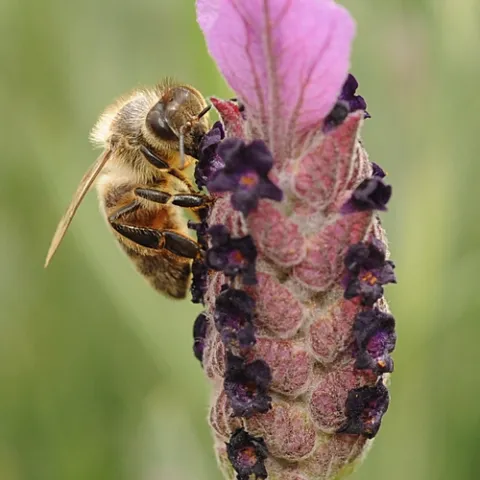
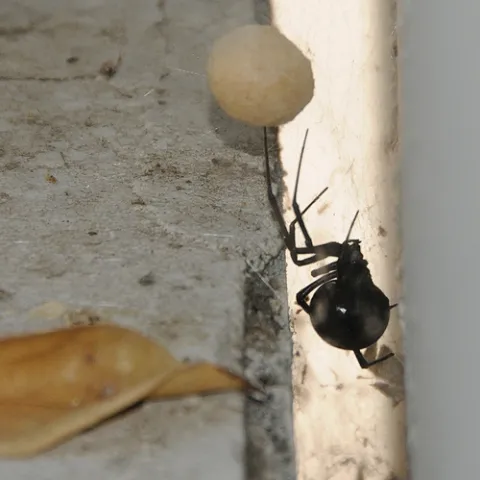
WHAT'S WRONG with this photo? For the answer, read the text above. (Photo by Kathy Keatley Garvey)
Bug Squad: Article

What's Wrong With This Photo?

March 12, 2010
By Kathy Keatley Garvey
Take a close look. What's wrong with the first photo posted below this blog? If you're a beekeeper or someone who's been around bees, you'll know immediately. If not, you may look at the photo and say "Hmm, a honey bee. Yep, it's a honey bee, all right. It's on a what...
View Article
Primary Image
THIS KELLY GREEN walking stick is the impetus behind the Bohart Museum's special theme, "What Has Six Legs and Is Green All Over?" The Bohart will focus on what's green from 1 to 5 p.m., Sunday, March 21 in a special St. Paddy's Day theme. (Photo by Kathy Keatley Garvey)
Bug Squad: Article

Going Green

March 11, 2010
By Kathy Keatley Garvey
What has six legs and is green all over? If you think like an entomologist, that's easy. Walking sticks, walking leaves, mantids, crickets and grasshoppers...
View Article
Primary Image
HONEY BEE, packing red pollen from nearby rock purslane blossoms, nectars lavender. (Photo by Kathy Keatley Garvey)
Bug Squad: Article

Benefit for the Bees

March 10, 2010
By Kathy Keatley Garvey
First question: Concerned about the declining bee population and deteriorating bee health? Second question: Like to paint, draw, sculpt or photograph honey bees? Or craft bee jewelry? Or use another art medium?
View Article
Primary Image
MOSQUITO RESEARCHER Tara Thiemann, a doctoral candidate, UC Davis Department of Entomology, is the recipient of the William C. Reeves New Investigator Award. (Photo by Kathy Keatley Garvey)
Bug Squad: Article

New Breed of Scientists

March 9, 2010
By Kathy Keatley Garvey
William C. Reeves (1916-2004) would have been proud. Remember William "Bill" Reeves? A renowned entomologist, professor and dean at UC Berkeley, he was widely regarded as the world's foremost authority on the spread and control of mosquito-borne diseases.
View Article
Colusa County: Article

March 2010

March 8, 2010
2009 rice variety trial results, red rice update, rice water weevil distribution in California rice fields.
View Article
Primary Image
Picture-winged fly (Ceroxys latiusculus) (Photo by Kathy Keatley Garvey)
Bug Squad: Article

Tracking the Picture-Winged Fly

March 8, 2010
By Kathy Keatley Garvey
Honey bees, bumble bees, hover flies, parasitoids and common houseflies aren't the only visitors paying their respects to our two nectarine trees. A picture-winged fly (Ceroxys latiusculus) dropped in on Feb. 28 for a quick visit.
View Article
Primary Image
BLACK-FACED BUMBLE BEE (Bombus californicus) gathering pollen in a California poppy. (Photo by Kathy Keatley Garvey)
Bug Squad: Article

Saving the Native Bees in Yolo County

March 5, 2010
By Kathy Keatley Garvey
Xerces Society scientists just developed a first-of-its-kind conservation strategy summarizing the threats facing native bees in the diverse landscapes of Yolo County and identifying measures to protect them. And what a great conservation--and conservation--piece this is.
View Article
Primary Image
THIS COLLECTION of bees, by native pollinator specialist Robbin Thorp, shows the wide diversity of bees in Yolo County. (Photo by Kathy Keatley Garvey)
Bug Squad: Article

So Many Bees

March 3, 2010
By Kathy Keatley Garvey
Folks accustomed to seeing only honey bees (which are non-natives) buzzing around their yard probably aren't aware that in the United States alone there are some 4000 identified species of native bees. And they probably aren't aware of The Bee Course.
View Article
Primary Image
HONEY BEE nectaring nectarine blossoms. (Photo by Kathy Keatley Garvey)
Bug Squad: Article

In the Pink

March 2, 2010
By Kathy Keatley Garvey
It's a peach of a tree, but it isn't a peach. It's a nectarine, a close variety of the peach--the result of a genetic mutation. In between the rain storms, honey bees are nectaring the nectarines and packing pollen, getting ready for the spring hive build-ups.
View Article