A Natural Solution for California's Herds: African Catfish Peptides

California's cattle producers and agricultural communities are all too familiar with the rising challenge of antibiotic resistance, making common bacterial infections harder to treat in livestock. But imagine a future where we could tackle these infections with a natural, powerful alternative. Our research points to just that: antimicrobial peptides (AMPs) found in African catfish.

We're really excited about these peptides because African catfish thrive in pathogen-rich freshwater, naturally producing these robust immune compounds in their skin mucus as a defense. This natural origin makes them highly appealing alternatives to synthetic drugs.

Predicted Safety and Potent Action

One of the most compelling aspects of these AMPs is their predicted safety for mammals. Our initial computer analyses suggest that various catfish AMPs are generally recognized as safe (GRAS). We predict they'll be absorbed in the human intestine without causing liver, brain, or heart toxicity. Furthermore, lab tests on a promising peptide, NACAP-II, confirmed it was non-hemolytic, meaning it didn't damage rabbit red blood cells—a strong indicator of its potential safety for mammalian cells.

Beyond safety, these peptides demonstrate effectiveness against problematic bacteria. One study revealed NACAP-II's strong activity against Extended-Spectrum Beta-Lactamase (ESBL)-producing Escherichia coli—a critical concern for both animal and human health due to its resistance to many common antibiotics. Another peptide, ACAP-IV, also showed antibacterial activity against E. coli and Staphylococcus aureus. We believe these AMPs work by directly disrupting bacterial cell membranes, a mechanism that makes it harder for bacteria to develop resistance compared to how they resist traditional antibiotics.

From New Guinea to UC Davis

April 27, 2010
By Kathy Keatley Garvey
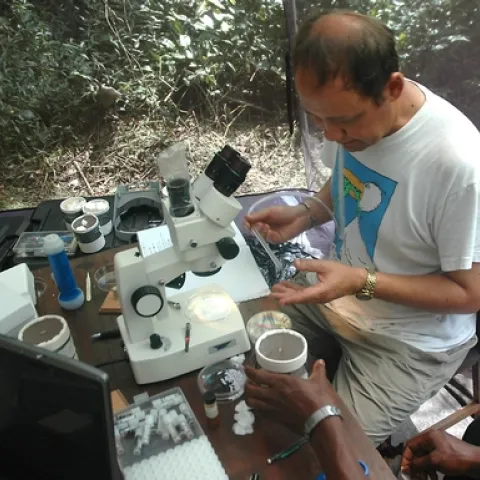
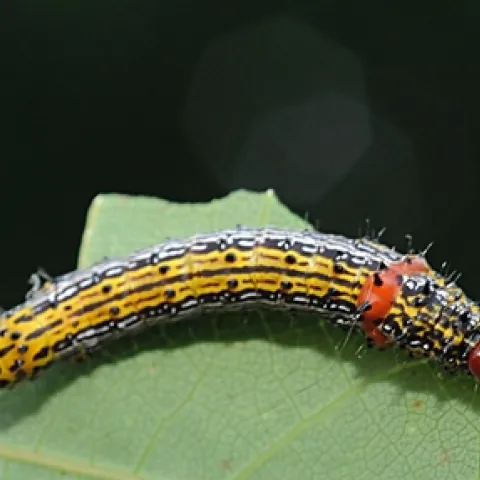
A lecture that UC Davis entomologists and friends of entomology are eagerly looking forward to will take place at noon tomorrow (Wednesday, April 28) in 122 Briggs Hall, Kleiber Drive.
View Article
Colusa County: Article

April 2010

April 27, 2010
Pre-plant nitrogen starter application, nitrogen and early drains, managing late planted rice, early season rice diseases.
View Article
Primary Image
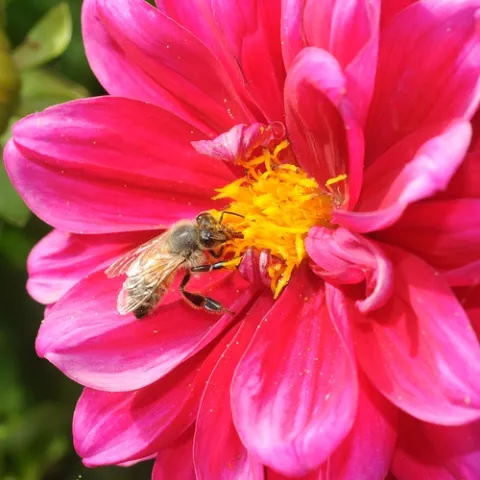
HONEY BEE zeroes in on a ruby-red blossom. (Copyrighted Photo by Kathy Keatley Garvey)
Bug Squad: Article

The Tower of Bees

April 26, 2010
By Kathy Keatley Garvey
"The tower of jewels" ought to be called "the tower of bees." This spectacular plant attracts bees like a honey-laden hive does hungry bears. The tower of jewels (Echium wildprettii), native to the Canary Islands, is a biennal; it flowers only in the second year and then dies.
View Article
Bug Squad: Article

Poster Child

April 23, 2010
By Kathy Keatley Garvey
It's amazing what a little Photoshopping can do to a bee on blue. We captured an image this week of a pollen-packing honey bee on Phacelia campanularia, also known as California blue bells or desert blue bells. It's a deep inky-blue wildflower that's native to southwestern deserts of California.
View Article
Colusa County: Article

May 2010

April 23, 2010
Fair Help Needed, Camp Tehama Application, Record Book Help...
View Article
Bug Squad: Article

Art Friendly, Bee Friendly, People Friendly

April 22, 2010
By Kathy Keatley Garvey
The half-acre garden, the Hagen-Dazs Honey Bee Haven planted last fall at the Harry H. Laidlaw Jr. Honey Bee Research Facility at the University of California, Davis, is not only bee friendly but it will be art friendly.
View Article
Bug Squad: Article

Pollen Power

April 21, 2010
By Kathy Keatley Garvey
Talk about pollen power. When honey bees forage among the birds eyes, they're a delight to see. They dive into the yellow-throated lavender flowers and emerge covered with a blue-gray pollen.
View Article
Primary Image
GIGANTIC ARTICHOKE PLANTS fill one of the planters at the Häagen-Dazs Honey Bee Haven. (Photo by Kathy Keatley Garvey)
Bug Squad: Article

Bee Connected: Save the Date

April 20, 2010
By Kathy Keatley Garvey
Bee connected; save the date. The grand opening of the half-acre Hagen-Dazs Honey Bee Haven at the Harry H. Laidlaw Jr. Honey Bee Research Facility at the University of California, Davis is scheduled for Saturday, Sept. 11. The honey bees already know it's there.
View Article
Primary Image
QUEEN BUMBLE BEE, a yellow-faced bumble bee (Bombus vosnesenskii) heads down the tower of jewels. (Photo by Kathy Keatley Garvey)
Bug Squad: Article

What a Show!

April 19, 2010
By Kathy Keatley Garvey
Everybody loves a bumble bee. Especially the yellow-faced bumble bee, Bombus vosnesenskii. And especially a queen.
View Article
Primary Image
A YOUNG ITALIAN honey bee nectaring lavender on the UC Davis campus. (Photo by Kathy Keatley Garvey)
Bug Squad: Article

If You Cotton to Honey...

April 16, 2010
By Kathy Keatley Garvey
If you cotton to honey, you'll want to head over to Briggs Hall tomorrow (Saturday, April 17) during the 96th annual UC Davis Picnic Day. You can sample cotton honey, as well as five other flavors, from 11 a.m. to 4 p.m.
View Article