A Natural Solution for California's Herds: African Catfish Peptides

California's cattle producers and agricultural communities are all too familiar with the rising challenge of antibiotic resistance, making common bacterial infections harder to treat in livestock. But imagine a future where we could tackle these infections with a natural, powerful alternative. Our research points to just that: antimicrobial peptides (AMPs) found in African catfish.

We're really excited about these peptides because African catfish thrive in pathogen-rich freshwater, naturally producing these robust immune compounds in their skin mucus as a defense. This natural origin makes them highly appealing alternatives to synthetic drugs.

Predicted Safety and Potent Action

One of the most compelling aspects of these AMPs is their predicted safety for mammals. Our initial computer analyses suggest that various catfish AMPs are generally recognized as safe (GRAS). We predict they'll be absorbed in the human intestine without causing liver, brain, or heart toxicity. Furthermore, lab tests on a promising peptide, NACAP-II, confirmed it was non-hemolytic, meaning it didn't damage rabbit red blood cells—a strong indicator of its potential safety for mammalian cells.

Beyond safety, these peptides demonstrate effectiveness against problematic bacteria. One study revealed NACAP-II's strong activity against Extended-Spectrum Beta-Lactamase (ESBL)-producing Escherichia coli—a critical concern for both animal and human health due to its resistance to many common antibiotics. Another peptide, ACAP-IV, also showed antibacterial activity against E. coli and Staphylococcus aureus. We believe these AMPs work by directly disrupting bacterial cell membranes, a mechanism that makes it harder for bacteria to develop resistance compared to how they resist traditional antibiotics.
UC Master Gardeners of El Dorado County: Event

Central Sierra: Fall Into Gardening

Event Date
Oct 4, 2025

10-Year Anniversary Celebration Fall into Gardening with the Master Gardeners at their beautiful Sherwood Demonstration Garden located in Placerville. Visitors can come for one class or stay all day. There will also be activities for kids, community booths, a delicious food truck and UCCE programs…
UC Master Gardeners of El Dorado County
View Event
UC Oaks: Article

Tax Incentives Encourage Open Space Conservation

September 8, 2025
By Michael Jones
by Richard StandifordQuercus – Volume 2, Issue 1 – March, 1995This information may be out of date.Residential and commercial development is the leading cause of conversion of oak woodlands over a relatively large area of the state. Oak woodlands have the highest biological diversity of any major habitat type…
View Article
UC Oaks: Article

A Potential New Profit From Oak Woodlands

September 8, 2025
By Michael Jones
by Mo-Mei ChenOaks ’n Folks – Volume 8, Issue 2 – November 1993IntroductionIn California, a variety of mushrooms have become increasingly popular. Because mushrooms grow well in oak woodland habitat, commercial mushroom production offers a profit potential for oak woodland owners. Woodland owners can also…
View Article
UC Oaks: Article

A Dynamic Ranch Model of Hardwood Rangeland

September 8, 2025
By Michael Jones
by Richard Howitt and Richard StandifordA study was started in 1987 to develop a dynamic model of hardwood rangeland management activities using the best available biological and economic data. Firewood production, livestock production, and commercial hunting were incorporated into a multi-product objective…
View Article
UC Oaks: Article

Blue Oaks: Forage Production and Quality

September 8, 2025
By Michael Jones
by Neil K. McDougald and William FrostOaks ’n Folks – Volume 6, Issue 1 – April 1991What is the value of blue oaks in terms of forage production?The value of blue oaks in terms of forage production has long been debated. In northern California blue oaks have been shown to decrease total forage production as…
View Article
Nutrition Policy Institute News: Article

Benefits of School Meals for All policies highlighted in California School Boards Association’s California Schools magazine

September 8, 2025
By Danielle Lee, Wendi Gosliner
Nutrition Policy Institute School Meals for All research was featured in a guest article in the summer issue of the California School Boards Association’s quarterly magazine, California Schools. The article highlights California’s School Meals for All policy, also known as universal school meals,…
View Article
Primary Image
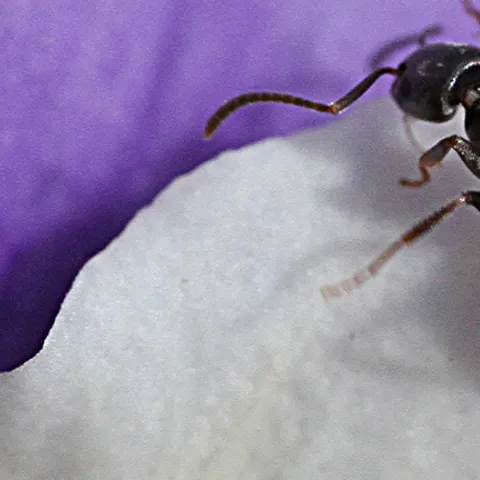
Tapinoma sessile, also known as the odorous house ant. It is a very common species, but tends to be pushed aside by the introduced Argentine ant, according to UC Davis ant specialist Phil Ward

Got an Ant Question?

September 8, 2025
By Kathy Keatley Garvey
 Got an ant question?Professor Phil Ward, a myrmecologist or ant scientist with the UC Davis Department of Entomology and Nematology, will be featured at the Davis Science Café on Wednesday, Sept. 10. Billed as "A Conversation with Professor Phil Ward," the event begins at 5:30 p.m. in the G Street…
View Article
UC Oaks: Article

The Role of Fire in California’s Oak Woodlands

September 8, 2025
By Michael Jones
by Richard StandifordOaks ’n Folks – Volume 9, Issue 2 – September 1994IntroductionFire is a natural part of California’s oak woodland ecosystem. It has also served as an important management tool since Native Americans first inhabited these areas. Fire plays a role in the development of oak woodland stand…
View Article
UC Oaks: Article

Protecting Homes from Wildfire in Oak Woodlands

September 8, 2025
By Michael Jones
by Richard StandifordOaks ’n Folks – Volume 7, Issue 2 – September 1992IntroductionUrbanization in California’s oak woodlands is taking place at unprecedented rates. Areas that were previously extensively managed for livestock production, with only a few homes spread out over thousands of acres, now contain…
View Article