A Natural Solution for California's Herds: African Catfish Peptides

California's cattle producers and agricultural communities are all too familiar with the rising challenge of antibiotic resistance, making common bacterial infections harder to treat in livestock. But imagine a future where we could tackle these infections with a natural, powerful alternative. Our research points to just that: antimicrobial peptides (AMPs) found in African catfish.

We're really excited about these peptides because African catfish thrive in pathogen-rich freshwater, naturally producing these robust immune compounds in their skin mucus as a defense. This natural origin makes them highly appealing alternatives to synthetic drugs.

Predicted Safety and Potent Action

One of the most compelling aspects of these AMPs is their predicted safety for mammals. Our initial computer analyses suggest that various catfish AMPs are generally recognized as safe (GRAS). We predict they'll be absorbed in the human intestine without causing liver, brain, or heart toxicity. Furthermore, lab tests on a promising peptide, NACAP-II, confirmed it was non-hemolytic, meaning it didn't damage rabbit red blood cells—a strong indicator of its potential safety for mammalian cells.

Beyond safety, these peptides demonstrate effectiveness against problematic bacteria. One study revealed NACAP-II's strong activity against Extended-Spectrum Beta-Lactamase (ESBL)-producing Escherichia coli—a critical concern for both animal and human health due to its resistance to many common antibiotics. Another peptide, ACAP-IV, also showed antibacterial activity against E. coli and Staphylococcus aureus. We believe these AMPs work by directly disrupting bacterial cell membranes, a mechanism that makes it harder for bacteria to develop resistance compared to how they resist traditional antibiotics.
Event Primary Image
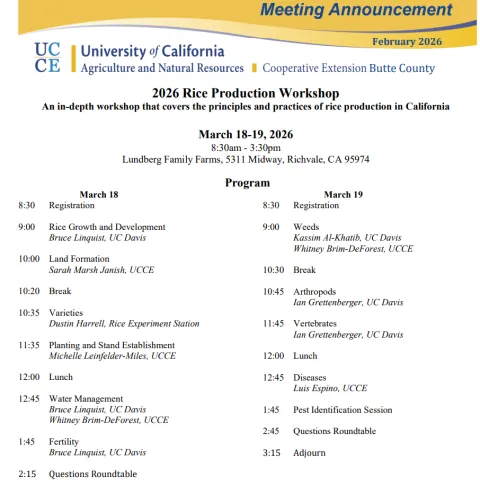
2026 Rice Production Workshop
Colusa County: Event

Rice Production Workshop

Event Date
Mar 18, 2026

An in-depth workshop that covers the principles and practices of rice production in California. Applied for DPR and CCA CE credits. March 18 8:30 Registration 9:00 Rice Growth and Development Bruce Linquist, UC Davis 10:00 Land Formation Sarah Marsh Janish, UCCE 10:20 Break 10…
Colusa County
View Event
Event Primary Image
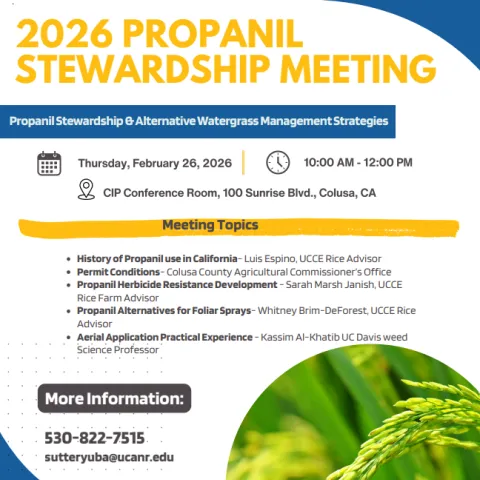
2026 Propanil Stewardship Meeting Announcement
Colusa County: Event

Propanil Stewardship Meeting

Event Date
Feb 26, 2026

Propanil Stewardship & Alternative Watergrass Management StrategiesHistory of Propanil Use in California- Luis Espino, UCCE Rice AdvisorPermit Conditions- Colusa County Agricultural Commissioner’s OfficePropanil Herbicide Resistance Development - Sarah Marsh Janish, UCCE Rice Farm AdvisorPropanil…
Colusa County
View Event
Event Primary Image
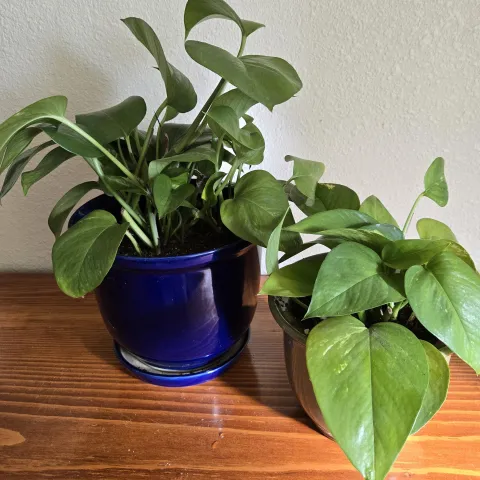
Pothos may be toxic to kids, cats and dogs
UC Master Gardener Program of Yolo County: Event

Toxic & Non-Toxic Houseplants for Pets and Kids

Event Date
Feb 13, 2026

Gardening Adventures Program at Woodland Senior Center will present Toxic & Non-Toxic Houseplants for Pets and Kids by UC Master Gardeners of Yolo County.   Classes are limited to 25 participants. Programs are free but sign ups are required by calling Woodland Community and Senior Center…
UC Master Gardener Program of Yolo County
View Event
Event Primary Image
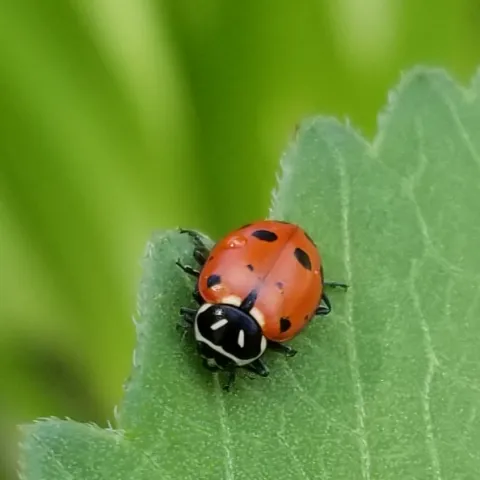
convergent lady beetle
UC Master Gardener Program of Yolo County: Event

UC Master Gardener Spring Plant Sale

Event Date
Apr 11, 2026

Drought-tolerant ornamentals will be available, including California natives, pollinator-friendly perennials and annuals that attract hummingbirds, butterflies, and bees, along with tomato plants (including heirloom varieties).Pricing: quart-size pots $5, annuals $3, and 4-inch tomato pots $4 (plus tax where…
UC Master Gardener Program of Yolo County
View Event
Event Primary Image
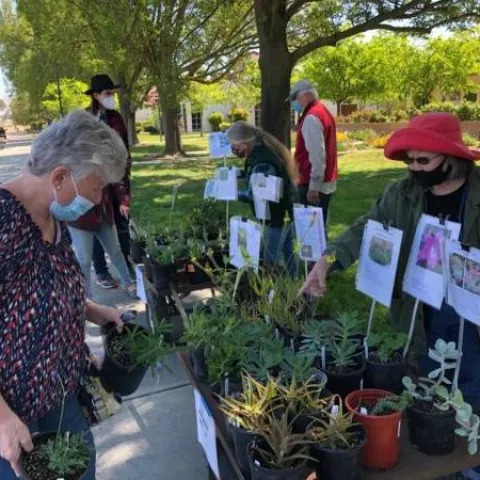
WCC Plant Sale
UC Master Gardener Program of Yolo County: Event

UC Master Gardener Spring Plant Sale

Event Date
Apr 4, 2026

Drought-tolerant ornamentals will be available, including California natives, pollinator-friendly perennials and annuals that attract hummingbirds, butterflies, and bees, along with tomato plants (including heirloom varieties).  Pricing: quart-size pots $5, annuals $3, and 4-inch tomato pots $4 (plus…
UC Master Gardener Program of Yolo County
View Event
Primary Image
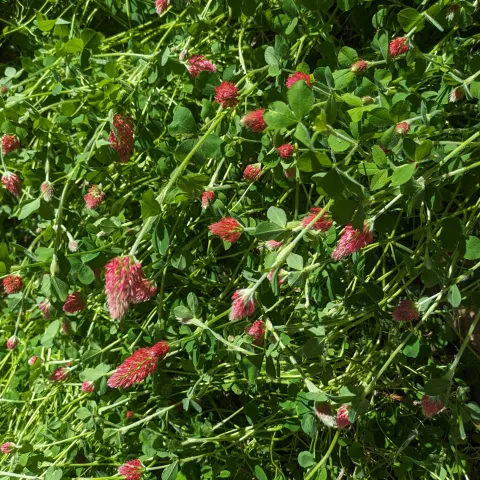
closeup view of crimson clover flowers and foliage
Under the Solano Sun: Article

Crimson Clover

February 4, 2026
By Jennifer M Baumbach
Blog by Nanelle Jones-Sullivan I use Crimson Clover (Trifolium incarnatum), a cool-season annual legume, as a winter cover crop. It is an attractive way to reduce soil erosion, suppress weeds and add nitrogen, and build organic matter in my soil. An important additional benefit is that it attracts…
View Article
Primary Image
WarAgainstWeeds podcast
UC Weed Science (weed control, management, ecology, and minutia): Article

Broomrape podcast interview

February 4, 2026
By Brad Hanson
Some of my weed science extension colleagues in the midwest have a podcast called War Against Weeds  supported with funding from the North Central IPM Center.  I was interviewed on the podcast a few years ago about herbicide resistant weeds in orchards.  Earlier this week, they invited me back…
View Article