A Natural Solution for California's Herds: African Catfish Peptides

California's cattle producers and agricultural communities are all too familiar with the rising challenge of antibiotic resistance, making common bacterial infections harder to treat in livestock. But imagine a future where we could tackle these infections with a natural, powerful alternative. Our research points to just that: antimicrobial peptides (AMPs) found in African catfish.

We're really excited about these peptides because African catfish thrive in pathogen-rich freshwater, naturally producing these robust immune compounds in their skin mucus as a defense. This natural origin makes them highly appealing alternatives to synthetic drugs.

Predicted Safety and Potent Action

One of the most compelling aspects of these AMPs is their predicted safety for mammals. Our initial computer analyses suggest that various catfish AMPs are generally recognized as safe (GRAS). We predict they'll be absorbed in the human intestine without causing liver, brain, or heart toxicity. Furthermore, lab tests on a promising peptide, NACAP-II, confirmed it was non-hemolytic, meaning it didn't damage rabbit red blood cells—a strong indicator of its potential safety for mammalian cells.

Beyond safety, these peptides demonstrate effectiveness against problematic bacteria. One study revealed NACAP-II's strong activity against Extended-Spectrum Beta-Lactamase (ESBL)-producing Escherichia coli—a critical concern for both animal and human health due to its resistance to many common antibiotics. Another peptide, ACAP-IV, also showed antibacterial activity against E. coli and Staphylococcus aureus. We believe these AMPs work by directly disrupting bacterial cell membranes, a mechanism that makes it harder for bacteria to develop resistance compared to how they resist traditional antibiotics.
Event Primary Image
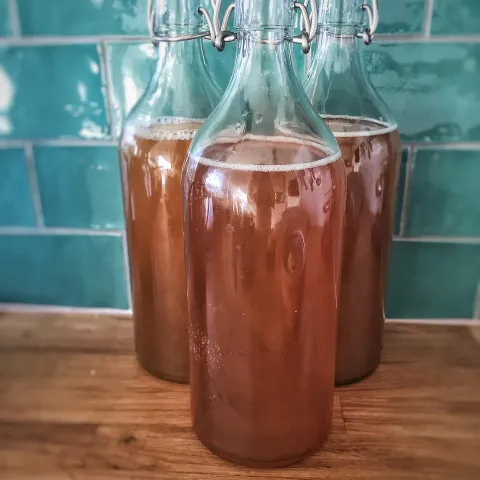
Kombucha - pixabay
UC Master Food Preserver Program of Orange County: Event

Kombucha & Zesty Tomato Salsa

Event Date
Oct 18, 2025

Join OC Master Food Preservers to learn How to make Kombucha … You will take home a living SCOBY in starter tea (ready to start your own batch) You will also prepare and can a Zesty Tomato Salsa to take home.It’s Easy … and lots of fun!$45 class fee covers ingredients, handouts and two canning jars with lids…
UC Master Food Preserver Program of Orange County
View Event
Topics in Subtropics: Article

Fruit Tree Culture Class This Spring

October 7, 2025
By Ben A Faber
Please join us for the 2026 Principles of Fruit and Nut Tree Growth, Cropping, and Management Course. Held March 9th through 13th, 2026, this course teaches the fundamentals of tree biology essential to making sound orchard management and business decisions. Across five days of lecture and in field…
View Article
UC Science Connect: Page

#6 Culturally responsive teaching in Computer Science

Culturally relevant pedagogy recognizes and honors the diverse cultural identities of all learners.What is culturally relevant teaching?Culturally responsive teaching, or culturally relevant pedagogy, uses the cultural knowledge, lived experiences, frames of refences and values of learners, to make the…
View Page
UC Science Connect: Page

#5 Introduction to coding with a microcontroller (using BBC micro:bit)

Hands-on learning with micro:bit, a microcontroller, helps youth understand the power of technology in the real world. The iCode curriculum develops competence in computer science through activities that value individual and family identity, teach social justice, and develop computer science skills and…
View Page
UC Science Connect: Page

#4 Identity and Computer Science

Integrating computer science education with identity development empowers young people to see themselves as coders connected to their cultural heritage. The iCode curriculum makes these connections explicit as facilitators value individual and family identity, teach social justice, and help youth develop…
View Page
UC Science Connect: Page

#3 Introducing block-based coding (Scratch)

The iCode curriculum is designed to empower young people by weaving together experiences that value individual and family identity, teach social justice, and develop computer science skills and mindsets. In block-based coding, computer commands are grouped together in pre-programmed blocks that…
View Page
UC Science Connect: Page

#2 Building relationships and belonging while teaching coding

Every child should have the opportunity to learn computer science.  Coding can be an expression of youth’s identity and their artistic selves. The iCode curriculum develops computational thinking, computer science skills, and career motivations by focusing on identity and cultural heritage.Before they…
View Page
UC Science Connect: Page

#1 Addressing inequity in Computer Science

Social justice youth development fosters critical thinking in young people while encouraging them to act toward achieving an equitable distribution of resources and opportunity for all. The iCode curriculum is designed to empower young people by bringing together critical thinking about social justice with…
View Page
Topics in Subtropics: Article

Cover Crops, Soil Health, Compost Tea, Anyone?

October 7, 2025
By Annemiek M Schilder
Climate-Smart Farming Demonstration Field MeetingWhen:  Tuesday October 21, 2025Time:    9:00 – 11:00 amWhere:  UC Hansen Agricultural Research and Extension Center, 5836 Beardsley Rd, Camarillo, CALearn …
View Article
Fresno County 4-H: Article

October 2025 Newsletter updated

October 7, 2025
By Elizabeth Ramirez
In This Edition…2- Committee & Council Mtgs.2- Water-Wise Event3- Livestock Judging Event3– County Fair Horse Show4- Festive Food Faire4- Livestock Camp4- Calvacade of Pigeons4- Summer Camp– JC5- Livestock Achievement5- Emerald & Impact Stars6- Club Officer Books6- Wanted– Clover Fest6- Gold Seal…
View Article