A Natural Solution for California's Herds: African Catfish Peptides

California's cattle producers and agricultural communities are all too familiar with the rising challenge of antibiotic resistance, making common bacterial infections harder to treat in livestock. But imagine a future where we could tackle these infections with a natural, powerful alternative. Our research points to just that: antimicrobial peptides (AMPs) found in African catfish.

We're really excited about these peptides because African catfish thrive in pathogen-rich freshwater, naturally producing these robust immune compounds in their skin mucus as a defense. This natural origin makes them highly appealing alternatives to synthetic drugs.

Predicted Safety and Potent Action

One of the most compelling aspects of these AMPs is their predicted safety for mammals. Our initial computer analyses suggest that various catfish AMPs are generally recognized as safe (GRAS). We predict they'll be absorbed in the human intestine without causing liver, brain, or heart toxicity. Furthermore, lab tests on a promising peptide, NACAP-II, confirmed it was non-hemolytic, meaning it didn't damage rabbit red blood cells—a strong indicator of its potential safety for mammalian cells.

Beyond safety, these peptides demonstrate effectiveness against problematic bacteria. One study revealed NACAP-II's strong activity against Extended-Spectrum Beta-Lactamase (ESBL)-producing Escherichia coli—a critical concern for both animal and human health due to its resistance to many common antibiotics. Another peptide, ACAP-IV, also showed antibacterial activity against E. coli and Staphylococcus aureus. We believe these AMPs work by directly disrupting bacterial cell membranes, a mechanism that makes it harder for bacteria to develop resistance compared to how they resist traditional antibiotics.

Primary Image
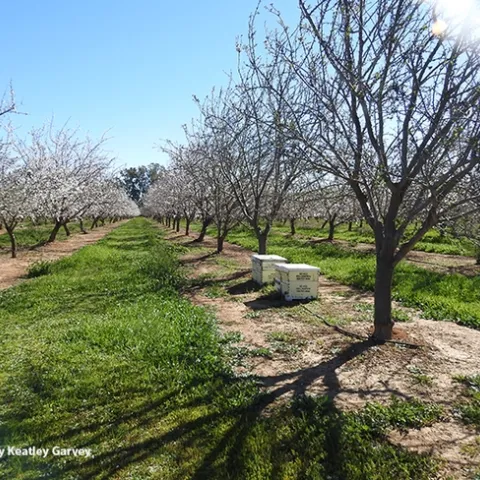
A blue-green stream wends through evergreen trees and low shrubs under a clear blue sky. Stones are visible under the water.
Green Blog: Article

How can California protect its water supply from wildfire?

December 8, 2021
By Pamela S Kan-Rice
Stakeholders from across disciplines and institutions offer recommendations to ensure safe, reliable water supply amid a growing wildfire threat It's intuitive that wildfires can affect ecosystems, harm wildlife and contaminate streams and rivers.
View Article
Primary Image
figs on tree
Topics in Subtropics: Article

Extending Fig Shelf Life

December 8, 2021
By Ben A Faber
Nov 30 Figs, like many other fresh fruit, suffer from postharvest loss due to fungal pathogens and shrivel. Leili Afsah Hejri, a scientist working in food safety, has been examining the use of ozone as a post-harvest treatment for sanitation as well as improving fruit quality.
View Article
Primary Image
The yellow fever mosquito, Aedes aegypti, will be the topic of a UC Davis Department of Entomology and Nematology seminar on Jan. 12. (Photo courtesy of the Center for Disease Control and Prevention)
Bug Squad: Article

Who's Speaking at the UC Davis Entomology/Nematology Seminars?

December 7, 2021
By Kathy Keatley Garvey
Talk about a full schedule! Nematologist Shahid Siddique, assistant professor, UC Davis Department of Entomology and Nematology, not only excels at research, teaching and public service but he serves as the coordinator of the department's weekly seminars for the 2021-22 academic year.
View Article
Primary Image
This is the alfalfa weevil, Hypera postica. Randa Jabbour of the University of Wyoming will discuss her research on the pest at her UC Davis seminar on Jan. 5. (Image courtesy of Wikipedia, AfroBrazilian)
Entomology & Nematology News: Article

Department's Winter Quarter Seminars Announced

December 7, 2021
By Kathy Keatley Garvey
Topics for the winter quarter seminars hosted by the UC Davis Department of Entomology and Nematology range from the alfalfa weevil to the yellow fever mosquito. The seminar series will take place on Wednesdays at 4:10 p.m. in 122 Briggs Hall beginning Jan. 5 and continuing through March 9.
View Article
Primary Image
Smoke bush. (gardeningexpress.co.uk)

Smoke bush.

December 7, 2021
by Penny Pawl, UC Master Gardener of Napa County One of my favorite drought-tolerant plants is the smoke bush (Cotinus coggygria). This wonderful bush is sometimes called smoketree. It is native to southern Europe and temperate parts of Asia.
View Article
Glenn County: Article

December 2021 & January 2022 Glenn County 4-H Roundup Newsletter

December 7, 2021
In this Issue: Coats-4-Kids & Crab Feed Council & Staff Updates 4-H Staff Report County-wide News & Events: Presentation Day Club & Project Info County-wide Project Info Sectional/State News Presentation Form 2021-2022 Adopt-A-Family Flyer 2021 Bowl-A-Thon Flyer & Registration Forms...
View Article