A Natural Solution for California's Herds: African Catfish Peptides

California's cattle producers and agricultural communities are all too familiar with the rising challenge of antibiotic resistance, making common bacterial infections harder to treat in livestock. But imagine a future where we could tackle these infections with a natural, powerful alternative. Our research points to just that: antimicrobial peptides (AMPs) found in African catfish.

We're really excited about these peptides because African catfish thrive in pathogen-rich freshwater, naturally producing these robust immune compounds in their skin mucus as a defense. This natural origin makes them highly appealing alternatives to synthetic drugs.

Predicted Safety and Potent Action

One of the most compelling aspects of these AMPs is their predicted safety for mammals. Our initial computer analyses suggest that various catfish AMPs are generally recognized as safe (GRAS). We predict they'll be absorbed in the human intestine without causing liver, brain, or heart toxicity. Furthermore, lab tests on a promising peptide, NACAP-II, confirmed it was non-hemolytic, meaning it didn't damage rabbit red blood cells—a strong indicator of its potential safety for mammalian cells.

Beyond safety, these peptides demonstrate effectiveness against problematic bacteria. One study revealed NACAP-II's strong activity against Extended-Spectrum Beta-Lactamase (ESBL)-producing Escherichia coli—a critical concern for both animal and human health due to its resistance to many common antibiotics. Another peptide, ACAP-IV, also showed antibacterial activity against E. coli and Staphylococcus aureus. We believe these AMPs work by directly disrupting bacterial cell membranes, a mechanism that makes it harder for bacteria to develop resistance compared to how they resist traditional antibiotics.
Primary Image
Making strawberry jam with pectin helps preserve the bright color. Photo credit: National Center for Home Food Preservation
Food Blog: Article

Pectin is not gelatin

October 13, 2021
By Susan Mosbacher
If you only have time to read this much: pectin is vegan-friendly. I was having lunch at an outdoor venue with a lovely vegetarian friend. When we got around to all things canning, I told her how excited I was to try a sugar-free jam recipe using a particular pectin. "I cannot eat jams with pectin.
View Article
Primary Image
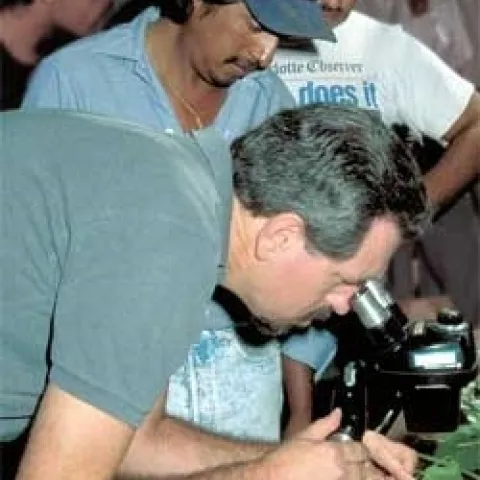
Frank Zalom, shown here by an almond tree, directed the UC Statewide Integrated Pest Management Program for 16 years, 1986-2002. (Photo by Kathy Keatley Garvey)
Entomology & Nematology News: Article

‘Entomological Giant’ Frank Zalom Named ESA Honorary Member

October 13, 2021
By Kathy Keatley Garvey
UC Davis distinguished professor Frank Zalom, a noted integrated pest management (IPM) specialist and a past president of the Entomological Society of America (ESA), is a newly elected Honorary Member of the ESA, an honor bestowed for his long-term dedication and extraordinary contributions to the 7...
View Article
Glenn County: Article

October 2021 Livestock and Range News

October 13, 2021
*Consider ammoniating rice straw* *Cattle deworming considerations* *Don't forget the mineral* *Patching the eye when treating pinkeye* *Steps to plant and establish summer dormant fescue* *Monthly pasture production in the North Valley* *Ag producer's continuing education day* *Virtual water measur...
View Article
Tehama County: Article

October 2021 Livestock and Range News

October 13, 2021
*Consider ammoniating rice straw* *Cattle deworming considerations* *Don't forget the mineral* *Patching the eye when treating pinkeye* *Steps to plant and establish summer dormant fescue* *Monthly pasture production in the North Valley* *Ag producer's continuing education day* *Virtual water measur...
View Article
Primary Image
These are only a few of the colors of crape myrtle. (idiggreenacres.com)
Napa Master Gardener Column: Article

Crape Myrtle.

October 13, 2021
By Penny Pawl, UC Master Gardener of Napa County As you drive around Napa Valley at this time of year, you see many beautiful shrubs and trees blooming in a varieties of colors. One standout is crape myrtle (Lagerstroemia), which has been imported from Asia, India and Australia.
View Article
Primary Image
Jason Bond,professor of entomology and the Evert and Marion Schlinger endowed chair in insect systematics, UC Davis Department of Entomology and Nematology, is a newly selected co-editor-in-chief of the journal Insect Systematics and Diversity (ISD), published by the Entomological Society of America (ESA). (Photo by Kathy Keatley Garvey)
Bug Squad: Article

Congrats to UC Davis Professor Jason Bond: Co-Editor-In-Chief of an ESA Journal

October 12, 2021
By Kathy Keatley Garvey
The Department of Entomology and Nematology at the University of California, Davis, is in the news today, and what wonderful, exciting news! Jason Bond, UC Davis professor of entomology and the Evert and Marion Schlinger endowed chair in insect systematics is a newly selected co-editor-in-chief of t...
View Article
Glenn County: Article

October & November 2021 Glenn County 4-H Roundup Newsletter

October 12, 2021
In this Issue: Welcome/4-H Week Council/Staff Updates County-wide News & Events Club & Project Info Honors & Recognitions Sect/State/Natl News Important Dates Inserts Updated 2021-2022 Calendar of Events 2021-2022 Fair Participation Requirements Glenn County 4-H Clubs and Meeting Dates 2021-2022 202...
View Article