A Natural Solution for California's Herds: African Catfish Peptides

California's cattle producers and agricultural communities are all too familiar with the rising challenge of antibiotic resistance, making common bacterial infections harder to treat in livestock. But imagine a future where we could tackle these infections with a natural, powerful alternative. Our research points to just that: antimicrobial peptides (AMPs) found in African catfish.

We're really excited about these peptides because African catfish thrive in pathogen-rich freshwater, naturally producing these robust immune compounds in their skin mucus as a defense. This natural origin makes them highly appealing alternatives to synthetic drugs.

Predicted Safety and Potent Action

One of the most compelling aspects of these AMPs is their predicted safety for mammals. Our initial computer analyses suggest that various catfish AMPs are generally recognized as safe (GRAS). We predict they'll be absorbed in the human intestine without causing liver, brain, or heart toxicity. Furthermore, lab tests on a promising peptide, NACAP-II, confirmed it was non-hemolytic, meaning it didn't damage rabbit red blood cells—a strong indicator of its potential safety for mammalian cells.

Beyond safety, these peptides demonstrate effectiveness against problematic bacteria. One study revealed NACAP-II's strong activity against Extended-Spectrum Beta-Lactamase (ESBL)-producing Escherichia coli—a critical concern for both animal and human health due to its resistance to many common antibiotics. Another peptide, ACAP-IV, also showed antibacterial activity against E. coli and Staphylococcus aureus. We believe these AMPs work by directly disrupting bacterial cell membranes, a mechanism that makes it harder for bacteria to develop resistance compared to how they resist traditional antibiotics.
Primary Image
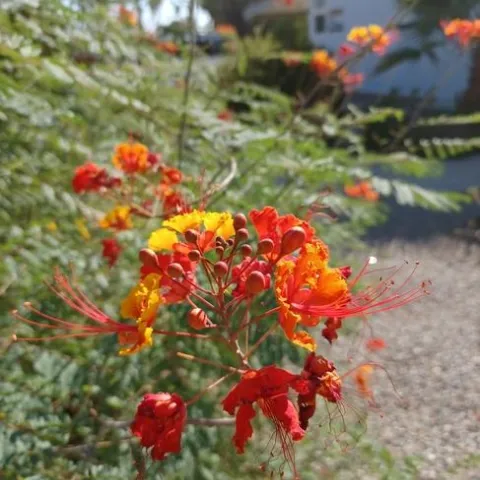
Enchanting Salvias - photo by Paula Pashby
Under the Solano Sun: Article

Nectar Replenishment

July 28, 2021
I recently took some time to relax near our Salvia garden, which comprises Pineapple Sage (Salvia elegans), Heatwave Glimmer Sage (Salvia microphylla), Autumn Sage (Salvia greggii), and Purple Sage (Salvia leucophylla).
View Article
Primary Image
First Indian rancheria in Hopland. Photo courtesy of Mendocino County Historical Society
ANR Employee News: Article

Story map shows history of land under Hopland REC

July 28, 2021
By Pamela S Kan-Rice
Field research in agricultural and natural resource science has been ongoing at UC Research and Extension Centers for over 70 years, making an impact on the food we eat and the management practices we recommend.
View Article
Primary Image
Microbiologist Shawn Christensen scoping out California golden poppies at the UC Davis Arboretum to take into his lab for experiments. Yes, Shawn says, the tattoo is of pollen grain. (Photo by Benjamin Van Domelen)
Entomology & Nematology News: Article

Some Floral Bacteria Can Enhance Pollen Germination, UC Davis Study Finds

July 28, 2021
By Kathy Keatley Garvey
Newly published, first-of-its-kind research indicates that certain species of floral bacteria can enhance pollen germination, announced a team of UC Davis scientists led by microbiologist Shawn Christensen of the Rachel Vannette laboratory, UC Davis Department of Entomology and Nematology.
View Article
Primary Image
community-309932 640
ANR Employee News: Article

L&D: Virtual program building, DEI in youth programs, YouTube, Qualtrics

July 27, 2021
By Jodi L Azulai
Image by Arek Socha from Pixabay ANR Learning & Development Webpage | Past Webinar Recordings Do you have a training to offer? Contact ANR Learning & Development and let us know! EXTENSION DELIVERY Innovation Skill-Building Experience (Sessions 3&4) Aug. 3, Aug. 10, 2021 10:30 a.m. - 12:30 p.m.
View Article
Colusa County: Article

Reminder: Virtual Healthy Soils Compost Field Day

July 27, 2021
2021 Virtual Healthy Soils Compost Field Day Wednesday, July 28th, 9:00 a.m. 9:00 a.m. - Welcome and Introduction - Amber Vinchesi-Vahl, UCCE Vegetable Crops Advisor - Colusa, Sutter and Yuba Counties 9:10 a.m.
View Article
ANR Employee News: Article

Accellion data breach discussed at town hall

July 27, 2021
By Pamela S Kan-Rice
At the July ANR town hall, Hoyt Sze, managing counsel of the Health Affairs & Technology Law Group at UC Office of the President, and Michael Bruemmer from Experian answered questions about the Accellion data breach and measures to protect personal data.
View Article
Primary Image
An alfalfa looper moth, Autographa californica, foraging on mustard. Moth identified by Art Shapiro of UC Davis. (Photo by Kathy Keatley Garvey)
Bug Squad: Article

Do Moths Usually Land with Their Wings Down?

July 27, 2021
By Kathy Keatley Garvey
National Moth Week ended last Sunday, July 25, but questions linger. A reader asked: "A friend was just telling me that butterflies and moths land differently. She couldn't remember if it was a moth that landed with its wings up or down. It looks like they land with their wings down.
View Article
Primary Image
Muskeg (photos by Karen Metz)
Under the Solano Sun: Article

Muskeg

July 27, 2021
When I initially read the itinerary for the Inside Passage, Southeast Alaska cruise I was especially interested in the hike to an Alaskan bog, or muskeg. That certainly sounded unique. Well, of course, our June 2020 cruise never happened.
View Article