A Natural Solution for California's Herds: African Catfish Peptides

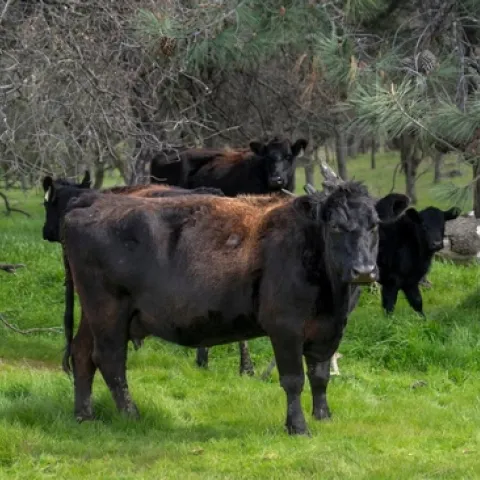
California's cattle producers and agricultural communities are all too familiar with the rising challenge of antibiotic resistance, making common bacterial infections harder to treat in livestock. But imagine a future where we could tackle these infections with a natural, powerful alternative. Our research points to just that: antimicrobial peptides (AMPs) found in African catfish.

We're really excited about these peptides because African catfish thrive in pathogen-rich freshwater, naturally producing these robust immune compounds in their skin mucus as a defense. This natural origin makes them highly appealing alternatives to synthetic drugs.

Predicted Safety and Potent Action

One of the most compelling aspects of these AMPs is their predicted safety for mammals. Our initial computer analyses suggest that various catfish AMPs are generally recognized as safe (GRAS). We predict they'll be absorbed in the human intestine without causing liver, brain, or heart toxicity. Furthermore, lab tests on a promising peptide, NACAP-II, confirmed it was non-hemolytic, meaning it didn't damage rabbit red blood cells—a strong indicator of its potential safety for mammalian cells.

Beyond safety, these peptides demonstrate effectiveness against problematic bacteria. One study revealed NACAP-II's strong activity against Extended-Spectrum Beta-Lactamase (ESBL)-producing Escherichia coli—a critical concern for both animal and human health due to its resistance to many common antibiotics. Another peptide, ACAP-IV, also showed antibacterial activity against E. coli and Staphylococcus aureus. We believe these AMPs work by directly disrupting bacterial cell membranes, a mechanism that makes it harder for bacteria to develop resistance compared to how they resist traditional antibiotics.
Master Food Preservers San Bernardino County: Article

Chicken feet

June 25, 2021
Made a batch of chicken broth recently and pressure canned it up. For previous batches I have used a conglomeration of leftover chicken bones, carcasses, necks and such that I stash in my freezer for just such a use. For this batch I went shopping for some other things.
View Article
Primary Image
Wildtending tools include collecting bags, loppers, and water, Janeva Sorenson
The Real Dirt: Article

Wildtending Walk #4: This Knowledge is Not Everywhere

June 25, 2021
Two quotes from the leaders of the May 25 Wildtending Walk at Verbena Fields in Chico are pertinent here. Toward the end of the walk Ali Meders-Knight, Traditional Ecological Knowledge (TEK) Specialist for the Mechoopda Tribe, said The more we understand this place together, the better off we'll be.
View Article
Primary Image
The blister beetle is both a pollinator and a pest. It is a pest of alfalfa and is toxic to livestock, especially horses. This one is foraging on a Mexican sunflower (Tithonia rotundifola) in Vacaville. (Photo by Kathy Keatley Garvey)
Bug Squad: Article

Day 4 of National Pollinator Week: Beetles

June 24, 2021
By Kathy Keatley Garvey
When you think of pollinators, you think of bees, right? And well you should: honey bees are the global workhorses of the pollination community and pollinate about one-third of the food we eat, including fruits and vegetables and some nuts, primarily almonds (California's almond acreage exceeds 1.
View Article
Primary Image
Two adult male wild turkeys strutting in grass with several female hens behind them.

Wild Turkeys: Is This a Pest?

June 24, 2021
By Belinda Messenger-Sikes
Have you seen wild turkeys wandering through your neighborhood? These American birds were once on the verge of extinction but now can be found foraging for food in urban and suburban neighborhoods. Some people enjoy the sight of a flock of wild turkeys strutting by their house.
View Article
Primary Image
5C8BB7AA-B098-4A8A-90F9-F8A602717B12 1 105 c
UCCE Master Gardeners of San Bernardino County Blogs: Article

Stinknet in San Bernardino County

June 24, 2021
By Chris J McDonald
Stinknet (Oncosiphon pilulifer) is a relatively new weed to North America and has been moving quickly and spreading in San Bernardino County. Gardeners may have noticed this unusual yellow-flowered plant growing in their yard this year, even though we are in a significant drought.
View Article
Primary Image
shot hole borer feeding

Beetle:Fungus Symbiosis?

June 24, 2021
By Ben A Faber
David Peris, Xavier Delcls, Bjarte Jordal https://doi.org/10.1111/brv.12763 A beetle bores a tree trunk to build a gallery in the wood in order to protect its lay. As it digs the tunnel, it spreads ambrosia fungal spores that will feed the larvae.
View Article
ANR Adventures: Article

Time flies

June 23, 2021
By Wendy Powers
Congratulations to Katherine Uhde! Katherine has been accepted into the Bloomberg American Health Initiative Fellowship Program at Johns Hopkins University. The Program is unique and a partnership between UC ANR and JHU.
View Article