A Natural Solution for California's Herds: African Catfish Peptides

California's cattle producers and agricultural communities are all too familiar with the rising challenge of antibiotic resistance, making common bacterial infections harder to treat in livestock. But imagine a future where we could tackle these infections with a natural, powerful alternative. Our research points to just that: antimicrobial peptides (AMPs) found in African catfish.

We're really excited about these peptides because African catfish thrive in pathogen-rich freshwater, naturally producing these robust immune compounds in their skin mucus as a defense. This natural origin makes them highly appealing alternatives to synthetic drugs.

Predicted Safety and Potent Action

One of the most compelling aspects of these AMPs is their predicted safety for mammals. Our initial computer analyses suggest that various catfish AMPs are generally recognized as safe (GRAS). We predict they'll be absorbed in the human intestine without causing liver, brain, or heart toxicity. Furthermore, lab tests on a promising peptide, NACAP-II, confirmed it was non-hemolytic, meaning it didn't damage rabbit red blood cells—a strong indicator of its potential safety for mammalian cells.

Beyond safety, these peptides demonstrate effectiveness against problematic bacteria. One study revealed NACAP-II's strong activity against Extended-Spectrum Beta-Lactamase (ESBL)-producing Escherichia coli—a critical concern for both animal and human health due to its resistance to many common antibiotics. Another peptide, ACAP-IV, also showed antibacterial activity against E. coli and Staphylococcus aureus. We believe these AMPs work by directly disrupting bacterial cell membranes, a mechanism that makes it harder for bacteria to develop resistance compared to how they resist traditional antibiotics.
UC Master Gardeners of San Mateo & San Francisco Counties: Article

Landscape Fabric: A Cautionary Tale

September 16, 2025
By Cathrin Callas
Do those nice, neat rolls of “weed blocking” fabric seem like the perfect solution in your battleagainst unwanted vegetation? Visions of freeing oneself from this perennial struggle areenticing and the task seems simple enough: just lay it on the soil, cover with an attractive layerof mulch and the foul…
View Article
Primary Image
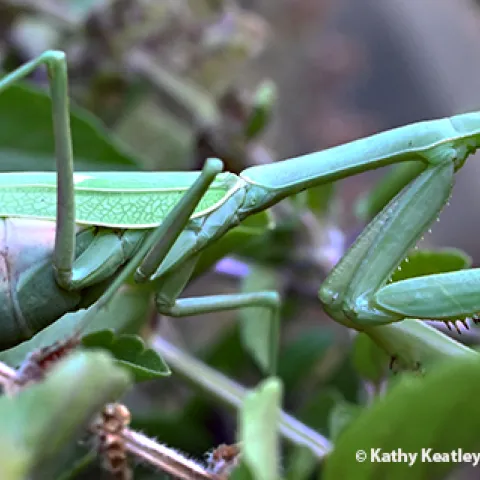
Female praying mantis, Stagmomantis limbata. (Photo by Kathy Keatley Garvey)
Bug Squad: Article

What a Mantis!

September 16, 2025
By Kathy Keatley Garvey
 There’s a “mom” in the word Stagmomantis, as in Stag-mom-antis limbata. That genus name seems quite appropriate for a gravid mantis, don't you think?Take the mama-to-be that's a permanent tenant in a Vacaville patch of African blue basil. She knows this is the place to "bee."We've nicknamed her …
View Article
Primary Image
Photo by Brian Hicks
UC Master Gardeners of San Mateo & San Francisco Counties: Article

Cool Season Cover Crops

September 16, 2025
By Cathrin Callas
 If you’re taking a break this fall and winter after growing summer veggies, then plant a cover crop to enrich and protect your soil as well as to attract beneficial insects. Choose a variety of cool season cover crop seeds, such as flowers, grasses and a legume, for sowing in early fall. See Cover…
View Article
Primary Image
landscape fabric
UC Master Gardeners of San Mateo & San Francisco Counties: Article

Landscape Fabric: The Hidden Truth

September 16, 2025
By Cathrin Callas
 Before rolling out landscape fabric to keep weeds at bay, consider the effects on your soil and plants. Landscape or “weed blocking” fabric, usually made of plastic or polyester, has varying degrees of permeability. Over time, holes in the fabric get clogged, preventing the movement of water, oxygen…
View Article
Primary Image
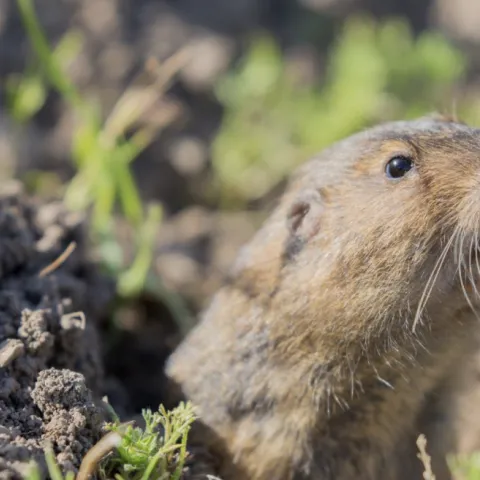
gopher
Urban Agriculture: Article

Integrated Gopher Control in Urban Farms: A Multilayer Approach

September 16, 2025
By Amrita Mukherjee
Urban farms face unique challenges from pocket gophers. Unlike rural fields, urban farms are often smaller, intensively managed, and located near homes, parks, or other landscaped areas. These conditions can actually increase gopher pressure: food is concentrated, protective cover may be abundant, and…
View Article
UCCE East Bay: Article

Raising the “Fancy” Standard for California Trees

September 16, 2025
By Andrew Miller
California’s urban forests deserve nothing less than “Fancy” trees. Jessie Godfrey, UC ANR Environmental Horticulture and Water Resource Management Advisor, is elevating the work of “Team Fancy,” a group of nursery professionals advocating for state-specific tree quality standards. These standards aim to…
View Article