A Natural Solution for California's Herds: African Catfish Peptides

California's cattle producers and agricultural communities are all too familiar with the rising challenge of antibiotic resistance, making common bacterial infections harder to treat in livestock. But imagine a future where we could tackle these infections with a natural, powerful alternative. Our research points to just that: antimicrobial peptides (AMPs) found in African catfish.

We're really excited about these peptides because African catfish thrive in pathogen-rich freshwater, naturally producing these robust immune compounds in their skin mucus as a defense. This natural origin makes them highly appealing alternatives to synthetic drugs.

Predicted Safety and Potent Action

One of the most compelling aspects of these AMPs is their predicted safety for mammals. Our initial computer analyses suggest that various catfish AMPs are generally recognized as safe (GRAS). We predict they'll be absorbed in the human intestine without causing liver, brain, or heart toxicity. Furthermore, lab tests on a promising peptide, NACAP-II, confirmed it was non-hemolytic, meaning it didn't damage rabbit red blood cells—a strong indicator of its potential safety for mammalian cells.

Beyond safety, these peptides demonstrate effectiveness against problematic bacteria. One study revealed NACAP-II's strong activity against Extended-Spectrum Beta-Lactamase (ESBL)-producing Escherichia coli—a critical concern for both animal and human health due to its resistance to many common antibiotics. Another peptide, ACAP-IV, also showed antibacterial activity against E. coli and Staphylococcus aureus. We believe these AMPs work by directly disrupting bacterial cell membranes, a mechanism that makes it harder for bacteria to develop resistance compared to how they resist traditional antibiotics.
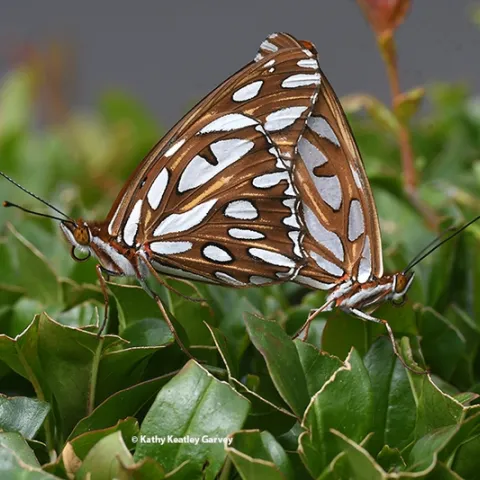
Primary Image
The Western Tiger Swallowtail, Papilio rutulus, foraging in the Ruth Storer Garden in the UC Davis Arboretum and Public Garden. (Photo by Kathy Keatley Garvey)
Bug Squad: Article

A Tiger in Your Garden

May 18, 2020
By Kathy Keatley Garvey
The "Tiger King" has nothing on the Western Tiger Swallowtail. The colorful yellow and black butterfly, Papilio rutulus, reigns supreme. We saw this one last week at the Ruth Storer Garden in the UC Davis Arboretum and Public Garden.
View Article
Primary Image
Eastside Non-Saline CERES
Irrigation Blog: Article

CERES/NVDI and SWP

May 18, 2020
By Blake L Mccullough-Sanden
The start of the 2020 pistachio season has been a mixed bag. Most of the southern San Joaquin Valley had decent chill hours, but heat units for bloom were a mixed bag and then we hit the 2.5 rainstorm from 4/5-9 during early bloom instead of February where it should have been.
View Article
Primary Image
atmometer calibration
Topics in Subtropics: Article

Atmometer Study

May 18, 2020
By Ben A Faber
Efficient and precise irrigation management is critical if California producers are to maximize crop quality, conserve water, and protect the environment. The use of evapotranspiration (ET) estimates is a significant component of irrigation management.
View Article
Primary Image
A screen shot of the opening of the second COVID-19 virtual symposium.
Entomology & Nematology News: Article

Second COVID-19 Virtual Seminar Draws Accolades

May 18, 2020
By Kathy Keatley Garvey
The second COVID-19 Symposium, organized and moderated by UC Davis distinguished professor Walter Leal and online at https://bit.ly/3b8TAau, is drawing accolades.
View Article
Primary Image
photos by Michelle Davis
Under the Solano Sun: Article

Pocket Gardens

May 18, 2020
I have been out walking even more of late than usual. Besides exercising, I have been checking out other homeowners' plant choices and landscaping. I look for what I call pocket gardens. For me, that means a small portion of someone's yard that seems to have received a little more TLC.
View Article
Primary Image
Screen Shot 2020-05-19 at 10.51.32 AM
Salinas Valley Agriculture: Article

Pythium Wilt Project Underway

May 18, 2020
By Richard F Smith
Pythium Wilt Project Underway JP Dundore-Arias and Richard Smith, Professor of Plant Pathology, CSU, Monterey Bay and Farm Advisor UCCE, Monterey County Pythium wilt is becoming an increasing concern in the Salinas Valley and has been responsible for significant lettuce yield losses.
View Article