A Natural Solution for California's Herds: African Catfish Peptides

California's cattle producers and agricultural communities are all too familiar with the rising challenge of antibiotic resistance, making common bacterial infections harder to treat in livestock. But imagine a future where we could tackle these infections with a natural, powerful alternative. Our research points to just that: antimicrobial peptides (AMPs) found in African catfish.

We're really excited about these peptides because African catfish thrive in pathogen-rich freshwater, naturally producing these robust immune compounds in their skin mucus as a defense. This natural origin makes them highly appealing alternatives to synthetic drugs.

Predicted Safety and Potent Action

One of the most compelling aspects of these AMPs is their predicted safety for mammals. Our initial computer analyses suggest that various catfish AMPs are generally recognized as safe (GRAS). We predict they'll be absorbed in the human intestine without causing liver, brain, or heart toxicity. Furthermore, lab tests on a promising peptide, NACAP-II, confirmed it was non-hemolytic, meaning it didn't damage rabbit red blood cells—a strong indicator of its potential safety for mammalian cells.

Beyond safety, these peptides demonstrate effectiveness against problematic bacteria. One study revealed NACAP-II's strong activity against Extended-Spectrum Beta-Lactamase (ESBL)-producing Escherichia coli—a critical concern for both animal and human health due to its resistance to many common antibiotics. Another peptide, ACAP-IV, also showed antibacterial activity against E. coli and Staphylococcus aureus. We believe these AMPs work by directly disrupting bacterial cell membranes, a mechanism that makes it harder for bacteria to develop resistance compared to how they resist traditional antibiotics.

Primary Image
Assemblymembers Cecilia Aguiar-Curry and Bill Quirk presented Jim Farrar with a proclamation honoring UC IPM at the Capitol. From left, Quirk, Anne Megaro, Mark Bell, Farrar, Mark Lagrimini and Aguiar-Curry.
ANR Employee News: Article

UC IPM celebrates 40th anniversary

July 1, 2019
By Pamela S Kan-Rice
The University of California Statewide Integrated Pest Management Program (UC IPM) is celebrating its 40th anniversary. Established July 1, 1979, with funding from the California Legislature, UC IPM built upon a growing movement to reduce dependence on pesticides.
View Article
Primary Image
IMG 20190502 093528
UC Weed Science (weed control, management, ecology, and minutia): Article

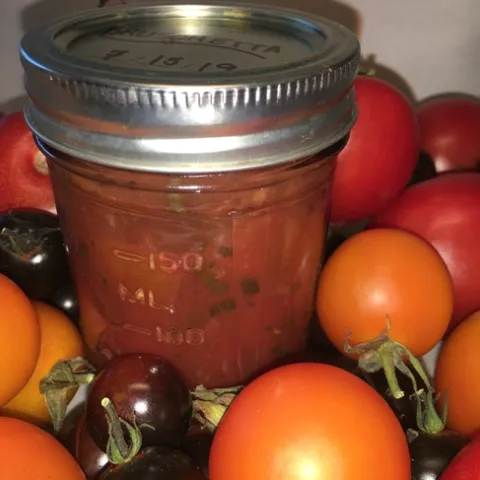
Weed management in organic processing tomatoes

July 1, 2019
Weeds are one of the biggest challenges to organic vegetable production and can be expensive to manage since herbicides are not an option.
View Article
Primary Image
Grape1
HOrT COCO-UC Master Gardener Program of Contra Costa: Article

Grapes in Distress

July 1, 2019
Advice for the Home Gardener from the Help Desk of the UC Master Gardener Program of Contra Costa County Help Desk Request: I'm delighted you're available to help diagnose garden problems! Below are four pictures of a grape leaf problem.
View Article
ANR News Blog: Article

June 2019 News clips (June 1-15)

June 30, 2019
By Pamela S Kan-Rice
In Full Bloom: Choose natives adapted to our climate to cut down on watering (Virginian Pilot) Allissa Bunner, June 15 Mulching is also a great way to help your garden beat the heat.
View Article
Primary Image
Dave Campbell
ANR News Releases: Article

Dave Campbell retires as UCCE community development specialist after 29 years

June 29, 2019
By Pamela S Kan-Rice
After providing 29 years of service, UC Cooperative Extension Specialist and Associate Agricultural Experiment Station Dean Dave Campbell retires July 1. Long-time colleague Rose Hayden-Smith asked Dave to reflect on his career and offer advice for those rising in the academic ranks.
View Article
Primary Image
A Gulf Fritillary shares a Mexican sunflower (Tithonia) with a hover fly (Syrphid). (Photo by Kathy Keatley Garvey)
Bug Squad: Article

Where Are You, Gulf Fritillaries?

June 28, 2019
By Kathy Keatley Garvey
Where are you, Gulf Fritillaries? The Gulf Fritillary (Agraulis vanillae) population seems to be diminishing this year around Solano and Yolo counties. A few here, a few there, but not in the large numbers of last year.
View Article
Topics in Subtropics: Article

Black Days for Black Walnut

June 28, 2019
By Ben A Faber
Walnut Twig Beetle and Fungus Causing 'Profound Damage' to Black Walnut Trees Author: Kathy Keatley Garvey Published on: May 23, 2019 Thousand cankers disease is killing a giant black walnut tree, estimated to be 150 years old, on the 100 block of E Street, Davis.
View Article
Santa Cruz County: Article

4-H Updates on Enrollment & Funding

June 28, 2019
Dear 4-H Families, We have very important news regarding funding issues and 4-H enrollment increases for the 2019- 2020 program year. See the article regarding the changes to our 4-H program.
View Article
Stanislaus County: Article

Evapotranspiration Report - 06/27/2019

June 28, 2019
Hello all, Please find the attached document to provide the previous weeks estimated water use report in terms of evapotranspiration for almonds, peaches, walnuts, established vineyard, alfalfa, and pasture in Stanislaus County.
View Article