A Natural Solution for California's Herds: African Catfish Peptides

California's cattle producers and agricultural communities are all too familiar with the rising challenge of antibiotic resistance, making common bacterial infections harder to treat in livestock. But imagine a future where we could tackle these infections with a natural, powerful alternative. Our research points to just that: antimicrobial peptides (AMPs) found in African catfish.

We're really excited about these peptides because African catfish thrive in pathogen-rich freshwater, naturally producing these robust immune compounds in their skin mucus as a defense. This natural origin makes them highly appealing alternatives to synthetic drugs.

Predicted Safety and Potent Action

One of the most compelling aspects of these AMPs is their predicted safety for mammals. Our initial computer analyses suggest that various catfish AMPs are generally recognized as safe (GRAS). We predict they'll be absorbed in the human intestine without causing liver, brain, or heart toxicity. Furthermore, lab tests on a promising peptide, NACAP-II, confirmed it was non-hemolytic, meaning it didn't damage rabbit red blood cells—a strong indicator of its potential safety for mammalian cells.

Beyond safety, these peptides demonstrate effectiveness against problematic bacteria. One study revealed NACAP-II's strong activity against Extended-Spectrum Beta-Lactamase (ESBL)-producing Escherichia coli—a critical concern for both animal and human health due to its resistance to many common antibiotics. Another peptide, ACAP-IV, also showed antibacterial activity against E. coli and Staphylococcus aureus. We believe these AMPs work by directly disrupting bacterial cell membranes, a mechanism that makes it harder for bacteria to develop resistance compared to how they resist traditional antibiotics.


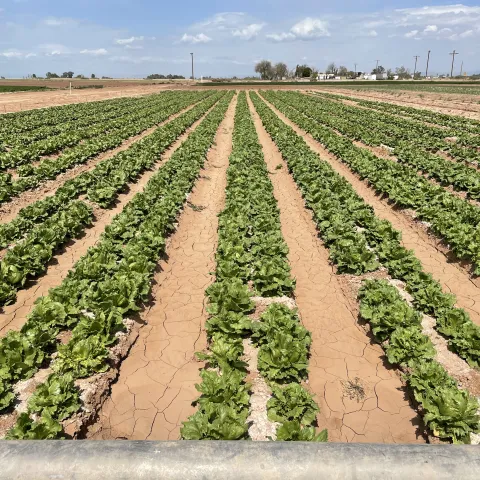
rows of planted romaine lettuce
Site - Research and Extension Center

West Side Research and Extension Center

Located in the highly productive agricultural west side of the San Joaquin Valley, the West Side Research and Extension Center (WSREC) is one of nine centers operated by the University of California, Division of Agriculture and Natural Resources.
View Site
4
Site - Research and Extension Center

Hansen Agricultural Research and Extension Center

UC Hansen Agricultural Research and Extension Center (HAREC) is located in Camarillo, a few miles east of the Pacific Ocean. HAREC is one of University of California Agriculture and Natural Resources (UC ANR) nine Research and Extension Centers (RECs).
View Site
Pomegranate tree
Site

UC Master Gardener Coordinators

Welcome to the UC Master Gardener Program coordinator website, a resource for essential tools, guides, and information to support program coordinators, advisors, county directors, and volunteer leaders.
View Site
Legumes
Site

Pest Management

Rachael Long is an Emeritus Farm Advisor with UC Cooperative Extension in Yolo, Solano, and Sacramento Counties. She has statewide expertise in entomology, Integrated Pest Management, and pollination ecology for field crops production.
View Site
Variety trial
Site

Vegetable Crops

Patricia Lazicki, Farm Advisor for Vegetable Crops The Vegetable Crops Program fosters appropriate research and collects and disseminates relevant information to growers, processors and related industries in the California vegetable industry.
View Site
Angus grazing
Site

Bay Area Working Rangelands

The University of California Cooperative Extension Bay Area Livestock and Natural Resources Program conducts applied research and outreach to promote working landscapes that conserve biological diversity, protect water quality and sustain livestock production.
View Site
UC Cooperative Extension Marin County: Page

Water and Soil

 Helaine BerrisWater and Soil AdvisorSonoma, Napa, Marin, Mendocino CountiesEmail: hmberris@ucanr.eduView more resources on the Water and Soil program websiteThe Water and Soil Program provides education, applied research, and technical assistance in agricultural water management to cultivated crop…
View Page
Event Primary Image
mulched pathway in a fruit tree orchard
Grown in Marin: Event

Perennial Weed Management in Vineyards and Orchards

Event Date
Jun 3, 2026

In this webinar, Jorge Angeles, Weed Management Advisor, University of California Cooperative Extension, Tulare, Kings, and Fresno Counties, will provide an overview of commonly found perennial weeds in orchards and vineyards in the San Joaquin Valley and cover key management strategies. In addition, the…
Grown in Marin
View Event
Event Primary Image
tractor in a field of lettuce
Grown in Marin: Event

Lettuce production and disease management in Salinas Valley

Event Date
Apr 15, 2026

Yu-Chen Wang, Plant Pathology Advisor with University of California Cooperative Extension, Monterey, Santa Cruz, and San Benito Counties, will provide an overview of the current knowledge and management of major lettuce diseases, including Impatiens Necrotic Spot, Pythium wilt, Verticillium wilt, and…
Grown in Marin
View Event
UC Master Gardeners of San Diego County: Page

San Diego County Yearly Impact

In the Garden Planting Seeds for a Healthier San Diego350 active volunteers35,048 hours donated$1,307,991 value of volunteer service Every year through our volunteer activities, San Diego County Master Gardeners reach thousands of people in countless ways as we aim to build a greener and healthier San…
View Page