A Natural Solution for California's Herds: African Catfish Peptides

California's cattle producers and agricultural communities are all too familiar with the rising challenge of antibiotic resistance, making common bacterial infections harder to treat in livestock. But imagine a future where we could tackle these infections with a natural, powerful alternative. Our research points to just that: antimicrobial peptides (AMPs) found in African catfish.

We're really excited about these peptides because African catfish thrive in pathogen-rich freshwater, naturally producing these robust immune compounds in their skin mucus as a defense. This natural origin makes them highly appealing alternatives to synthetic drugs.

Predicted Safety and Potent Action

One of the most compelling aspects of these AMPs is their predicted safety for mammals. Our initial computer analyses suggest that various catfish AMPs are generally recognized as safe (GRAS). We predict they'll be absorbed in the human intestine without causing liver, brain, or heart toxicity. Furthermore, lab tests on a promising peptide, NACAP-II, confirmed it was non-hemolytic, meaning it didn't damage rabbit red blood cells—a strong indicator of its potential safety for mammalian cells.

Beyond safety, these peptides demonstrate effectiveness against problematic bacteria. One study revealed NACAP-II's strong activity against Extended-Spectrum Beta-Lactamase (ESBL)-producing Escherichia coli—a critical concern for both animal and human health due to its resistance to many common antibiotics. Another peptide, ACAP-IV, also showed antibacterial activity against E. coli and Staphylococcus aureus. We believe these AMPs work by directly disrupting bacterial cell membranes, a mechanism that makes it harder for bacteria to develop resistance compared to how they resist traditional antibiotics.
Primary Image
Figure 1. Yield at 13 percent moisture of UCCE Delta sorghum seeding rate trial. There were no significant differences among treatments in 2016 (P = 0.1278) or 2017 (P = 0.2419).
SJC and Delta Field Crops: Article

Sorghum Seeding Rate Trial Final Report

December 18, 2017
By Michelle M Leinfelder-Miles
In recent years, the University of California Division of Agriculture and Natural Resources has augmented research efforts on growing grain and silage sorghum [Sorghum bicolor (L.) Moench] in California.
View Article
Primary Image
avocado suckers
Topics in Subtropics: Article

Afer the Fire, Replant or Field Graft?

December 18, 2017
By Ben A Faber
This is from past experience, and is still relevant. Availability of replant trees is a major issue to consider at this point. The wildfires in San Diego and Ventura Counties during the fall of 2003 were certainly devastating to many avocado groves adjacent to burning native chaparral.
View Article
Bug Squad: Article

I'm Just a Little Ol' Honey Bee Foraging on Lavender

December 14, 2017
By Kathy Keatley Garvey
I'm just a little ol' honey bee foraging on lavender. I left my warm colony in Vacaville, Calif. to see if there's any nectar out there. My sisters are hungry. I'm not sure if we have enough honey to tide us over until spring.
View Article
UC Weed Science (weed control, management, ecology, and minutia): Article

What does family mean?

December 14, 2017
By Guy Kyser
We were sampling plots in the Delta in July 2016, and found a small clump of this plant pickerelweed (Pontederia cordata).
View Article
Primary Image
fire 1
Topics in Subtropics: Article

Assessing Fire Damaged Avocado Trees

December 14, 2017
By Ben A Faber
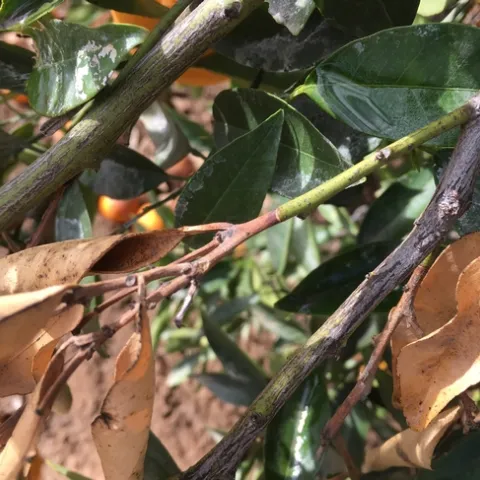
The destruction after a fire can be pretty gruesome and sad. Many times, though the fire moves through the orchard so fast that, even though the canopy has turned brown, there is a good chance the trees can come back. It all depends on how much damage has been done to the trunk.
View Article
Primary Image
fire sonia 1
Topics in Subtropics: Article

What Lessons Have We Learned From Previous Fires?

December 14, 2017
By Ben A Faber
Sonia Rios, Area Subtropical Horticulture Advisor, Riverside & San Diego Counties Henry Herrera, Forester, California Department of Forestry and Fire Protection (CAL FIRE) Gary Bender, Subtropical Horticulture Advisor, San Diego County This is a reposting of a blog from 2015 that is still pertinent...
View Article
Bug Squad: Article

A 'Firecracker of a Surprise' in Davis: Who Knew?

December 13, 2017
By Kathy Keatley Garvey
When plant and insect enthusiast Ria de Grassi discovered caterpillars on her firecracker plant, Russelia equisetiformis, last July 10 in her yard in Davis, Calif., she asked noted butterfly authority Art Shapiro, UC Davis distinguished professor of evolution and ecology, to identify them.
View Article
Bug Squad: Article

Want to Learn How to Care for Bees? UC Davis Offering Courses

December 12, 2017
By Kathy Keatley Garvey
Want to bee-come a beekeeper and learn the ABC's of taking care of colonies? Think "A" for apiary; "B" for bees; and "C" for colonies. Here's how to join the ranks of California's estimated 11,000 backyard and small-scale beekeepers.
View Article