A Natural Solution for California's Herds: African Catfish Peptides

California's cattle producers and agricultural communities are all too familiar with the rising challenge of antibiotic resistance, making common bacterial infections harder to treat in livestock. But imagine a future where we could tackle these infections with a natural, powerful alternative. Our research points to just that: antimicrobial peptides (AMPs) found in African catfish.

We're really excited about these peptides because African catfish thrive in pathogen-rich freshwater, naturally producing these robust immune compounds in their skin mucus as a defense. This natural origin makes them highly appealing alternatives to synthetic drugs.

Predicted Safety and Potent Action

One of the most compelling aspects of these AMPs is their predicted safety for mammals. Our initial computer analyses suggest that various catfish AMPs are generally recognized as safe (GRAS). We predict they'll be absorbed in the human intestine without causing liver, brain, or heart toxicity. Furthermore, lab tests on a promising peptide, NACAP-II, confirmed it was non-hemolytic, meaning it didn't damage rabbit red blood cells—a strong indicator of its potential safety for mammalian cells.

Beyond safety, these peptides demonstrate effectiveness against problematic bacteria. One study revealed NACAP-II's strong activity against Extended-Spectrum Beta-Lactamase (ESBL)-producing Escherichia coli—a critical concern for both animal and human health due to its resistance to many common antibiotics. Another peptide, ACAP-IV, also showed antibacterial activity against E. coli and Staphylococcus aureus. We believe these AMPs work by directly disrupting bacterial cell membranes, a mechanism that makes it harder for bacteria to develop resistance compared to how they resist traditional antibiotics.

Bug Squad: Article

Another Unwelcome Intruder

January 21, 2016
By Kathy Keatley Garvey
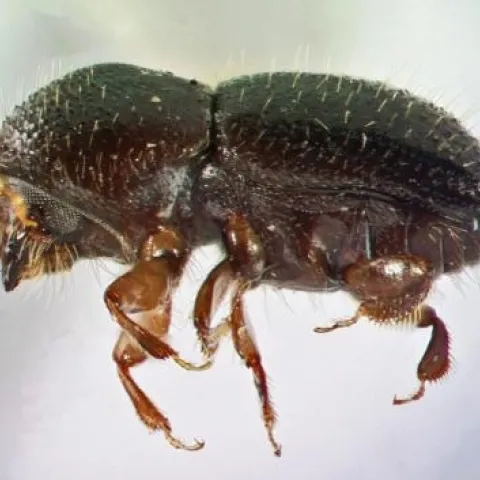
California's beekeepers not only worry about the varroa mite (aka Public Enemy No. 1), but the small hive beetle. As the state prepares for its annual almond pollination season--which usually begins around Valentine's Day--beekeepers from all over the country are trucking in their bees.
View Article
Bug Squad: Article

A Day in the Life of a Virgin Queen Bee

January 20, 2016
By Kathy Keatley Garvey
We've all read stories dealing with "A Day in the Life" of principals, presidents and princesses. We're probably familiar with The Beatles' song "A Day in the Life," the final song on their Sgt. Pepper's Lonely Hearts Club Band album.
View Article
Primary Image
xylella f on olives
Topics in Subtropics: Article

Xylella fastidiosa introduction to Europe traced back to Central America

January 20, 2016
By Ben A Faber
Elizabeth Fichtner1, Dani Lightle2, Dan Flynn3, Rodrigo Krugner4 UC Cooperative Extension (UCCE) Tulare1, Kings1, Glenn2, Tehama2, and Butte2 Counties, UC Davis Olive Center3, USDA, Agricultural Research Service, San Joaquin Valley Agricultural Sciences Center4 The recent outbreak of the plant bacte...
View Article
Primary Image
image 34163
IGIS: Article

GIF from space

January 19, 2016
By Maggi Kelly
Made this for fun for the GIF from NASA's "abcs from space" site: http://earthobservatory.nasa.gov/Features/ABC/. Was going to do "Kellylab" but ran out of time. G: This image of Pinaki Island was captured by astronauts on the International Space Station in April 2001.
View Article
Bug Squad: Article

We Have a Winner! Beer-for-a-Butterfly Contest

January 19, 2016
By Kathy Keatley Garvey
We have a winner! And he wasn't even looking for it. A UC Davis graduate student won the Beer for a Butterfly contest by collecting the first cabbage white butterfly of the year Saturday morning, Jan. 16 outside his home in West Davis.
View Article
UC Weed Science (weed control, management, ecology, and minutia): Article

2015 Evaluation of intelligent cultivators for use in lettuce production

January 18, 2016
By Richard F Smith
Richard Smith, Farm Advisor and Tricia Love, Research Assistant University of California Cooperative Extension Monterey County SUMMARY The current automated weeding machines use cameras to detect plants, and a computer algorithm to process the image, calculate which plants to keep/remove, and activa...
View Article
Primary Image
compost pile
Topics in Subtropics: Article

Mature Compost Does NOT Kill Phytophthora

January 18, 2016
By Ben A Faber
A recent article in California Agriculture highlights something that we have found in raw organic materials that have been used in mulches for controlling Avocado Root Rot Phytophthora cinnamomi.
View Article
Bug Squad: Article

Like to Know More About Honey?

January 17, 2016
By Kathy Keatley Garvey
Would you like to know more about honey? You're in luck. The UC Davis Honey and Pollination Center is hosting an educational honey tasting on Wednesday night, Jan. 27 in the Sensory Theater of the Robert Mondavi Institute for Wine and Food Science on Old Davis Road.
View Article
Primary Image
Beautiful San Benito County!
Livestock & Range: Article

5 Upcoming Events

January 16, 2016
By Devii R Rao
Here are some events related to livestock and range management that may be of interest. You can always check my website for new event postings.
View Article
Primary Image
water movement
Topics in Subtropics: Article

Dealing with Drought

January 16, 2016
By Ben A Faber
It ain't over yet, and this last week we had a wonderful 2 day meeting with folks who have dealt with drought in many different ways. Here are presentations made by people from Israel, Australia and California. Soon the actual videos will be available, but now see the powerpoints. http://www.
View Article