A Natural Solution for California's Herds: African Catfish Peptides

California's cattle producers and agricultural communities are all too familiar with the rising challenge of antibiotic resistance, making common bacterial infections harder to treat in livestock. But imagine a future where we could tackle these infections with a natural, powerful alternative. Our research points to just that: antimicrobial peptides (AMPs) found in African catfish.

We're really excited about these peptides because African catfish thrive in pathogen-rich freshwater, naturally producing these robust immune compounds in their skin mucus as a defense. This natural origin makes them highly appealing alternatives to synthetic drugs.

Predicted Safety and Potent Action

One of the most compelling aspects of these AMPs is their predicted safety for mammals. Our initial computer analyses suggest that various catfish AMPs are generally recognized as safe (GRAS). We predict they'll be absorbed in the human intestine without causing liver, brain, or heart toxicity. Furthermore, lab tests on a promising peptide, NACAP-II, confirmed it was non-hemolytic, meaning it didn't damage rabbit red blood cells—a strong indicator of its potential safety for mammalian cells.

Beyond safety, these peptides demonstrate effectiveness against problematic bacteria. One study revealed NACAP-II's strong activity against Extended-Spectrum Beta-Lactamase (ESBL)-producing Escherichia coli—a critical concern for both animal and human health due to its resistance to many common antibiotics. Another peptide, ACAP-IV, also showed antibacterial activity against E. coli and Staphylococcus aureus. We believe these AMPs work by directly disrupting bacterial cell membranes, a mechanism that makes it harder for bacteria to develop resistance compared to how they resist traditional antibiotics.

Primary Image
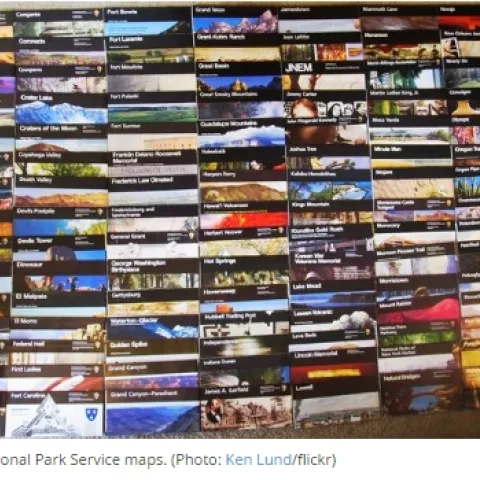
A praying mantis perches on a blanketflower, Gaillardia. (Photo by Kathy Keatley Garvey)

Prey for Me

August 17, 2015
By Kathy Keatley Garvey
Whenever folks post photos of praying mantids, their readers expect to see prey. You know, the hapless bee or butterfly that made the fatal mistake of getting too close to those spiked forelegs. This praying mantis (below) appeared to have been a hapless victim of another predator.
View Article
Primary Image
predatory mite
Topics in Subtropics: Article

The Top 10 Blogs of Topics in Subtropics

August 14, 2015
By Ben A Faber
Here are the top 10 blogs from Topics in Subtropics over the last 5 years. The two earliest and latest pertain to how you select products that will truly help you from amongst all those that are being promoted. Some of these have been around a long time, so that's why they are the most read.
View Article
Primary Image
A male tule bluet on a fading Mexican sunflower blossom. (Photo by Kathy Keatley Garvey)

Blue as Blue Can Be

August 13, 2015
By Kathy Keatley Garvey
They look like shiny blue and black needles. Make that "flying" shiny blue and black needles. We spotted this damselfly foraging on a Mexican sunflower (Tithonia) this week in our family bee garden. The blue was breathtaking.
View Article
Primary Image
image 31481
IGIS: Article

Funny pic on Google Maps

August 13, 2015
By Maggi Kelly
This is the island of Nihoa, northwest of Kauai, viewed in Google Maps. Hawaii on my mind. Anyway, it is a funny shot with mixed resolutions, and what looks to be a bordered image without its adjacent partner images. Web link: https://www.google.com/maps/@23.0606579,-161.
View Article
Primary Image
A tiff over a Tithonia. One holds her ground while another wants her share. (Photo by Kathy Keatley Garvey)

A Tiff Over a Tithonia

August 12, 2015
By Kathy Keatley Garvey
Honey bees sometimes get into little battles with one another. Here's a case of a tiff over a Tithonia. Two honey bees wanted the same Mexican sunflower (Tithonia). They each tried to claim the same blossom, bounced one another off, returned, and then battled again.
View Article
Primary Image
silicon
Topics in Subtropics: Article

Silicon as a Nutrient for California Fruit Trees

August 12, 2015
By Ben A Faber
Silicon is currently under consideration for elevation to the status of a "plant beneficial substance by the Association of American Plant Food Control Officials (AAPFCO).
View Article
Primary Image
A cabbage white butterfly, Pieris rapae, nectaring on catmint. (Photo by Kathy Keatley Garvey)

Cabbage White Butterfly Not So Bad?

August 11, 2015
By Kathy Keatley Garvey
It's the butterfly we're supposed to hate. That would be the cabbage white butterfly, Pieris rapae. Its larvae or cabbageworms are pests of our cole crops, including cabbage, kale and mustard. Pests? You bet.
View Article