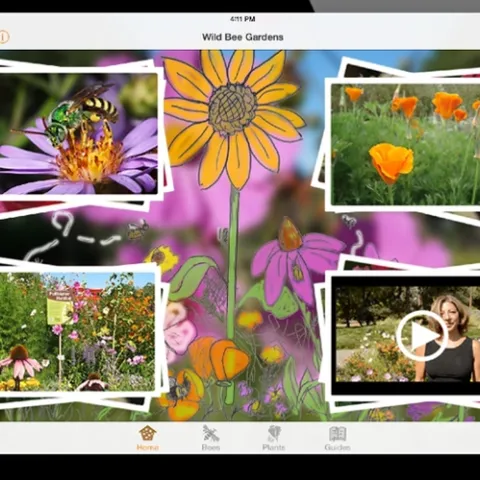
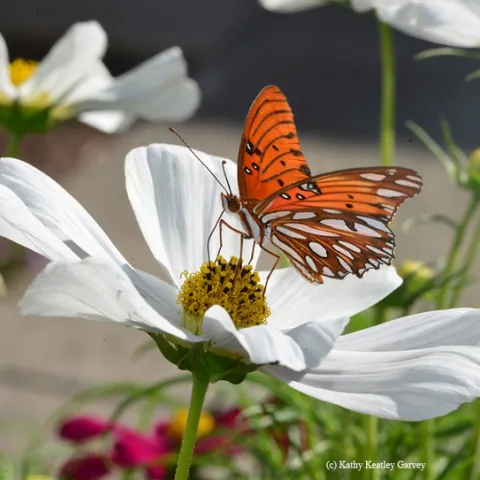
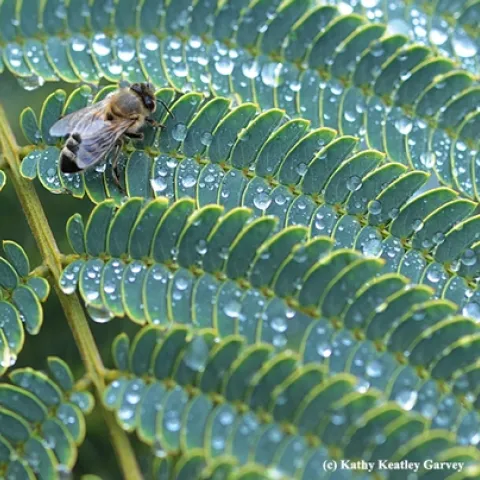
Native bee enthusiast Celeste Ets-Hokin of the Bay Area is on a mission: she wants residents to provide habitat for wild bees, including bumble bees, sweat bees, miner bees, mason bees, digger bees and long-horned bees.
It has been demonstrated that baling rice straw immediately after harvest (called rice strawlage) greatly increases its nutritional value for livestock. Baling at 30 to 40 percent moisture can have the challenge of mold management.
It's GIS Day 2014! Come visit Mulford Hall Wednesday Nov 19th at 5pm-ish to participate in workshops, listen to talks, see posters, and chat with other like-minded GIS-enthusiasts. See the agenda here: http://gif.berkeley.edu/gisday.html.
Worldview-2 has been a very useful sensor; we've used it for some of our wetlands work. On August 13th of this year DigitalGlobe launched WorldView-3 spacecraft. It will provide a 31 cm panchromatic resolution, 1.24 m multispectral resolution, with an average revisit time of
How many insect myths do you know? Worker bees are males, right? Butterflies and moths can't fly if you rub the scales off their wings, right? Earwigs crawl into your ears and then into your brain, right? Wrong. They're all widely known but falsely held beliefs.
You've heard folks say "cold as ice," right? Well, ICE is red hot. The International Congress of Entomology (ICE) is gearing up for its 2016 conference, "Entomology without Borders," to take place Sept. 25-30, 2016 in Orlando, Fla.
Neonicotinoids. It's a 14-letter word but many people consider it a four-letter word. Wikipedia defines it as a "a class of neuro-active insecticides chemically similar to nicotine...In the late 2000s some neonicotinoids came under increasing scrutiny over their environmental impacts.
As part of the massive ongoing effort to map Sonoma County with high-res imagery and lidar, historic imagery of the county was collected and georeferenced.
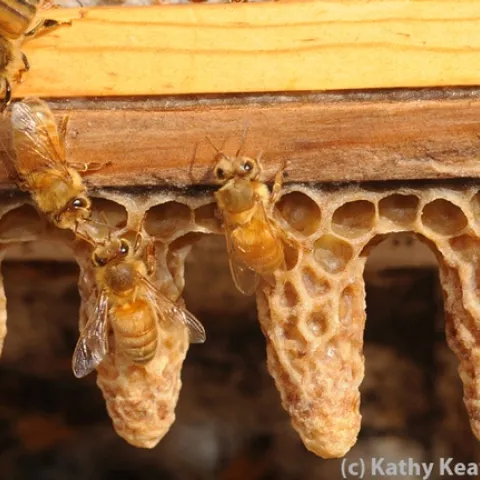
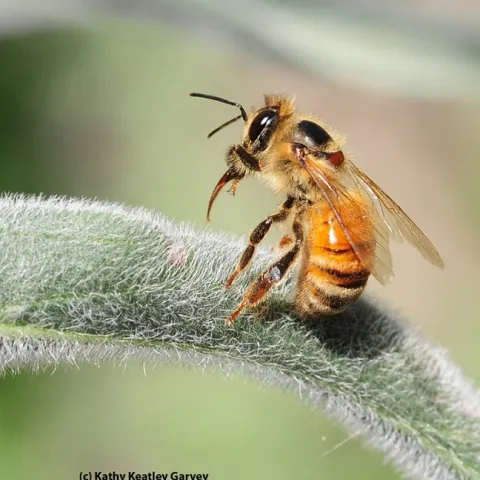
Honey bees will be "all the buzz" next week when the California State Beekeepers' Association (CSBA) meets Nov. 18-20 in Valencia, Calif., and the Entomological Society of America (ESA) meets Nov. 16-19 in Portland, Ore.
One of our collaborators on the Sonoma Vegetation Mapping Project has sent work on how web mapping and high resolution imagery has helped them do their job well. These are specific comments, but might be more generally applicable to other mapping and conservation arenas.