The UCCE Master Gardeners of Colusa County are looking to serve you better. We would like to know what workshops you would like to attend. Please fill out the survey. All participants will be entered into a drawing for a set of Landscape Pest ID cards. The deadline is Friday December 12.
University of CaliforniaRiverside (UCR) Distinguished Professor of Soil Physics and Soil Physicist Emeritus John Letey, Jr. passed away on 14 September. He was 81 years old. He received his B.S. degree at Colorado State University and Ph.D. degree at the University of Illinois.
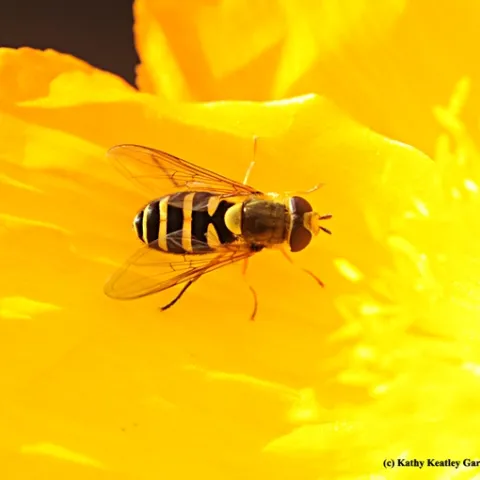
It's cool how honey bees and syrphid flies gravitate toward the Iceland Poppy. It's a winter plant, and frankly, there isn't much to eat out there. The Iceland Poppy (Papaver nudicaule), a bowl-shaped, papery flower, fills the bill. The name is a misnomer. It's not native to Iceland.
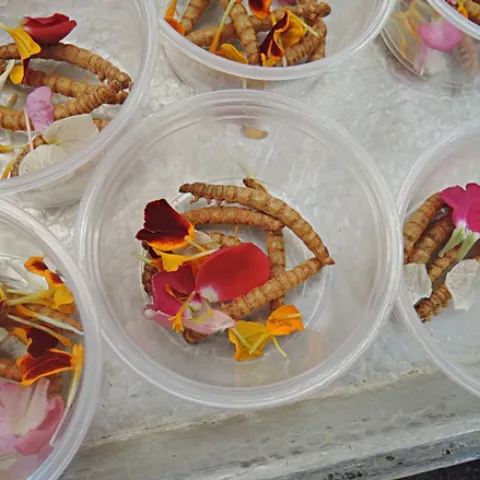
You can make a meal out of mealworms. It's cricket to eat Cambodian crickets. And who wouldn't want a plate of teriyaki grasshopper kebobs paired with Rubicon Angus Scottish Ale? "Don't worry, be hoppy," said celebrity bug chef David George Gordon, author of the award-winning Eat-a-Bug cookbook.
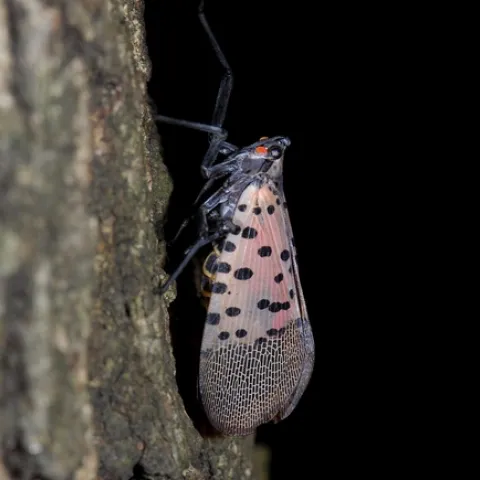
Adult spotted lanternfly (Lycorma delicatula). Source http://hojae.net/520. The Pennsylvania Department of Agriculture recently reported the first detection of yet another invasive hemipteran pest in the US.
Here's a wide range of information on drought resources from ATTRA, the National Sustainable Agriculture Information Service - https://attra.ncat.org/attra-pub/summaries/summary.
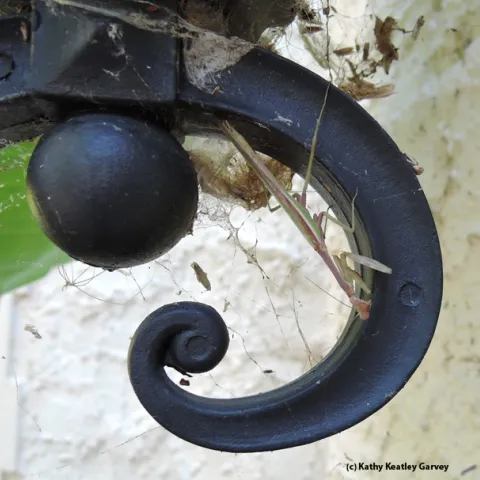
Here's a good reason why you should not clean the fixtures around your porch lights--if you need a reason. The lights attract all kinds of nocturnal flying insects. It's like the proverbial draw of a moth to a flame. Spiders weave their webs on the light fixtures to trap their prey.