UC ANR is committed to providing an accessible and inclusive web experience for all users. If you encounter an accessibility barrier or need content in an alternative or remediated accessible format, please contact anraccessibility@ucanr.edu.
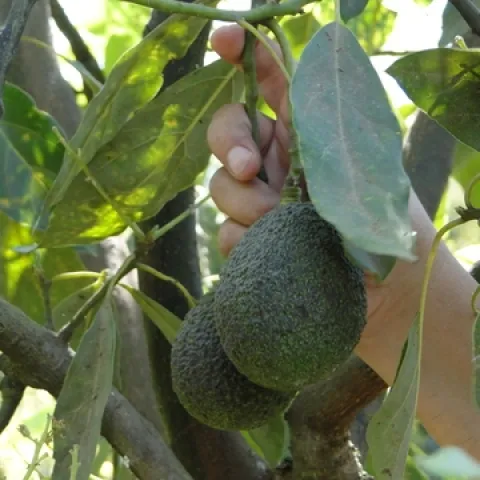
The Avocado: Botany, Production and Uses, 2nd Edition By Bruce Shaffer, Nigel Wolstenholme and Anthony Whiley This brand new book summarizes avocado science and technology and reviews production practices on a worldwide scale.
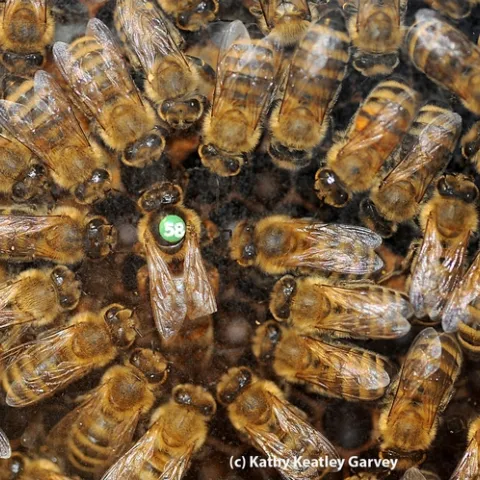
The Spirit of the Hive: The Mechanisms of Social Evolution. That's the title of a newly published book written by Robert E. Page Jr., one of the world's foremost honey bee geneticists.
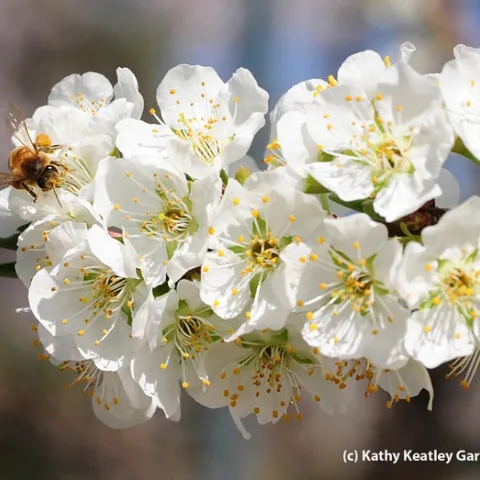
If you haven't made it over to the Hagen-Dazs Honey Bee Haven on Bee Biology Road, UC Davis, yet this year, you should. The trees that form "Orchard Alley" are blooming. You'll see almonds and plums flowering, and soon, apples. Really spectacular are the delicate plum blossoms.
Costs of Orchard Establishment and Production Summary for Avocados in California: Based on 2011 studies: www.coststudies.ucdavis.edu Etaferahu Takele, UCCE Area Advisor, Ag.
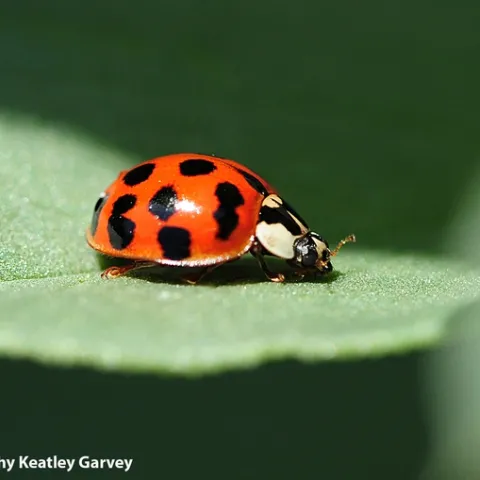
People aren't the only ones favoring fava beans. Fava beans growing in a raised bed in the Hagen-Dazs Honey Bee Haven on Bee Biology Road, UC Davis, are attracting honey bees, European paper wasps, lacewings, ladybugs, aphids and carpenter bees.
A sure way to generate controversy among citrus growers is to initiate a discussion on navel orange tree pruning. Some growers maintain that yield and fruit size is best maintained by minimal pruning, while others believe that the number of large fruit is increased when trees are severely pruned.
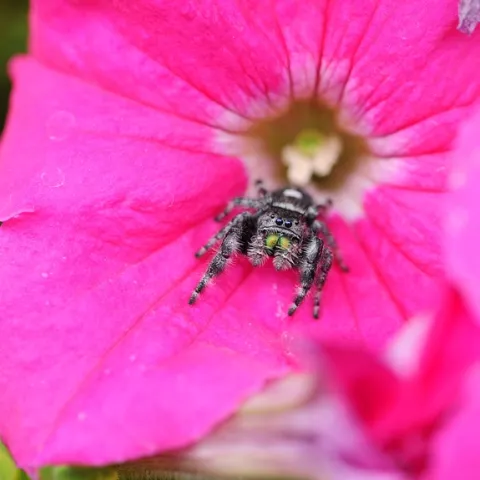
There's a good reason why jumping spiders are named "jumping spiders." They jump. A jumping spider, according to National Geographic, can jump 50 times its body length. We saw this jumping spider (family, Salticidae and probably genus Phidippus) in our flower bed last weekend.
This is part of a talk I gave last week in Marin County. These three annual thistles turn up everywhere in northern California, so it's nice to know them by name. They're mostly on disturbed sites, roadsides, and waste ground, but they can also establish on rangeland, pasture, and natural areas.
![Orange 7[1]](/sites/default/files/styles/large_square/public/2013-03/blog14425.jpg.webp?h=050417d1&itok=wQF2sBea)