Ongoing research

Primary Image
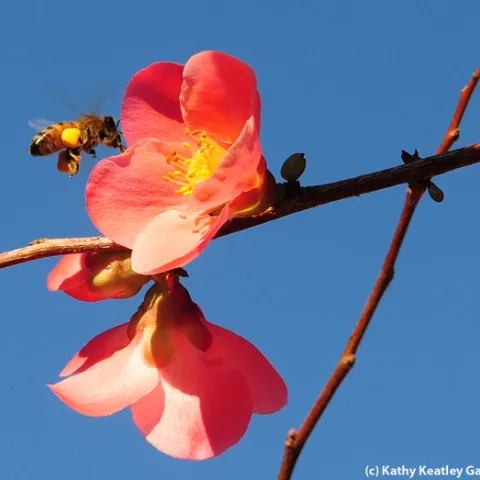
Pollen-packing honey bee cleaning her tongue as she heads for flowering quince. (Photo by Kathy Keatley Garvey)
Bug Squad: Article

Where the Yellow Pollen Came From

February 18, 2013
By Kathy Keatley Garvey
"Where'd that yellow pollen come from?" Beekeepers who watch their bees return to their hives with pollen loads like to guess the origin of the pollen. Red, yellow, blue, white... It's not unlike "What Color Is Your Parachute?" the job-hunting guide by Richard N. Bolles.
View Article
Primary Image
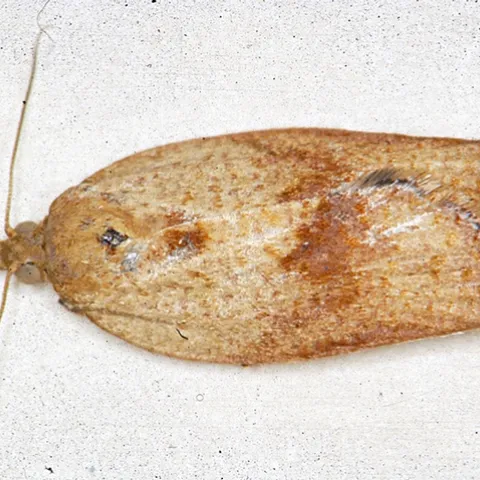
Female light brown apple moth, Epiphyas postvittana. (Photo courtesy of David Williams, principal scientist, Perennial Horticulture, Department of Primary Industries, Victoria, Australia.)
Bug Squad: Article

LBAM--Not Your Typical Invader

February 15, 2013
By Kathy Keatley Garvey
The light brown apple moth (Epiphyas postvittana)--it's not your typical invader. UC Berkeley professor Nick Mills will head to UC Davis on Wednesday, Feb. 20 to speak on just that: "The Light Brown Apple Moth--Not a Typical Invader.
View Article
Primary Image
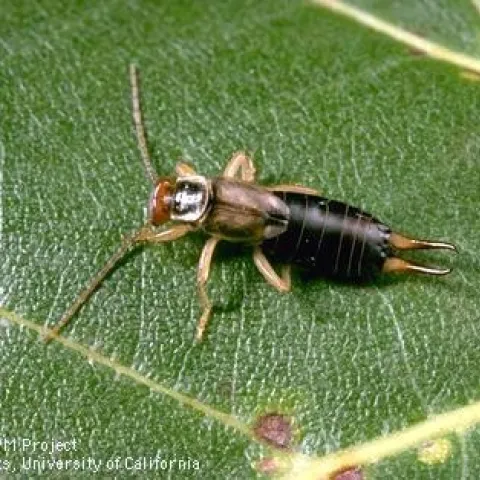
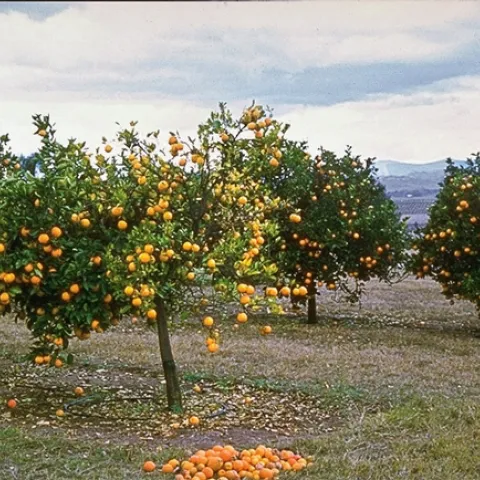
earwig

Earwigs Flying Under the Radar

February 15, 2013
By Ben A Faber
Not too many years ago, most growers and pest control advisors were unaware that earwigs were a potential pest problem in citrus. Earwigs simply were not often found in large numbers in citrus orchards.
View Article
Primary Image
dry root rot

Dry Root Rot in Citrus

February 15, 2013
By Ben A Faber
Dry root rot has been a problem in citrus orchards for many years. Although generally a problem in coastal and northern California counties it has been reported in other citrus producing areas of the state.
View Article
Colusa County: Article

Sacramento Valley Almond News - February 2013

February 15, 2013
Butte-Glenn Almond Institute & Walnut Day Groundwater Nitrogen Dilemma Bee Careful with Pesticides Almond orchards with wild insects have higher fruit set Nickels Field Day Springtime disease control Almond Fungicide Efficacy South Sacramento Valley Winter Almond Meeting...
View Article
Primary Image
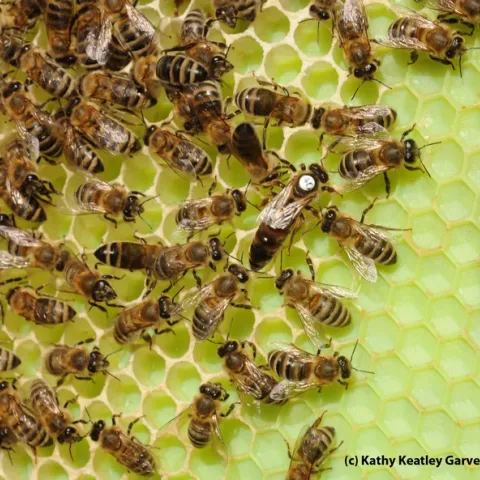
Queen bee (with dot) and worker bees. (Photo by Kathy Keatley Garvey)
Bug Squad: Article

Bee My Valentine

February 14, 2013
By Kathy Keatley Garvey
It's nice to remember the honey bee on Valentine's Day. You'll see many Valentine cards inscribed with "Bee My Valentine" and featuring a photo of a bee. Many of those photos depict a queen bee, the mother of all bees in the hive. To be a queen, she'll need to be fed royal jelly as a larva.
View Article
UC Weed Science (weed control, management, ecology, and minutia): Article

Roundup Resistant Ryegrass Control in Sacramento Valley Almonds

February 14, 2013
By Douglas Munier
Glyphosate resistant ryegrass has been a persistent problem since appearing in almond orchards in the Sacramento Valley in the late 1990s. It is a winter annual weed, but under irrigation it can germinate any time of the year.
View Article
Primary Image
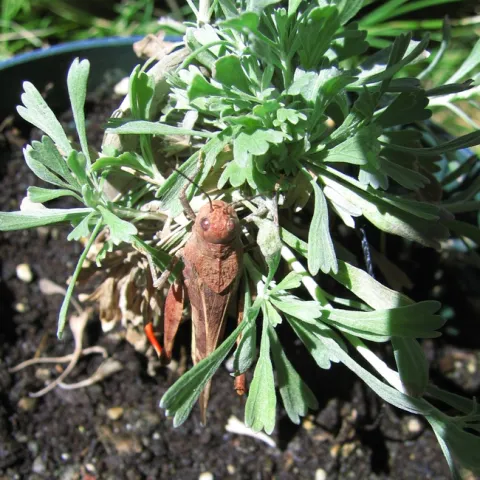
Grasshopper feeding on sagebrush. (Photo courtesy of Rick Karban)
Bug Squad: Article

It Pays to Be a Relative

February 13, 2013
By Kathy Keatley Garvey
Plants communicate. They do. Ecologist Richard Karban, a professor in the UC Davis Department of Entomology, points out that one of the simplest forms of communication involves shade. When a plant is shaded, it grows away from the plant or other object that's shading it.
View Article