

iCode Curriculum
Identity exploration through computer science for middle school youth
“I Code” and “Identity Code”
Young people need both digital competence and confidence to use computing to solve problems and design solutions. Computer science (CS) skills are in demand in the job market, and all youth benefit from computational thinking (CT) abilities, even if they do not pursue high-tech careers. Yet access to CS education is uneven, especially for youth from lower-income households, youth in rural communities, and Black, Indigenous, and Latino youth. Participation in CS learning strongly predicts interest in CS college and career pathways, and current disparities in access mirror those seen in the CS workforce, where women, especially women of color, are underrepresented.
This curriculum centers identity and cultural heritage to help young people strengthen their CT abilities, build positive attitudes toward CS, and increase career motivation. When CS instruction is paired with authentic, culturally relevant learning and identity development, youth engagement and persistence in CS can improve.
Grounded in culturally relevant youth development and experiential learning, the curriculum spirals core CS ideas across three modes: unplugged activities (no computer needed), block-based coding with Scratch, and BBC micro:bit design and programming. Alongside skill building, lessons invite youth to explore, discuss, and reflect in ways that support positive ethnic-racial identity connected to their heritage and culture.
Scope
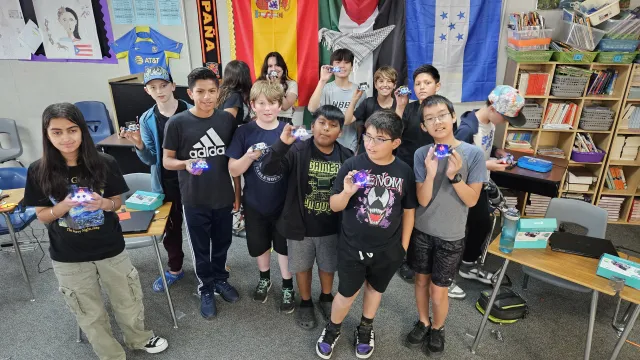
The curriculum is designed for out-of-school settings and can be facilitated by professionals, trained volunteer educators, or CS industry mentors. Professional development materials, including reading guides and video lessons, are available at click2computerscience.org.
Sequence
Because of the developmental arc and sensitive topics, we strongly recommend implementing the full sequence, Lessons 01–14, in order, even for youth who have prior CS experience, rather than selecting stand-alone lessons.
Team
- Steven Worker, PhD, smworker@ucanr.edu
- Fe Moncloa, PhD, fxmoncloa@ucanr.edu
- Curtis Ullerich, curtis@ulleri.ch
- Katherine Soule, PhD, kesoule@ucanr.edu
- Car Mun Kok, PhD
- Yu Meng, PhD
- Vernelle Mitchell-Hawkins
- Evelyn Rumsby
- Liliana Vega
Educator Learning Modules
Background reading guides and video learning modules are available for educators preparing to lead the iCode (identity-code) curriculum. These materials focus on teaching skills needed and is a companion to the iCode curriculum introduction and background and the educator toolkit.
Curriculum
Published version, February 2026
iCode curriculum: Identity exploration through computer science for middle school youth.
Curriculum Front Matter & Introduction
- Introduction and Background
- Curriculum Pedagogy
- Lesson Layout
Module 1 Building Agreements for Brave Spaces and Computational Thinking
Youth and adults develop group agreements, establish brave spaces, and begin to explore access, equity, and computational thinking.
- 01 Lesson: Building Agreements (Unplugged) [1 hour]
- 02 Lesson: Brave Spaces (Unplugged) [1 hour]
- 03 Lesson: Civil Dialogue: Understanding Access and Equity (Unplugged) [1 hour]
- 04 Lesson: Exploring Culture (Unplugged) [1 ½ hours]
- 05 Lesson: Computational Thinking (Unplugged) [1 hour]
Module 2: Ethnic-Racial Identity in Computer Science
Youth explore their identities, ethnic heritage(s) and background(s) while increasing their knowledge of fundamental CS concepts (code, events, loops) and begin block-based coding.
- 06. Lesson: Stereotypes and Bias (Online) [1 ½ to 2 hours]
- 07. Lesson: What’s in a Name? (Scratch) [1 ½ to 2 hours]
- 08. Lesson: Storytelling and Narratives (Scratch) [1 ½ to 2 hours]
- 09. Lesson: Exploring Connections to Family and Ancestral Roots (Scratch) [1 ½ to 2 hours]
Module 3: Social Justice in Computer Science
Youth strengthen their awareness of multiple groups’ experiences with discrimination in the context of the USA while deepening their understanding of CS concepts (algorithms, logic, functions) and begin programming a microcontroller. Youth improve their critical reflection, motivation, and action (critical consciousness) while improving their ability to design and code a microcontroller with external sensors.
- 10. Lesson: Code the Concept (Scratch) [2 to 2 ½ hours]
- 11. Lesson: Bias in Computer Science (Unplugged) [1 hour]
- 12. Lesson: Intent and Impact of Algorithms (Unplugged) [1 hour]
- 13. Lesson: Sparking Discussion About Marginalization (micro:bit) [5 to 7 hours]
- 14. Lesson: Using Computer Science to Confront Oppression (micro:bit) [5 to 6 hours]
Primer 01 – Preparing to Facilitate iCode Curriculum: Preparing educators to integrate computer science education and ethnic-racial identity exploration using social justice youth development
Primer 02 – Building an educator community of practice (CoP): To strengthen 4-H professionals’ leadership to coordinate a sustained learning and support group of educators to teach the iCode curriculum
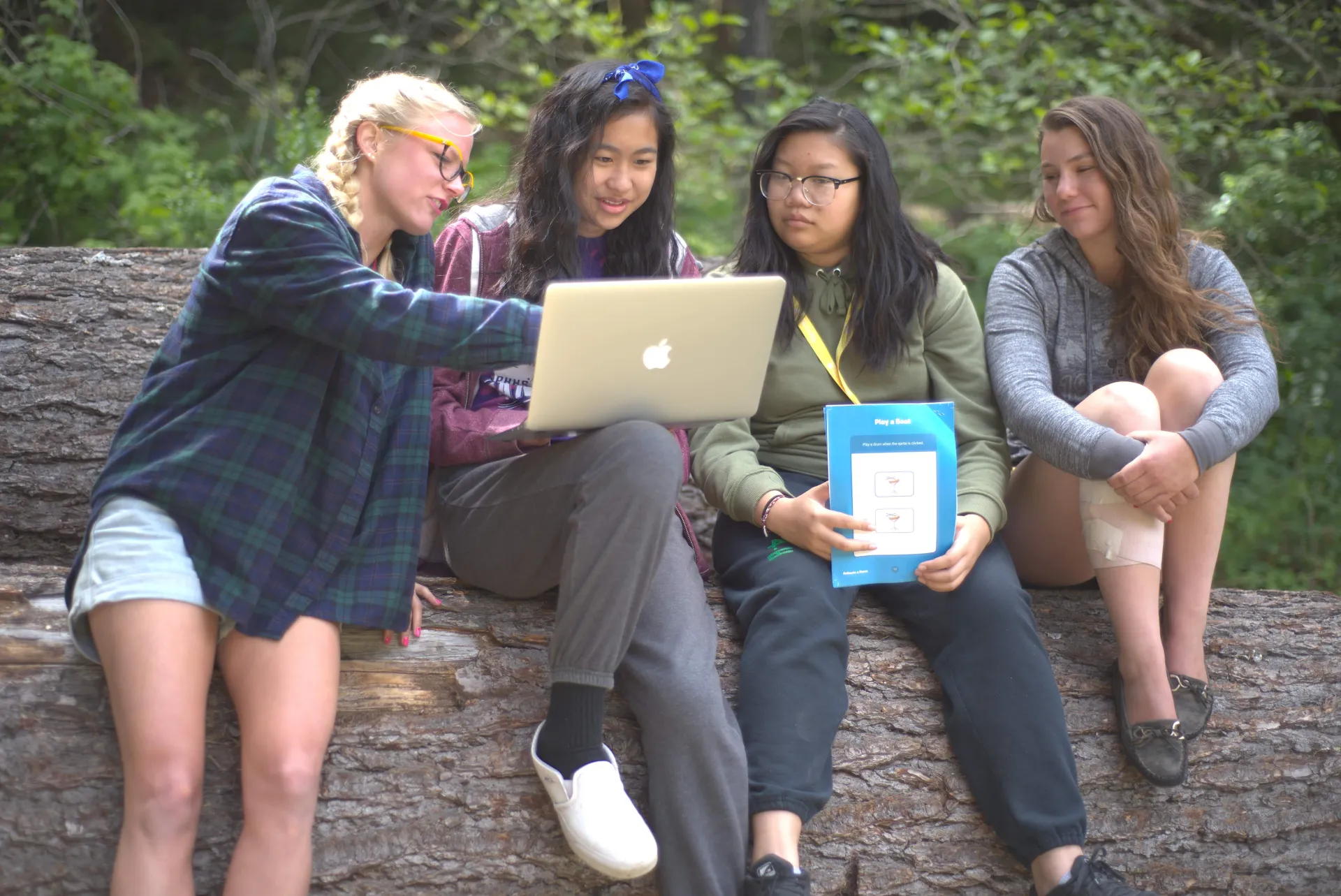
Toolkit – Educator Toolkit
- Involving the Family
- Family Introduction Letter (template to be sent home before Lesson 06)
- Educator Tips for Facilitating Conversations
- Facilitator Reflection Tool
- Sample Lesson Implementation Timeline (school year, 32-weeks)
- Youth Survey Analysis Notes
- Introduction to CS First
- Introduction to BBC micro:bit
Youth Survey Instrument
Publications
- Worker, S., Moncloa, F., & Mitchell-Hawkins, V. (2024). Integrating computer science education and ethnic-racial identity exploration within a social justice youth development framework. Journal of Youth Development, 19(3). https://open.clemson.edu/jyd/vol19/iss3/1
- Worker, S, & F., Moncloa. (2025). STEM and Social Justice Youth Development. National Urban Research and Extension Center. https://nurec.extension.org/wp-content/uploads/2025/07/STEM_A1.pdf
- Worker, S. M., Nayak, R., & Moncloa, F. (2024). California 4-H computer science education pathway. Journal of Extension, 62(1). https://tigerprints.clemson.edu/joe/vol62/iss1/9/
Worker, S. M. et al. (2024). iCode curriculum: Computer science education and ethnic-racial identity exploration using social justice youth development (Identity-Code). Presented at the National Association of Extension 4-H Youth Development Professionals Annual Conference.
iCode Poster 2024 NAE4-HYDPArchived
Acknowledgements
We acknowledge financial support from the National 4-H Council, Google, and the National Urban Research & Extension Center.
