
Editor's Pick Archive :: 2026 :: 2025 :: 2024 :: 2023 :: 2022 :: 2021 :: 2020 :: 2019
Articles for 2026
January: Echeveria “Imbricata” (Hen and chicks)
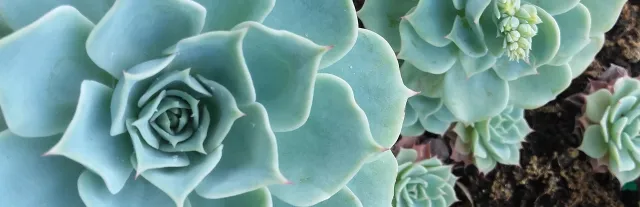
With it's fleshy leaves and low growth pattern this attractive succulent is ideal for fire-wise landscaping. Blue-green rosettes spread freely, forming dense clumps from two to four feet wide. In the spring pink flowers lined in yellow bloom grace 8-inch stems. Drought-tolerant; frost hardy to 20 degrees this succulent prefers light, well-drained soils, and partial shade in our area.
February: Our Portion of the Pacific Flyway
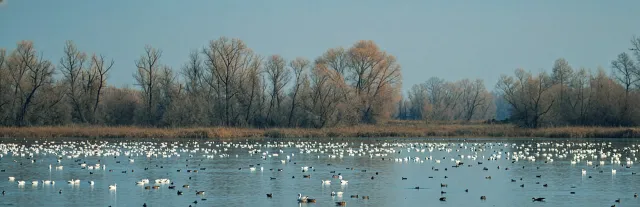
The route that migrating waterfowl and raptors take as they move between their seasonal homes is four thousand miles long, stretching from Patagonia to Alaska. Butte County’s own small portion of the Pacific Flyway attracts millions of birds. This is because we have a lot to offer them: a portion of the tiny percentage of remaining wetlands in the Sacramento and San Joaquin valleys is here; our flooded rice fields are attractive to birds, and our waterways (both natural and those built to carry water for irrigation) also provide food and resting spots for these travelers.
Two easily accessible places for viewing migrating birds are the Llano Seco Viewing Platform on 7-Mile Lane west of Dayton, and the Gray Lodge Wildlife Area west of Gridley. The show started in November but continues through February. Don’t miss this opportunity to see these amazing creatures as they go about feeding and gathering energy for their next big push southwards.
Photo of Gray lodge by the California Department of Fish and Wildlife.
March: North Table Mountain Ecological Reserve
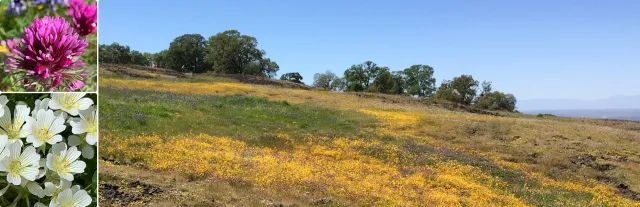
It’s wildflower time! One of the best local places for wildflower viewing is the North Table Mountain Ecological Reserve on Cherokee Road out of Oroville. The Reserve is managed by the California Department of Fish and Wildlife (CDFW), which requires a day pass for hiking access (just under $6 and is available online at CDFW Lands Pass. According to the CDFW website, the 3,300 acre Reserve is an “elevated basalt mesa created by ancient lava flows, with beautiful vistas of spring wildflowers, waterfalls, lava outcrops, and a rare type of vernal pool, called Northern Basalt Flow Vernal Pools. Despite the impacts of non-native invasive plant species, range management practices, such as cattle grazing, have contributed to maintaining spectacular wildflower blooms that draw visitors from far and near.” In addition, the 360-degree views of the surrounding countryside are phenomenal.
Be sure to wear sturdy walking shoes, as basalt formations can be uneven and slippery when wet. Enjoy traipsing through this stunning natural area.
April: Colorful Mosaics About Nature
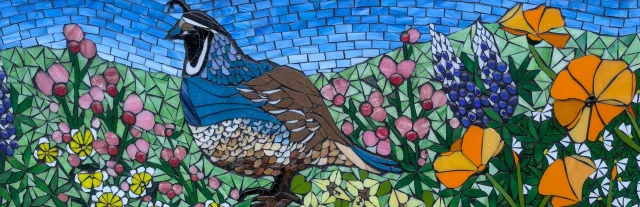
You must go see the mosaics along Table Mountain Boulevard in Oroville. This masterful art installation consists of 60 distinctly different murals totaling 600 feet, making it one of the largest mosaic projects in the United States. The organization behind the stunning array is the Rainforest Art Project, a San Diego-based non-profit dedicated to “engaging children throughout the United States in projects that bring lasting beauty to their communities, while giving participants a deep sense of pride and ownership.”
Over 1,000 of our local schoolchildren were involved in placing pre-cut glass tiles in professionally-designed templates to create the mosaics, which depict local flora, fauna, and landmarks.
Plan to spend some time taking in the many facets of each mosaic as you stroll up and then back down the fairly steep boulevard (park in the western lot of the Feather River Fish Hatchery). I promise that you too will want to share the news about this heart-warming and important piece of public art. My money says the beauty and artistry of these mosaics will draw people from far and wide.
May: Grow Food
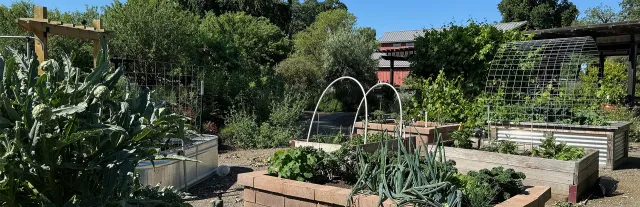
Why not invest some time and effort into supplying yourself, your family, and perhaps your neighbors and friends, with fresh, healthy, and hyper-locally grown food! If you already have a food garden, consider helping someone else start one. If your yard won’t accommodate your project, partner with friends.
An excellent resource to help you pursue any of these options is the 1,000 Acres More Project of Butte County Local Food Network. BCLFN is dedicated to creating “a healthier, just, resilient, and regenerative local food system for Butte County and its foodshed.” Learn about the available gardening opportunities through 1000 Acres More.
June: Farmers Markets!
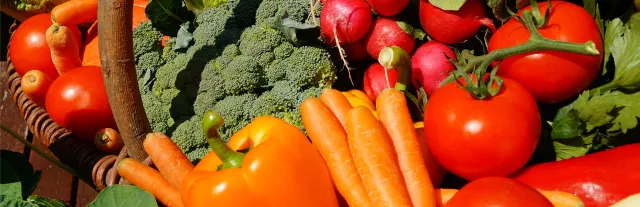
We’ve got great ones in Butte County, and our local farmers and vendors are entering the season of plenty right about now. Stalls are piled high with their healthful and colorful harvests, including many varieties of berries, early peaches, summer squash, lettuce, and much more. You name the vegetable or fruit, nut or seed, and you are likely to find it on offer.
Chico boasts year-round farmers markets on Wednesdays and Saturdays, plus a warm-season Thursday night market which leans more towards entertainment and prepared food but does have a few farm stalls. There’s a new farmers market in Durham on Sundays through October. And Oroville has its markets on Wednesdays and Saturdays from April to September.
Enjoy what you eat and support our hardworking farmers. It’s worth remembering that the food you buy at a farmers market was not shipped across an ocean or trucked across a continent. It was grown right here, by our neighbors.
Besides great produce and supporting farmers, the market also includes information booths from local non-profit organizations. The UC Master Gardeners of Butte County will be available to answer your gardening questions at the Chico Farmers Market the 2nd Saturday in June, September, October, and November. Check our Events page for details, and stop by our booth.
July: Be on the Lookout for the Glassy Winged Sharpshooter
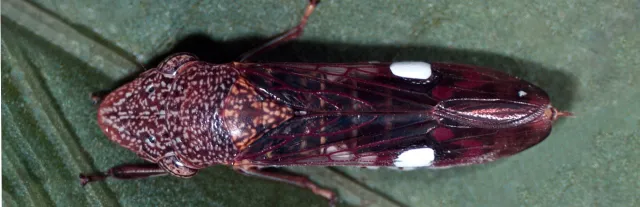
On June 5, the California Department of Food and Agriculture (CDFA) issued a notification that “invasive glassy-winged sharpshooter (GWSS) insects were found on shipments of grapevines sold at select Costco locations in Northern California between April 21 and May 21.” The plants were sold at Costco stores in 24 different counties, including Butte, Yuba, and Shasta. The GWSS presents a danger to crops and ornamentals because it is a vector for “Pierce’s disease, a fatal grapevine disease that threatens California vineyards. The pest can also damage citrus trees, landscape plants, and other crops.”
The CDFA notes that “early detection and rapid response are critical to preventing the pest from spreading further.” Reaching Costco members who purchased potentially infected plants so they can properly dispose of them (see below) is of utmost importance. Please spread the word! Visit the UCANR Pest Note for detailed information and history of the Glassy Winged Sharpshooter.
What To Do If You Purchased a Plant
If you purchased a grapevine from Costco in an affected county between April 21 and May 21, take the following steps:
Isolate the Plant
- Keep the plant in its original pot or container and away from other plants.
- Do not put the plant in the ground if you have not already done so.
- If possible, place the plant inside two trash bags, one inside the other, and seal them closed.
- Do not return, transport or relocate the plant.
- Do not place the plant in the trash or compost bin.
Contact Your Local County Agricultural Commissioner’s Office Right Away
Find your County Agricultural Commissioner.
- An agricultural inspector will come to examine the plant and nearby host plants.
- If inspectors find GWSS on the grapevine, they will safely remove and dispose of the plant.
- GWSS monitoring traps may also be placed on or near the property.
August: Replace Invasives with Natives!
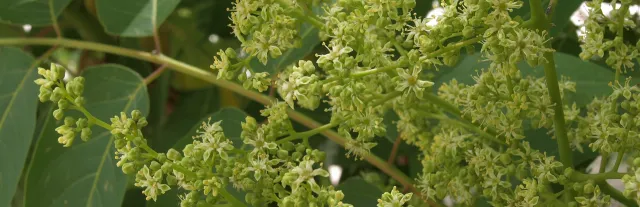
Master Gardeners always advise planting natives, especially instead of invasive species. A handy California Department of Fish and Wildlife (CDFW) website makes it easy to identify an invasive plant and choose an appropriate replacement.
Let’s say you have the deceivingly named “Tree of Heaven” (Ailanthus altissima) in your yard (condolences if you do). If you click on the CDFW link above, and then click on the Tree of Heaven link, you’ll find the history of this fast-growing tree, learn why it’s a problem in both domestic and wild landscapes, and see what native alternatives you can plant in its stead.
Currently, the CDFW website contains information about the following problem plants: Big Periwinkle; English Ivy; Giant Reed; Iceplant; Onion Grass; Pampas Grass; Red Sesbania; Russian Olive; and Tree-of-Heaven. They will periodically add new pages to highlight other species to avoid.
For a more complete list of invasives in California, please visit the California Invasive Plant Council’s Invasive Plant Inventory Database.
We thank you for doing your part to plant native species, which grow happily here. Our native wildlife, including pollinators, will thank you too.
Key-of-Heaven photo by Jim Morefield.
September: What’s Growing On KZFR 90.1 FM
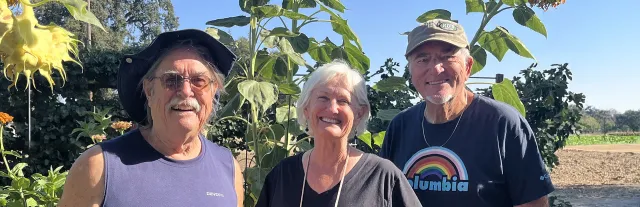
"What's Growing On" is a new garden show on KZFR Community Radio (90.1 FM) hosted by Tom Hansen, Jenny Marr, and Tom Gagne. The show explores seasonal topics and answers questions from the community. The hosts also provide resources to help listeners acquire accurate home gardening information. A special feature is interviews with local food and gardening experts.
The first show aired on August 13 and airs the second Thursday of each month. To access past programs, visit the show's archive then scroll down to the program date. Past programs are accessible for listening for two weeks.
Tom, Jenny, and Tom want to hear from you! Send your gardening questions to jennydoesplants@yahoo.com
Tom, Jenny, and Tom are UC Master Gardeners of Butte County. Content aired on ‘What’s Growing On’ does not represent the views of the University of California’s Agriculture and Natural Resources, and UC has no affiliation with this radio show.
October: Hardneck Garlic
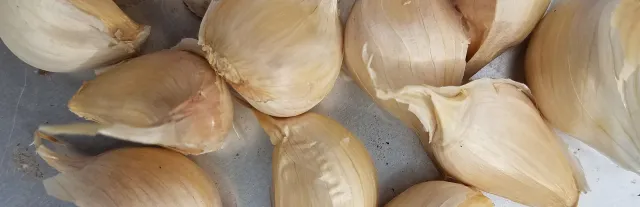
There are two types of garlic—hardneck and softneck. Our top tip for garlic growers (or those planning to grow garlic): choose the hardneck varieties.
The softneck varieties yield more, but much smaller, individual cloves. At least in our kitchen, the skinny cloves end up unused, as it’s just no fun peeling a tiny sliver of garlic. Hardneck varieties yield fewer cloves (between 5–7), but they are large and easy to peel.
Because hardnecks are native to the countries of eastern Europe, where cold winters are the norm, they like a few weeks of chilling in the refrigerator crisper drawer before planting. It’s ideal to plant them in mid to late September, but you can start later—like sometime in October.
Hardnecks are, however, harder to come by. You need to order them, because our grocery stores stock only the softnecks.
Credit for this tip goes to Tom Hanson’s discussion of all things garlic on the September 10 edition of What’s Growing On, aired on KZFR Community Radio 90.1 FM. For more information on growing garlic, read our article here: Growing Garlic | The Real Dirt