
Photos provided by Phil Quinlan
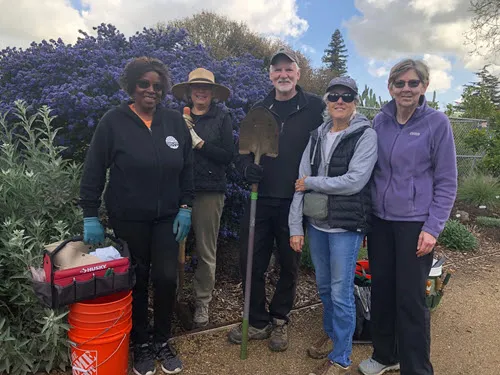
The Gehringer Native Plant Garden, designed, installed, and maintained by UC Master Gardeners, showcases California native plants that attract pollinators and thrive in Concord’s hot summers. It demonstrates how hardy, water-conserving plants can be used in homes, schools, businesses, and public gardens without pesticides, benefitting wildlife. It also provides a setting for UC Master Gardeners to develop hands-on skills in an area of growing public and business interest.
The passage of California Assembly Bill 1572 (which targets the irrigation of non-functional turf with potable water) is expected to further drive interest in more sustainable alternatives, such as California native plants. See https://ucanr.edu/blog/smart-water-living-urban-water-efficiency-socal/article/assembly-bill-ab-1572-2023-2024
The demonstration garden was originally an unsightly, weed-filled area. Starting in summer 2022, the weeds were removed, and the first plants were installed in fall 2022. A further planting in fall 2023 extended the garden into a shaded area.
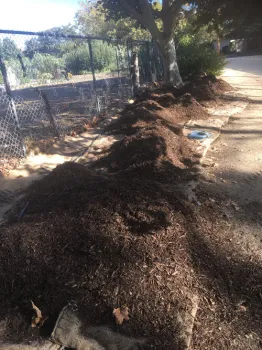
In late fall 2024/early 2025, the narrow parking strip became another thriving demonstration area. It now supports butterfly-, bee-, and bird-friendly plants. Milkweed provides habitat for monarch butterflies, while yarrow feeds butterflies and native bees. Red-flowered fuchsia attracts hummingbirds, and coyote mint, prostrate manzanita, and common rush add structure. The strip shows how natives can flourish in challenging urban spaces.
Two planted areas, approximately 200 feet long, are separated by a decomposed granite path. One is about eight feet wide on the garden side, while the parking strip ranges from eighteen inches to two feet wide. There are currently approximately 120 plants and 90 different varieties.
The garden features a rich mix of pollinator-friendly natives. Eight kinds of California lilac and six types of manzanita form the backbone, with sages, buckwheat, coffeeberry, and toyon adding variety. In shaded areas, flowering currants, coffeeberries, and Catalina cherries provide structure. Each spring, wildflowers bloom throughout the garden, including Chinese houses in shade and poppies, phacelia, gilia, and lupine in the sun. A display kiosk and garden bench invite visitors to pause and enjoy the plants and wildlife.
The garden has become a haven for wildlife. Bluebirds and white-crowned sparrows forage among the shrubs, while red-tailed hawks circle overhead. Monarch butterflies lay eggs on narrow-leafed milkweed, an essential plant as monarch populations decline.
Native bees, including yellow-faced bumble bees and golden Valley carpenter bees, gather pollen from the flowers. Western aphid eaters help control pests, and western fence lizards bask in the sun. A bluebird nest box installed in 2024 fledged five chicks in 2025.
Other birds seen in or above the garden include wrens, titmice, chickadees, hummingbirds, phoebes, finches, goldfinches, bushtits, scrub-jays, and Swainson’s thrushes.
The team is capturing their sightings on their iNaturalist project: https://www.inaturalist.org/projects/gehringer-native-plant-garden.
Together, these elements make the pollinator pathway both a thriving ecosystem and a living classroom, showing how native plants can create beautiful, sustainable landscapes that conserve water and support wildlife.
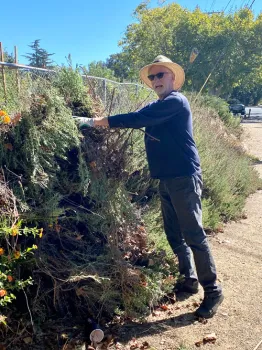
A team of six UC Master Gardeners works in the garden from 9 – 11 am every Thursday. Team members include Phil Quinlan (lead), Dorothy Abeyta, Bennet Berke, Jim Breuner, Bruce Dresser, Karen Goodwin, Robin Harper, and Anna Wendorf. They welcome new volunteers – there is a wide range of opportunities, including plant care and maintenance, propagation, irrigation, biodiversity monitoring, photography, and more. Contact CoCoMG Phil Quinlan if you're interested in volunteering.
Native plants take a few years to establish and mature, so the decision was taken to delay ‘going public’ until they felt it was ready. They’re happy to say that time has arrived and want to invite UC Master Gardeners to their ‘Going Public’ event on Saturday, April 4th, from 12 – 3 pm.
UC Master Gardeners, Gehringer community gardeners and the local community will be invited. Refreshments and food will be catered by UC Master Gardeners. There will be a table with handouts about California natives and a guided tour of the garden. In addition, free seeds will be available. Phil or Anna may do a talk or run a video in the Gehringer Community Garden Learning Center (a pavilion).
The garden has also been invited to participate in the “Bringing Back the Natives Tour” (an established tour in the Bay Area featuring predominantly private homes) on May 3, from 10 –4 pm. Activities will include a guided tour, handouts at the tables and free seeds.
For more information, visit https://bringingbackthenatives.net/view-gardens. Please mark your calendars now to attend one or both of these events.
< Previous Articles Next >
Go to: Current Issue UCANR Home CoCoMGHub