
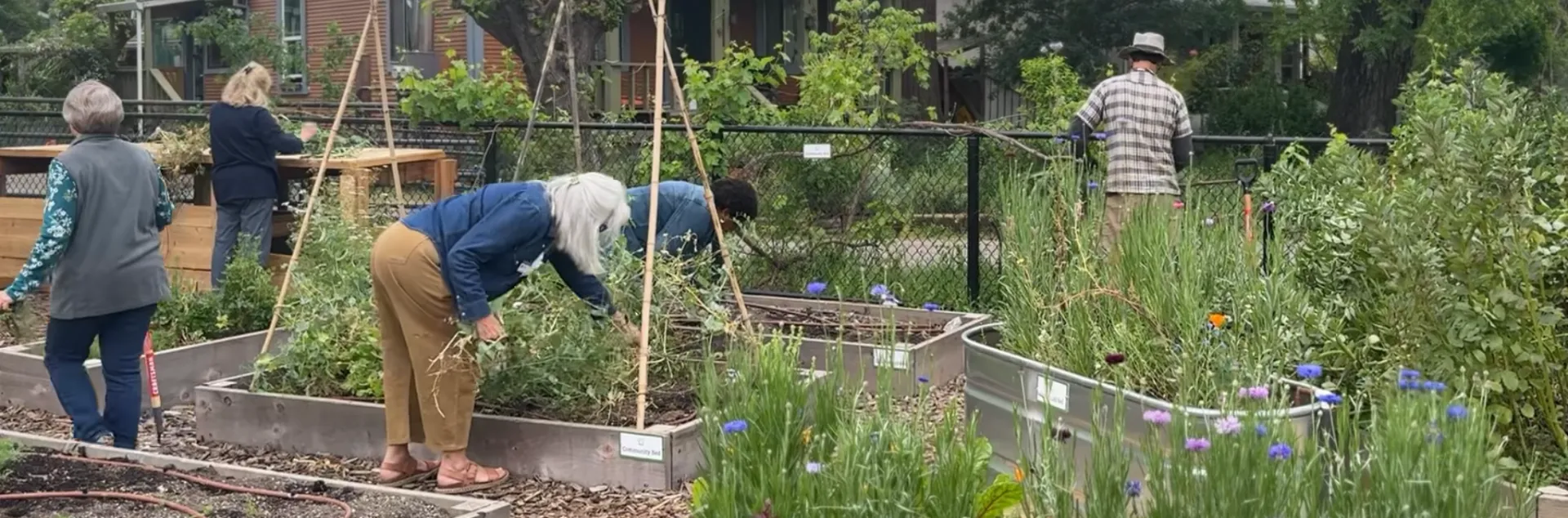
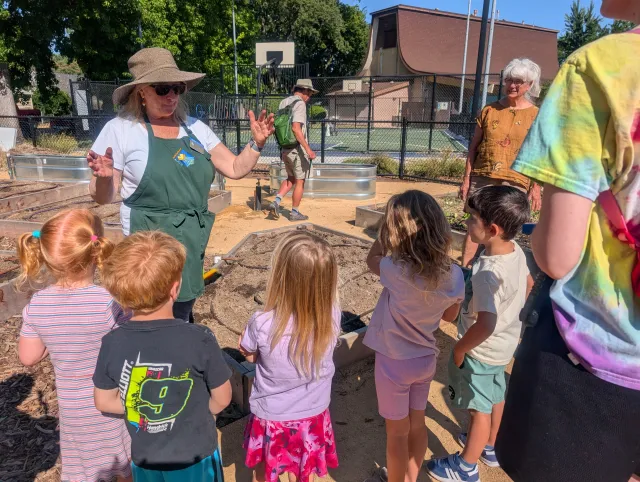
In classrooms across Butte County, UC Master Gardener volunteers were helping students plant seeds, dig in the soil and ask questions about the world around them. The work was meaningful, but it also revealed a challenge: There was not enough time to reach every student in a lasting way.
At the same time, staffing and funding changes were making garden-based education harder for schools to sustain. The need was growing, but support was shrinking.
"We were in a lot of classrooms once a month, and to me it did not seem the most effective use of our time," said UC Master Gardener Joyce Hill. That realization prompted the UC Master Gardeners of Butte County to rethink not just what they were doing, but how they were doing it. Instead of trying to reach more students one classroom at a time, they stepped back and asked a bigger question: What would it look like to build something that could keep going, even when they weren't there?
The Living Lab
The answer became The Living Lab, a garden-based science project that gives teachers ready-to-use lessons and training so they can teach science outdoors.
The team rebuilt the project from the ground up. UC Master Gardeners reviewed lessons, aligned them with science standards and developed full units where students could observe, ask questions and learn how plants grow, how soil functions and how living systems are connected through hands-on experience. Students explore topics like how seeds grow and what they need to thrive, along with how worms function and what they need to survive, helping them understand plant life cycles and the role of soil in a living system. The lessons also incorporate reading and storytelling, helping students build literacy skills alongside science.
"We came to the realization that there were a few of us and a lot of schools, and a lot of kids that we were not getting to," Hill said. "We needed to do something different."
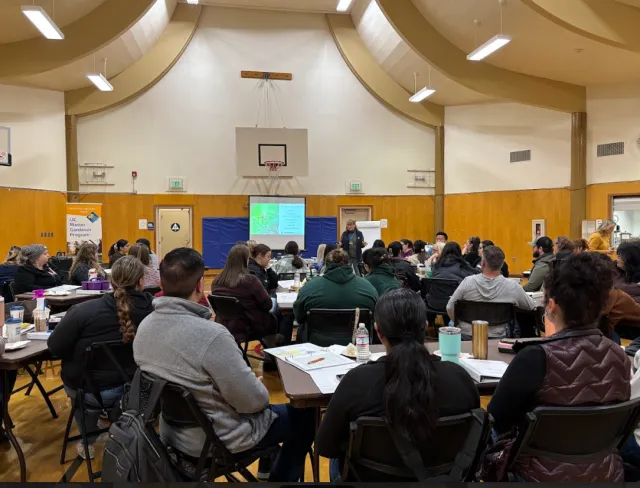
That shift led to a train-the-trainer model. Instead of teaching every lesson themselves, UC Master Gardeners began leading hands-on workshops where teachers and afterschool leaders could experience the lessons firsthand, then take them back to their own classrooms and garden spaces. Training took place at a local teaching garden, where educators could see the lessons in action and practice them for themselves.
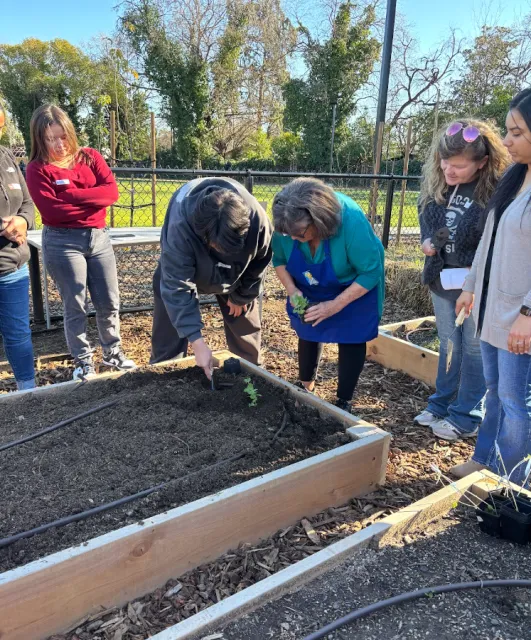
UC Master Gardener Toni Morucci said one of the most rewarding parts has been watching educators bring the work back to their own campuses. "I've been helping with some of the curriculum and doing the leadership training," Morucci said. "It's been really fun watching the leaders from the different schools that have gardens come and learn about the curriculum and how they can take things back to their school site."
In just a few years, they trained more than 120 educators, reaching thousands of students across Butte County. More importantly, they created a model that does not rely on a volunteer being in every classroom.
Behind that growth is a dedicated team of 10 to 12 UC Master Gardeners, including retired educators, curriculum writers and longtime volunteers. Each person brings a different skill set, and together they've created something far stronger than any one person could build alone. "I saw that its mission and its goal was bigger than any individual […] it was community-wide," said UC Master Gardener Rick Rogers.
For many UC Master Gardeners, the impact shows up in small, everyday moments: a student notices something new, a teacher gains confidence leading a garden lesson, or a school garden becomes a place where learning feels real.
"I love working with children, to watch them be able to grow in the garden, understand where their food is coming from, being excited about where their food is coming from," said UC Master Gardener Marie Dillon.
By building a project that trains educators and supports long-term learning, these UC Master Gardeners created something that will continue to grow well beyond their own time in the classroom.
Statewide Recognition
The Living Lab recently earned second place in the UC Master Gardener Search for Excellence, a statewide recognition that highlights innovative projects with strong community impact, earning a $1,000 cash award.
In addition to the cash prize, the team will showcase their work through a digital poster display at the 2026 UC Master Gardener Conference and will be featured in a dedicated conference session. These opportunities provide a platform to share their approach, inspire other county programs and highlight the impact of innovative, volunteer-driven education across California.
The UC Master Gardener Program provides the public with University of California research-based information on home horticulture, sustainable landscaping and pest management through local UC Cooperative Extension offices. During National Volunteer Month, we celebrate the dedication and impact of our volunteers, whose outreach, education and service strengthen communities across California.
Through initiatives like Search for Excellence, we recognize outstanding programs that demonstrate innovation and measurable results. If you're interested in learning more about gardening in your community or getting involved, connect with your local UC Master Gardener Program.
AI tools were used in the preparation of this article to assist with organizing content and reviewing grammar, clarity and sentence structure in alignment with UC guidelines. All content was reviewed, verified and approved by the author prior to publication.