
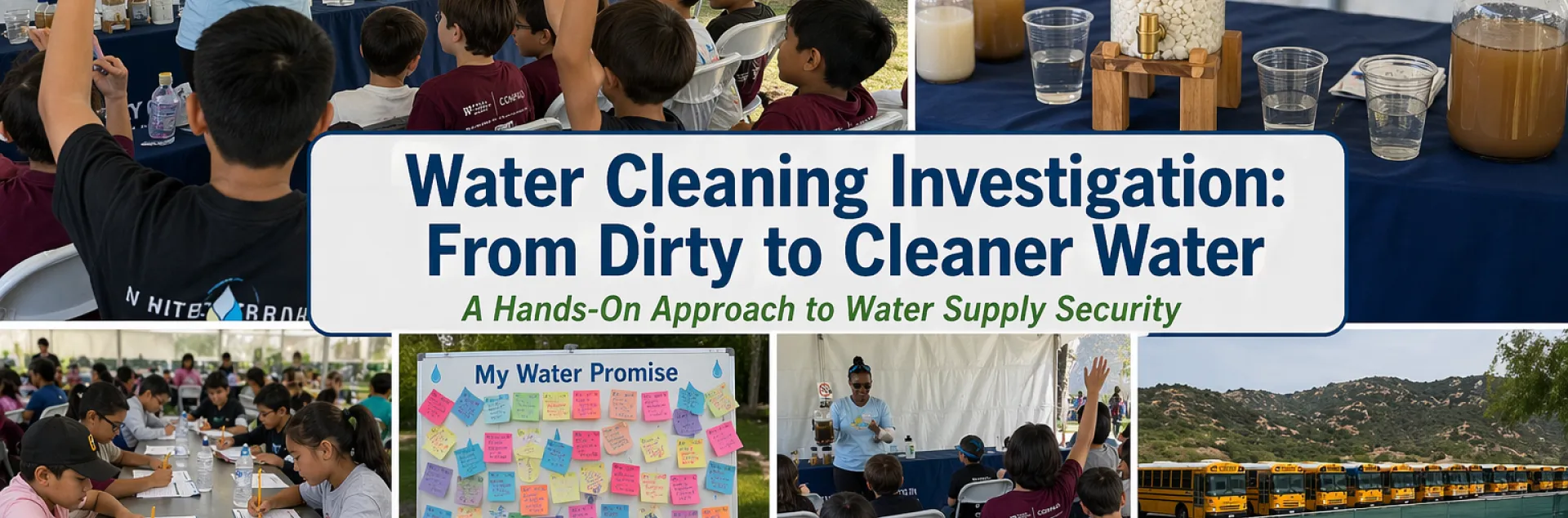
Inspiring Young Water Stewards Through Hands-On Learning at the 2026 OC Children’s Water Festival
💧 Hands-On Learning in Drinking Water Treatment
April 15–16, 2026 | Oak Canyon Park, Orange County, California
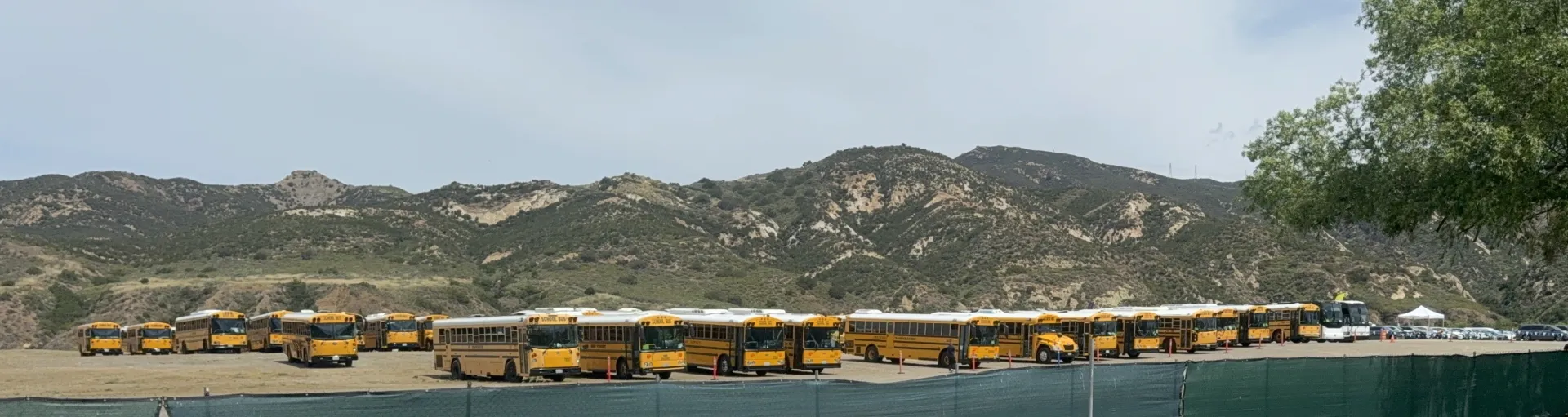
On April 15 and 16, 2026, Oak Canyon Park in Silverado, California, came alive with the energy of thousands of young learners. The OC Children’s Water Education Festival welcomed approximately 6,000 third, fourth, and fifth-grade students from across Orange County, all arriving with curiosity and leaving with a deeper understanding of water. The event was made possible by the Orange County Water District.
At Booth 52, for the second year in a row, the University of California Cooperative Extension offered a hands-on learning experience focused on drinking water treatment and filtration system. The sessions were led by Esther Lofton, the Urban Watershed Resilience Advisor, and supported by two Disney volunteers each day, whose presence made it possible to engage students more closely during each activity.
Across the two days, twelve sessions were delivered, five on the first day and seven on the second, with classes of up to 43 students at a time. Each group brought a new wave of questions, observations, and excitement.
💧 Making the Invisible Visible: How Water Gets Clean
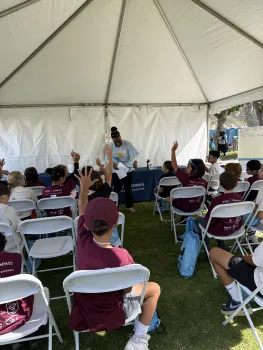
The heart of the experience was a simple but powerful activity, Water Cleaning Investigation: From Dirty to Clean. Students were introduced to dirty water, brown in color and clearly unsafe, made from a mixture of dirt, soil, clay, leaves, and grass. Before anything else, they were asked where this kind of water might be found. Hands quickly went up, and students eagerly answered, “lakes,” “ponds,” “rivers,” and more.
That moment opened the door to a larger conversation about water sources and helped connect the lesson to the real world around them. It also created an opportunity to share where much of our water in Southern California comes from, including the Colorado River, snowmelt from the Sierra Nevada, imported water from Northern California through the State Water Project, as well as local supplies and groundwater.
From there, students followed the transformation of that water step by step through the same treatment processes used in real drinking water systems across Southern California.
They learned that one of the first steps in drinking water treatment is aeration, a process in which water is mixed with air. Aeration is used to remove dissolved gases such as hydrogen sulfide, which can cause unpleasant odors, and to introduce oxygen into the water. This added oxygen helps oxidize dissolved metals like iron and manganese, allowing them to be removed more effectively in later treatment steps. When asked what they observed as the instructor created a waterfall effect by pouring water from one beaker to another, the students chorused “bubbles.” The instructor affirmed their observation and explained that oxygen is being introduced into the water during this process, helping to improve water quality.
From there, students continued to follow the transformation of water through the remaining treatment steps, observing how each stage builds on the previous one.
They then explored coagulation and flocculation, where very small particles, too fine to settle on their own, are encouraged to come together into larger clumps. As these particles combined, the students could see how the water began to change. During the next step, sedimentation, these larger particles settled to the bottom, leaving clearer water above.
As the water moved through layers of sand and activated carbon, the students observed filtration in action. The water became visibly cleaner, and they began to understand that filtration removes remaining suspended particles as well as some substances that affect taste and odor. This helped them recognize that treatment processes extend beyond what can be seen with the naked eye.
One of the most memorable moments came during filtration. As the murky water passed through the layered system and began to clear, students leaned forward in their seats. A few voices broke the silence with excitement, calling out, “It’s magic!” ✨
In that moment, curiosity turned into understanding. That moment created space for something deeper. It became an opportunity for the instructor to explain that what appeared to be magic was in fact science, engineering, and careful design working together. It also served as a reminder of how easily clean water can be taken for granted when the work behind it is not visible.
The question was then posed to them: “Can we drink this water now?” The water appeared very clean and was visually comparable to the drinking water they were familiar with, so many students responded yes. Others hesitated, recalling how dirty the water had been at the beginning. The instructor probed further and introduced the final stage of treatment. Some students mentioned bacteria, viruses, and germs, and the instructor affirmed their responses, while also clarifying that the demonstration water was created to mimic natural sources such as river or swamp water and did not actually contain harmful microorganisms.
This led into a discussion of disinfection, the final step in drinking water treatment. During this stage, water is treated to inactivate or destroy disease-causing microorganisms. Common methods include the use of chlorine or chloramine, which provide a disinfectant residual as water moves through the distribution system, as well as ultraviolet (UV) light and ozone, which are also effective at inactivating pathogens. Through this discussion, students were able to connect what they observed in the demonstration to the processes used to ensure that water delivered to homes is safe to drink.
A key concept emphasized throughout the session:
👉 Clear water is not always safe to drink.
🧠 Learning Through Observation and Participation
![🧠 Learning Through Observation and Participation 📝 [INSERT IMAGE 4: STUDENTS WITH WORKSHEETS] Alt text: Students seated under a tent writing observations on worksheets during a water treatment activity.](/sites/default/files/styles/medium_large_350x350_/public/2026-04/Students%20writing.png.webp?itok=BCaZYn1M)
Throughout the sessions, students were not passive observers. They documented what they saw, described changes in the water, and reflected on what each step meant. They began to question whether the water was safe at different stages, learning that clarity alone does not guarantee safety.
Using structured worksheets and guided discussion, they moved from simple observation to deeper understanding, while volunteers provided additional support to help students stay engaged and ask questions throughout the activity.
🌱 From Learning to Action: Water Promise Boards
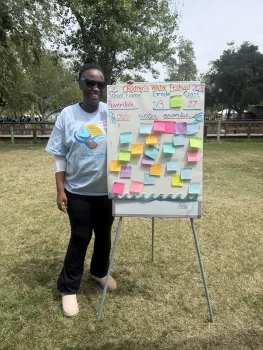
As the sessions came to a close, the focus shifted from understanding to action. Students were invited to write their own water promises. Standing in front of large boards, they carefully considered what they could do differently in their daily lives. One by one, they added their commitments, creating a growing mosaic of intention and awareness.
Many students expressed thoughtful and practical commitments. They spoke about taking shorter showers, turning off the faucet while brushing their teeth, and being more mindful not to waste water. Others recognized the importance of keeping pollution out of storm drains and protecting the environment around them.
One student offered a particularly thoughtful idea: collecting the cold water that runs from the tap before it becomes warm and using it to water plants. It was a simple yet insightful observation that reflected both awareness and creativity. It also sparked a moment of reflection on how such ideas, often overlooked, can inspire innovation and how systems might be improved in the future so that water is used more efficiently even before it reaches the tap.
Not all responses were without humor. Some students found creative ways to interpret conservation. One confidently shared that they would not take showers anymore, prompting a moment of shared laughter with teachers who quickly recognized the opportunity to avoid bath time. Another suggested drinking less water, which became an important teaching moment, reminding the class that while saving water is essential, drinking water is equally important for health and well-being.
Together, these reflections formed something much larger than individual promises. They revealed a growing awareness and a shared understanding that everyday actions, even small ones, can contribute to protecting water resources.
🌎 Connecting to Southern California Water Systems
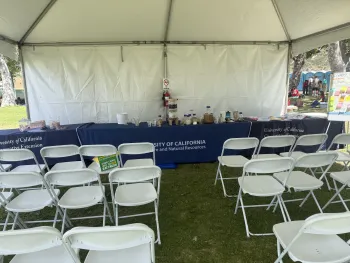
The lessons extended beyond the activity itself. Students began to understand that in Southern California, water is not an unlimited resource. It travels long distances, requires multiple treatment steps, and depends on careful management before it reaches homes, schools, and communities.
This realization helps bridge an important gap between using water and understanding its value.
🤝 Collaboration and Community Support
The sessions were strengthened through collaboration. The support from Disney volunteers helped create a welcoming and engaging environment, allowing students to participate more fully.
We extend our sincere thanks to the Orange County Water District (OCWD) for the opportunity to be part of this impactful event. Opportunities like this allow us to connect directly with students in meaningful ways, with the hope that they will carry what they learned beyond the classroom, sharing it with their families and communities.
By helping students understand how water is treated, the effort and cost required to deliver it, and the importance of protecting water sources, we can begin to bridge the gap between water use and water awareness. This awareness is essential to fostering a culture of conservation and stewardship, where protecting watersheds and preventing pollution becomes a shared responsibility.
💧 Lasting Impact
Across twelve sessions and within a festival that reached thousands of students, something meaningful took place. Students did not just learn how water is cleaned. They began to see their connection to it.
They left not only with knowledge, but with a sense of responsibility.
And perhaps most importantly, they left understanding that caring for water is something they can be part of, starting now.
In those moments of curiosity, excitement, and reflection, the foundation for lifelong water stewardship begins.
It would be remiss not to acknowledge our young water stewards who showed curiosity, creativity, and commitment throughout the sessions. The future of water protection and conservation is built by instilling awareness in young minds, and these are lessons they will carry with them as they grow into the next generation of decision-makers and community leaders.
At its core, this work is about more than water. It is about building understanding, responsibility, and care for the systems that sustain our communities.
🌊 Get Involved: Become a Water Steward
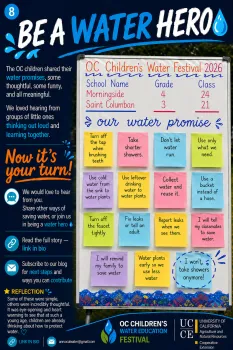
For those inspired to take the next step, we invite you to become part of a growing community of water stewards.
Whether you are an educator, student, community member, or simply someone who cares about water, there are many ways to stay engaged. You can subscribe to this blog to receive updates on programs, resources, and opportunities, or reach out directly to learn how to get involved in watershed stewardship efforts across Southern California.
By building awareness, sharing knowledge, and taking action, we can collectively protect our water resources and strengthen the resilience of our communities.
📧 Email: anrsocalwater@gmail.com
✍🏽 About the Author
Esther Lofton is the Urban Watershed Resilience Advisor with University of California Cooperative Extension (UCCE), where she advances water quality, conservation, and community engagement across Southern California.
Through the Urban Watershed Resilience Program, she works at the intersection of science, education, and community partnership to address critical water challenges. Her work focuses on translating research into practical, community-centered solutions that support water supply security, improve water quality, and promote water use efficiency and equity.
She collaborates with public agencies, educators, and community organizations to bridge the gap between water systems and public understanding, with a strong emphasis on outreach, youth education, and building the next generation of water stewards.
🌐 Explore our programs and resources
🌊 SoCal Water Resources Program: https://ucanr.edu/site/socal-water-resources
🌿 Watersheds Program: https://ucanr.edu/site/watersheds-los-angeles-and-ventura-counties
📖 SoCal Water Blog Series:
https://ucanr.edu/site/socal-water-resources/socal-water-blog-series
Follow the story on Instagram for more moments from the field and classroom, and explore our blog series for deeper insights, resources, and real-world applications of water education and stewardship
🔗 CONNECT
Instagram: https://instagram.com/socal_h2o
TikTok: https://www.tiktok.com/@socal_water
X: https://x.com/SoCal_H2O