

Report • September 2025 • Download PDF (815 KB)
Table of Contents
- Background
- Study Objectives
- Study Design and Methods
- Findings
- Discussion
- Conclusions
- References
- Acknowledgements
In 2024, the Nutrition Policy Institute (NPI) pilot tested an intervention aiming to promote awareness of the California Nutrition Incentive Program, CNIP, among Supplemental Nutrition Assistance Program (SNAP) shoppers using text messages to inform them about the program. The purpose of the pilot study was to assess the feasibility of the intervention as well as the evaluation protocols to inform whether scaling the intervention might be appropriate. This report shares the pilot study findings.
Background
Fruit and vegetable (FV) intake has been shown to be protective against various chronic diseases such as heart disease and some cancers (Hu, 2020; Schwingshackl, 2018; Bazzano, 2003; Gundgaard, 2003). However, few U.S. residents meet the recommendations for FV consumption, and this issue is more severe among low-income U.S. households (Moore, 2017; Moore, 2015; Lee-Kwan, 2017; Grimm, 2012). In addition, low-income families generally face challenges in accessing affordable healthy food and acquiring sufficient amounts of food (Committee on Examination of the Adequacy of Food Resources and SNAP Allotments, 2013). Public health interventions focused on increasing the affordability of FV as well as increasing FV intake, especially among populations with low-income, thus hold promise for improving health.
One strategy used to accomplish this has been to increase SNAP participants’ ability to purchase FV by providing financial incentives (e.g. match SNAP dollars spent on FV or providing coupons to SNAP participants for the purchase of FV) at venues such as certified farmers’ markets (CFMs). While some studies have shown these incentive programs to lead to increased purchase and consumption of FV, the evidence is mixed (Anderson, 2001; Baronberg, 2013; Cohen, 2017; Dimitri, 2015; Freedman, 2014; Herman, 2008; Kim, 2010; Lindsay, 2013; Olsho, 2015; Racine, 2010; Ratigan, 2017; Savoie-Roskos, 2017; Savoie-Roskos, 2016; Young, 2013). A study in Michigan found that a dollar-matching program in supermarkets was effective at increasing SNAP shoppers’ spending on fresh produce (Rummo, 2019). However, a nationwide evaluation of Food Insecurity Nutrition Incentives (FINI) programs conducted by Westat reported few encouraging food consumption or food security outcomes resulting from these programs when combined (Vericker, 2019). Further work is needed to better understand the impacts of these types of financial incentives on FV intake and food security outcomes among low-income populations, as well as to identify the most promising design and implementation mechanisms to encourage program access and enhance program outcomes.
A previous evaluation of CNIP found that while program participants highly value and appreciate the program, use of the incentive was not statistically significantly associated with increased pre/post FV consumption, although participants did self-report their perception that they eat more FV as a result of program participation (Gosliner, 2022). The study further found that use of the match incentive was significantly associated with reduction in the odds of participants exhibiting certain food insecure behaviors, that participants greatly appreciated the program, as well as that higher levels of incentive benefit availability at a market were associated with purchasing a larger portion of their FV there. This evaluation also found that many SNAP shoppers sampled at supermarkets (82%) were not aware of CNIP and observed that once they learned about the program, nearly all (96%) SNAP shoppers reported being “very/somewhat likely” to use CNIP in the future. Westat’s nationwide evaluation of FINI programs also reported in a preliminary report that less than 40% of SNAP participants living near retailers offering match incentive programs knew about them (Vericker, 2019). These findings indicate a need to better understand how to raise awareness of this program among communities where participating retailers operate.
A potentially cost-effective way of increasing CNIP awareness among a large number of SNAP participants is through the use of short message service (SMS) texts. A recent survey of American adults found that over 90% own either a cell phone or a smartphone (Pew Research Center, 2024). In fact, several studies have successfully utilized SMS texts to promote public health and behavior changes (Gosliner, 2023; Felix, 2023; Gustafson, 2019; Hall, 2015; Rathbone, 2017). In addition, a couple of studies have used text messages as a tool for promoting FV consumption among SNAP and SNAP-eligible participants, both of which have reported promising results (Gosliner, 2023; Felix, 2023; Power, 2018). The majority of participants in these two interventions reported higher intake of FV or serving their children more FV, and that they appreciated the texts and found them to be useful and credible. To improve the efficacy of text messages, the theoretical framework Informational-Motivational-Behavioral Skills (IMB) model has been used by prior intervention studies to guide the content of the text messages, the main goal being to inform and motivate recipients to engage in a desired health behavior, although results have been mixed (Nelson 2016, Hubert, 2022). IMB builds on existing health behavior models, specifically around social and individual determinants of health, and is highly generalizable across populations and health promotion behaviors (Fisher, 2003).
Building from the prior findings suggesting text messages might be effective as well as findings that SNAP shoppers using CNIP greatly appreciated the program but that many SNAP shoppers were unaware of the program, the present evaluation aimed to examine the effects of distributing information about CNIP via text messages to SNAP shoppers not previously aware of or utilizing the program.
Study Objectives
This pilot aimed to start to answer the following research questions that a future full-scale shopper evaluation, if warranted, would fully address:
- Does outreach by text message lead to SNAP participants newly using CNIP?
- What are SNAP participants’ perceptions of the text messages promoting awareness of CNIP?
- If texts lead to new CNIP use, can we identify any impact of program participation on participants’ produce purchases, produce intake, food security, or nutrition security?
Study Design and Methods
The pilot study was a randomized controlled trial of a five-week text message (SMS) campaign intervention.
Study sample
A convenience sample of participants were recruited from three East Bay locations in June-July 2024. The William Jenkins Health Center (a Federally Qualified Health Center [FQHC]), the Ralph Hawley Head Start Center, and the West Berkeley Head Start Center. Each of these sites were chosen based on 1) their close proximity to a CFM offering CNIP and 2) the likelihood that a high proportion of the population they serve receives SNAP benefits. Individuals were eligible for participation in this study if they were 18 years of age or older on the day of recruitment, spoke English or Spanish, belonged to a household participating in SNAP, and had not used CNIP in the 12-months prior to recruitment. Eligible participants were randomly assigned to an intervention or control group.
Data collection
Participants were asked to complete one baseline 10-15 minute survey about their food and shopping habits and then to complete a second 10-15 minute online (follow-up) survey about their food and shopping habits about 4-6 weeks after receiving a 5-week series of texts from NPI. The follow-up survey also included questions about participants’ perceptions of the text messages and their utility, whether they shopped at the promoted CFM, and whether they used CNIP. A random subsample of study participants assigned to the intervention group were also asked to participate in a 15-30 minute in-depth interview to share their thoughts about the text messages and experiences of the intervention. Interviews were audio recorded with participants’ permission. The surveys and interviews were conducted in English or Spanish, according to participant preference.
Intervention and control group text messages (SMS)
The intervention group received text messages about CNIP (Table 1), or “Market Match” (MM), as it was called by the CFMs included in this study. The control group received text messages about physical activity. Both groups were sent one text message per week, in English or Spanish according to their preference, over the course of five weeks. The intervention group also received a couple of “check-in” text messages that asked whether they had visited the CFM the week prior and, if so, whether they had used MM. The intent was to gauge whether the messages were having the desired effect, prompting people to shop at the CFM.
Table 1. Intervention text messages.
| Text message |
|---|
|
|
|
|
|
Analysis
Descriptive analyses of the survey data were conducted using SAS 9.4. Interview audio recordings, both English and Spanish, were transcribed via Notta.ai. All analysis was conducted by a bilingual researcher who is a native Spanish speaker; thus, no translation of transcripts was conducted, and data were analyzed in the language in which they were collected. After transcription, each transcript was reviewed, and corrections were made as needed. A thematic analysis was then conducted on the interview transcripts, with one research team member listening to all the recordings and reading all the transcripts. An inductive coding approach was used to analyze the transcripts in Word and Excel and develop the themes and sub-themes.
Findings
Study participants
A total of 83 individuals consented to participate in this pilot study and completed a baseline survey; 42 were randomized into the intervention group and 41 into the control group (Figure 1). During the text message campaign, 3 participants opted out of receiving text messages, rendering them ineligible to continue participation in the study. By follow-up, an additional 2 participants had opted out of the study and 4 no longer had a working phone number, so were not able to be contacted to continue study participation. A total of 58 participants completed the follow-up survey (30 from the intervention group and 28 from the control group).
Overall, the majority of these 58 survey participants were female and had earned a high school diploma or higher (Table 2). However, greater percents of intervention group participants were male (23% vs 11%; p=0.005) and had less than a high school education (37% vs 14%; p<0.001), compared to the control group. A greater percent of the intervention group was Hispanic or Latino(a) compared to the control group (73% vs 36%; p=0.002), which was more evenly split between Hispanic or Latino(a) and Black or African American participants. A greater percent of the intervention group completed the survey in Spanish as opposed to English, compared to the control group (60% vs 36%; p=0.007). Overall, participants were fairly evenly split between those earning less than $10,000 a year and those earning more, in both groups. On average, participants were around 40 years of age and had about 2 children in their household, in both groups.
Figure 1. Study sample flowchart
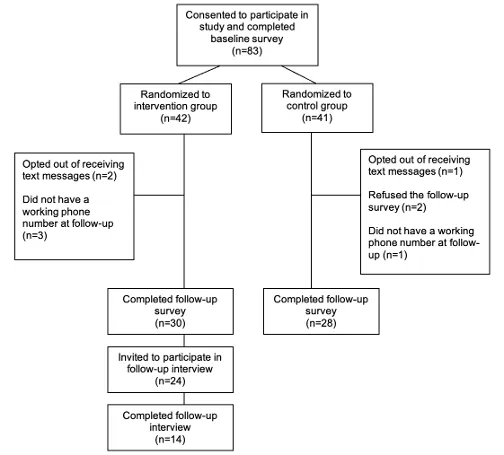
Table 2. Sociodemographic characteristics of study participants at baseline (n=58)
| Characteristic | Total Sample (n=58) | Intervention Group (n=30) | Control Group (n=28) | p-value1 |
|---|---|---|---|---|
n (%) | n (%) | n (%) |
| |
| Gender2 |
| |||
| Female | 43 (74.1%) | 21 (70.0%) | 22 (78.6%) | 0.025 |
| Another gender3 | 12 (20.7%) | 8 (26.7%) | 4 (14.3%) | 0.025 |
| Missing | 3 (5.2%) | 1 (3.3%) | 2 (7.1%) | N/A |
| Race/Ethnicity2 |
| |||
| Hispanic or Latino(a) | 32 (55.2%) | 22 (73.3%) | 10 (35.7%) | 0.002 |
| Black or African American | 16 (27.6%) | 5 (16.7%) | 11 (39.3%) | 0.248 |
| Another race/ethnicity4 | 7 (12.1%) | 2 (6.7%) | 5 (17.9%) | 0.157 |
| Missing | 5 (8.6%) | 1 (3.3%) | 4 (14.3%) | N/A |
| Interview Language |
| |||
| English | 30 (51.7%) | 12 (40.0%) | 18 (64.3%) | 0.007 |
| Spanish | 28 (48.3%) | 18 (60.0%) | 10 (35.7%) | 0.007 |
| Education |
| |||
| Less than high school | 15 (25.9%) | 11 (36.7%) | 4 (14.3%) | <0.001 |
| Earned high school diploma or higher | 39 (67.2%) | 18 (60.0%) | 21 (75.0%) | <0.001 |
| Missing | 4 (6.9%) | 1 (3.3%) | 3 (10.7%) | N/A |
| Income |
| |||
| Less than $10,000 | 23 (39.7%) | 12 (40.0%) | 11 (39.3%) | 0.700 |
| $10,000-$30,000 | 16 (27.6%) | 7 (23.3%) | 9 (32.1%) | 0.353 |
| More than $30,000 | 4 (6.9%) | 2 (6.7%) | 2 (7.1%) | 0.975 |
| Missing | 15 (25.9%) | 9 (30.0%) | 6 (21.4%) | N/A |
Mean (SE) | Mean (SE) | Mean (SE) |
| |
| Age (nintervention=29, ncontrol=24, ntotal=53) | 40.5 (0.62) | 40.8 (0.02) | 40.2 (1.29) | 0.575 |
| Number of children per household (nintervention=28, ncontrol=26 , ntotal=54) | 1.9 (0.22) | 1.7 (0.13) | 2.0 (0.47) | 0.521 |
1P-values calculated via Rao-Scott chi-square tests, adjusting for clustering by recruitment site, for categorical variables and via GEE, adjusting for clustering by recruitment site, for continuous variables, assessing differences in sociodemographic characteristics between intervention and control groups.
2Cumulative percentages may exceed 100% as multiple response options could be selected.
3Includes participants reporting gender as male or another gender; numbers of individual categories suppressed and combined with next smallest cell due to small cell sizes.
4Includes participants reporting race/ethnicity as Asian, Native American or Alaska Native, or White; numbers for individual categories suppressed and combined with next smallest cells due to small cell sizes.
Behavioral changes among survey respondents
We found a trend toward greater increase in the percentage of participants who shopped at farmers’ markets among intervention group participants compared to control group participants from baseline to follow-up (increased from 29% to 88% in the intervention group vs from 63% to 88% in the control group; Table 3), though this result was not statistically significant. There were increases of similar magnitude in the percentage of participants who reported using MM among intervention and control groups (from 0% to 25% among the intervention group vs 0% to 19% in the control group).
Table 3. Percent of participants shopping at certified farmers’ markets and using Market Match at baseline and follow-up timepoints, by intervention group.
Intervention Group | Intervention Group | Intervention Group | Control Group | Control Group | Control Group | |
|---|---|---|---|---|---|---|
Outcome | n | Baseline (%) | Follow-Up (%) | n | Baseline (%) | Follow-Up (%) |
| Shopped at any farmers' market in the past 30 days | 17 | 29.4% | 88.2% | 16 | 62.5% | 87.5% |
| Used Market Match in the past 30 days | 20 | 0.0% | 25.0% | 21 | 0.0% | 19.1% |
Perceptions of the text messages among survey respondents
The majority of intervention group participants recalled receiving the text messages (90%), reading the text messages (90%), and clicking on the link in the text messages (83%; Table 4). Most intervention group participants looked upon the text messages favorably, agreeing or strongly agreeing that the text messages were informative, that they appreciated receiving them, liked the once a week frequency, understood what the text messages were promoting, and understood what MM was and where they could use it as a result of receiving the text messages. Half of the intervention group participants also reported that they shared information about MM with others, such as family members and friends.
Table 4. Reported perceptions of the text message intervention among intervention group participants (n=30).
| Interactions with text messages | n (%) |
| Recalled receiving the text messages | |
| Yes | 27 (90.0%) |
| No | 3 (10.0%) |
| Missing | 0 (0.0%) |
| Read the text messages |
|
| Yes | 27 (90.0%) |
| No | 0 (0.0%) |
| Missing | 3 (10.0%) |
| Clicked on the link in the text messages |
|
| Yes | 25 (83.3%) |
| No | 1 (3.3%) |
| Missing | 4 (13.3%) |
| Perceptions of text messages | n (%) |
| The text messages were informative | |
| Strongly agree/Agree | 28 (93.3%) |
| Neither agree nor disagree | 0 (0.0%) |
| Perceptions of text messages | n (%) |
| Strongly disagree/Disagree | 2 (6.7%) |
| Missing | 1 (3.3%) |
| I appreciated receiving the text messages |
|
| Strongly agree/Agree | 25 (83.3%) |
| Neither agree nor disagree | 2 (6.7%) |
| Strongly disagree/Disagree | 2 (6.7%) |
| Missing | 1 (3.3%) |
| I liked the frequency of the text messages (one per week) |
|
| Strongly agree/Agree | 25 (83.3%) |
| Neither agree nor disagree | 4 (13.3%) |
| Strongly disagree/Disagree | 0 (0.0%) |
| Missing | 1 (3.3%) |
| I understood what the text messages were promoting |
|
| Strongly agree/Agree | 28 (93.3%) |
| Neither agree nor disagree | 0 (0.0%) |
| Strongly disagree/Disagree | 0 (0.0%) |
| Missing | 2 (6.7%) |
| I understood what Market Match is based on the text messages |
|
| Strongly agree/Agree | 26 (86.7%) |
| Neither agree nor disagree | 2 (6.7%) |
| Strongly disagree/Disagree | 1 (3.3%) |
| Missing | 1 (3.3%) |
| I understood where I could use Market Match based on the text messages. |
|
| Strongly agree/Agree | 27 (90.0%) |
| Neither agree nor disagree | 1 (3.3%) |
| Strongly disagree/Disagree | 1 (3.3%) |
| Missing | 1 (3.3%) |
| Shared information about Market Match with others |
|
| Yes | 15 (50.0%) |
| No | 14 (46.7%) |
| Missing | 1 (3.3%) |
Intervention group participants rated all the text messages highly with regards to how likely they would be to want to visit the farmers’ market after reading the message. Out of a possible 5 stars, all text messages received an average rating around 4.2 (Table 5).
Table 5. Average text message ratings among intervention group participants.
Text message number (see Table 1 for text message content) | n | Mean Rating (SE)* |
|---|---|---|
Text message #1 | 27 | 4.2 (0.1) |
Text message #2 | 27 | 4.3 (0.2) |
Text message #3 | 27 | 4.2 (0.2) |
Text message #4 | 27 | 4.2 (0.1) |
Text message #5 | 27 | 4.2 (0.2) |
*Participants were asked to rate text messages based on how likely they would be to want to visit the farmers’ market after reading the message on a scale of 1 star to 5 stars. One star indicated that the text message made them not likely to want to visit the farmers’ market and 5 stars indicated that the text message made them very likely to want to visit the farmers’ market.
Interview sub-sample characteristics
A total of 14 study participants completed a follow-up interview (Figure 2) reaching saturation during the final interview, in which no new themes emerged, whereas up to the 13th interview new concepts continued to emerge. The majority (79%) of respondents identified as female (Table 6). Most (86%) indicated they were of Hispanic or Latino(a) descent. Almost two-thirds (64%) of the interviews were conducted in Spanish. With regard to education, 64% of respondents reported having earned at least a high school diploma. As for income, 79% said they earned less than $30,000 in the previous year. The average age of interviewees was 41 years old, and households had, on average, 1.6 children.
Table 6. Interview participant characteristics at follow-up (n=14).
| Characteristic | n (%) |
| Gender |
|
| Female | 11 (78.6%) |
| Male | 3 (21.4%) |
| Race/Ethnicity |
|
| Hispanic or Latino(a) | 12 (85.7%) |
| Black or African American | 2 (14.3%) |
| Interview language |
|
| Spanish | 9 (64.3%) |
| English | 5 (35.7%) |
| Education |
|
| Earned high school diploma or higher | 9 (64.3%) |
| Less than high school | 2 (14.3%) |
| Don’t know/Prefer not to answer | 3 (21.4%) |
| Income |
|
| Less than $30,000 | 11 (78.6%) |
| Don’t know/Prefer not to answer | 3 (21.4%) |
Mean (SE) | |
| Age | 41.1 (0.4) |
| Number of children per household | 1.6 (0.2) |
Interview key findings
Over half of the 14 interviewees (57%) had visited the CFM promoted in the text messages at least one time in the 30 days prior to completing the follow-up survey, but only one person had successfully used MM when shopping at the CFM.
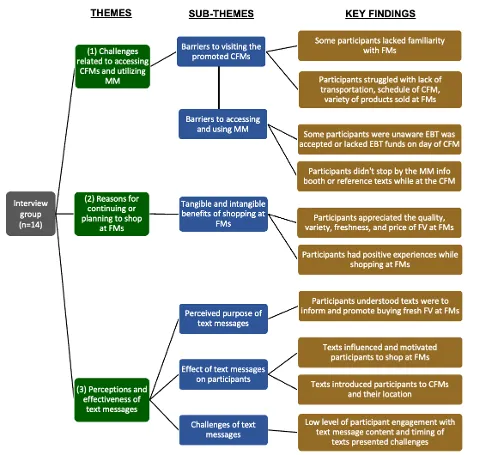
Three themes and six sub-themes emerged from the thematic analysis of the participant interviews (Figure 2). The first theme was about specific challenges participants faced, such as barriers to visiting the CFM promoted in texts and accessing MM once at the CFM. The second theme encompassed the various reasons interview participants said they would continue shopping at or planned to shop at FMs, including factors that motivated them to shop at FMs. The third theme related to the text messages; specifically, what participants perceived their purpose to be, how effective they were at influencing participants, and challenges related to assimilating the text message content.
Figure 2. Major themes, sub-themes, and key findings from participant interviews.
Illustrative interview quotes
Theme (1):Challenges experienced by participants
Sub-Theme (1.1): Barriers to visiting the promoted CFMs
Key Finding (1.1.1): Perceived comfort level was cited as a barrier to shopping at FMs by a couple of the people interviewed. Not being familiar with FMs kept these participants from visiting the CFM promoted in the texts. For example, a couple of participants said:
"I don't shop at the farmers’ market ever. I just don't know . . . enough about it to go walk around. So I don't." (English-speaking, female)
"I wouldn't know what to like-- where exactly to go since I've never shopped at a farmers’ market . . . ." (English-speaking, female)
Key Finding (1.1.2): Lack of transportation to CFM, location of CFM, time or day the CFM operated, and perceived limited variety of products sold, were among the more frequent barriers mentioned:
". . . sometimes because it’s a little far away, and sometimes one doesn’t have a way to get around. So sometimes one has to go to the closest place . . ." (Spanish-speaking, female)
"The day is the only thing that stopped me. I liked the texts, I liked the information you sent me." (English-speaking, male)
"It's just so convenient for me to go to the grocery store and get my fruits and vegetables because I can get everything that I need there. But that's just because I haven't been to the farmer's market, I don't know what else I could get [at the farmers' market]. My assumption is just fruits and vegetables . . . ." (English-speaking, female)
Sub-Theme (1.2): Barriers to accessing and using MM
Key Finding (1.2.1): Among interview participants, two EBT card-related barriers emerged. The first was not knowing the CFM they visited accepted EBT and the second was no longer having a balance on their EBT card on the day they went to the CFM. Both of these barriers prevented participants from obtaining MM.
"Because I wasn't sure if they would accept it [the EBT card] or not, and to avoid embarrassment, I pay with cash instead. . . ." (Spanish-speaking, male)
"Sometimes, like I said, having the money available [on the EBT card], because sometimes you have already gone shopping, sometimes you no longer have [money] to go to places to buy . . . " (Spanish-speaking, female)
Key Finding (1.2.2): A couple of participants mentioned being interested in the MM program and seeing the MM and information booth sign while shopping at the CFM but not stopping by the information booth to find out more, as instructed in the texts. For example, the following participants acknowledged seeing the MM signs but not taking the next step of going to the information booth to obtain MM.
"The truth is, I was interested in it [Market Match], but I didn't pay much attention to it." (Spanish-speaking, female)
"Yes, [I] saw there was a [sign] it says ‘information’, but I don't go there. I always go [straight to the vendors] and get things, . . . there with different vendors, . . ." (Spanish-speaking, male)
Theme (2): Reasons for continuing or planning to shop at FMs
Sub-Theme (2.1): Tangible and intangible benefits of shopping at FMs
Key Finding (2.1.1): Among the participants that shopped at FMs, the majority reported many tangible benefits to shopping at FMs, including perceived quality, variety, freshness, and price of the fruits and vegetables found there. As a couple of participants said:
"Because there's a wide variety of fruits and vegetables, and they're fresh, and also reasonably priced." (Spanish-speaking, female)
"One of the reasons is to give the best to my children, something fresh and good [of] quality." (Spanish-speaking, female)
Key Finding (2.1.2): An overall positive experience while shopping at the FM was among the most frequently mentioned intangible benefits of shopping at an FM.
“It’s a very nice, pleasant experience, nice people, and a lot of fruits and vegetables.” (English-speaking, male)
“I would describe it as, I liked it and I will continue going, as long as I can, I will continue going to buy fruit.” (Spanish-speaking, female)
Theme (3): Perceptions and effectiveness of text messages
Sub-Theme (3.1): Perceived purpose of the text messages
Key Finding (3.1.1): The majority of respondents understood that the main purpose of the text messages was to promote buying fruits and vegetables at FMs. More generally, participants said the purpose of the text messages was to provide people with information.
Participants said they thought the purpose was:
“A reminder maybe to influence us to go to the farmers’ market to get the fresh fruits and vegetables versus maybe a grocery store." (English-speaking, female)
"To try and shop often at the farmers’ market instead of the regular store. . . . for fresh food." (English-speaking, female)
“. . . for me it is good information, because if you have time and the possibility to go to these [farmers’] markets to buy, it is good.” (Spanish-speaking, female)
Sub-Theme (3.2): Effect of text messages on participants
Key Finding (3.2.1):The text messages influenced participants to act, primarily motivating them to shop at FMs. The texts also created awareness among participants regarding their purchase and consumption of fruits and vegetables. For example, participants said:
"Yes, in fact, I did know about them [the farmers’ markets] before, but they didn't really catch my attention, . . . back then going to a farmers’ market seemed very expensive to me, . . . But when I started seeing the [text] messages and when you shared the information with me, when I spoke with you the first time. Then I went, bought fruits and vegetables, then I kind of liked it." (Spanish-speaking, female)
"Yes, almost as soon as I got the messages, I went [to the farmers’ market] to check it out." (Spanish-speaking, female)
“. . . they [the text messages] encouraged me to buy fresh fruit.” (Spanish-speaking, female)
" . . . [the text messages] made me think about adding more vegetables to my daily diet, [and] more fruits. Changing the way I eat." (Spanish-speaking, female)
Key Finding (3.2.2): The text messages seemed to not only be an effective tool for motivating people to shop at FMs, but also for getting people to think about their consumption of fruits and vegetables and encouraging them to buy fruits and vegetables. Participants shared that the text messages introduced them to FMs, and this is now somewhere they shop for fruits and vegetables, as illustrated by these two quotes:
"Well, for me [the text messages] were a help because, as I said, I wasn't very knowledgeable about this type of program [the farmers' markets]. And it did help me a lot, to know now where [to go shop]—if I want top-quality, fresh products. So that influenced me a lot, and they're even cheaper. Cheaper and healthier." (Spanish-speaking, female)
"As I said, I used to go to supermarkets, and now I know that [the farmers' markets] are located in different places, and that helps me even more because I buy things a little cheaper and of top quality." (Spanish-speaking, female)
Sub-Theme (3.3): Challenges related to text messages
Key Finding (3.3.1):Among those interviewed, low engagement with the text message content limited the effectiveness of the texts. For example, close to one-third (36%) said they did not click on the hyperlink directing them to the MM How it Works web page, which has a web link to a video tutorial in multiple languages explaining how to use MM. However, several participants elaborated that it was not due to fear of the link being a scam or a virus, rather it was not convenient to do so when the texts arrived, as illustrated by the following quote:
" It's not that I didn't want to do it [click on the link], and it's not the phone. It [the text] did come, but . . . I was doing something, and then the next day I forgot, and so the days went by.” (Spanish-speaking, female)
A second common challenge regarding the texts also mentioned in the above quote, was the time and circumstance under which the texts were received. Participants reported not always being in a location (e.g. work) or the right mindset (e.g. occupied or stressed) to assimilate the overall content of the texts, including the hyperlink. For example, two participants told us:
"It's just that sometimes it [the text] comes when I'm at work, and then I forget to look at it [again]. But I do see the messages, but then I forget to look at them more closely." (Spanish-speaking, female)
"I don't know if it's me, because I'm busy with so many things, maybe I didn't read . . . slowly enough, and I've been a little stressed these past few days, but I would like to learn more about the [MM] program. I don't know if it was not enough information [in the texts], since at the time I wasn't very up to taking it in." (Spanish-speaking, female)
Additionally, a few participants talked about technology issues and a handful did not remember that the text message instructed them to stop by the CFM’s information booth to ask about MM. Despite these challenges related to the texts, over half (57%) of interview participants, including the three quoted above, reported visiting the CFM advertised in the texts and 79% of interviewees told us they visited the advertised CFM or another FM during the 30 days prior.
Additional lessons learned
Of the interview participants that confirmed that they shopped at the CFM, all except one participant used a form of payment other than EBT and therefore did not obtain MM. When probed further during the interview about what payment method they did use, half reported using cash to pay for the FV they purchased at the CFM. Further probing revealed that among this group of participants, 71% said that not being aware that EBT is accepted at the CFM was the primary reason they used cash, instead of their EBT card. This was true despite a few of the participants being frequent shoppers at that CFM, which has a history of offering MM. As one long-time CFM shopper said:
"The information [booth], I didn’t go. I went [to the farmers’ market], but I bought [things] using cash. With my own money." (Spanish-speaking, female)
We also learned from the interviews that when engaging with SNAP shoppers, it will be important to find alternative ways to explain or talk about MM. Most participants did not refer to the program as Market Match. Therefore, we believe it is possible that on the follow-up survey, some people that reported not using MM did in fact use it, and some that reported using it did not. For example, one interview participant accurately explained how MM works when asked what stood out to them about the text messages. However, further in the interview, when asked to describe the MM program the participant said:
“That [Market Match] was something I didn’t quite understand, what it was about, but [the text message] was always explaining about that program to be able to go buy things. . . ” (Spanish-speaking, female)
Nevertheless, the qualitative findings from this pilot study confirm that when SNAP shoppers receive and engage with text messages created using principles of the IMB theoretical framework, their influence on SNAP shoppers’ behaviors can be meaningful. As one participant said:
“. . . it [the text messages] has really changed my life a lot because I have liked the vegetables, the fruits, everything organic, and yes it has changed [my life] a lot.” (Spanish-speaking, female)
Discussion
While it is encouraging that this simple series of text messages motivated so many SNAP participants in the intervention group to go to a farmers’ market, it is discouraging that most of them did not utilize MM while there. The limited use of MM may have been due to a lack of understanding of what the text messages were promoting. Despite most follow-up survey participants reporting that they understood what the text messages were promoting, the qualitative interviews demonstrated that many participants perceived the main purpose of these messages to be promoting the purchase of fruits and vegetables at farmers’ markets as opposed to the intended purpose of promoting the use of MM. Other factors that may have contributed to participants not understanding that the texts were promoting MM include 1) the complexity of explaining to new users how MM works in just one sentence, 2) participants’ not clicking on the How it Works web link included in the texts, and 3) the multi-step process required to access the how MM works video tutorial mentioned in the texts, which the intervention relied on to address the first factor.
The findings from this pilot study suggest that the texts were effective at informing and reminding participants about when and where to go to the CFM, and that they can buy fresh FV there. However, the text message intervention, as currently designed, needs to be modified for the purpose of increasing the uptake of MM. It is possible that SMS is not the appropriate platform for introducing the MM program to new users. A consideration for future studies is during the recruitment process to direct participants to the Ecology Center’s How it Works web page and show them the how MM works video tutorial that provides step-by-step instructions, in multiple languages, on how to obtain MM once at the CFM. Showing SNAP participants the web link and video during recruitment could have the added benefit of minimizing concerns about clicking on a link received via text, which a few participants in this pilot study and a prior NPI text intervention mentioned (Felix, 2023). For example, in this study and the prior NPI study 42% and 40% respectively of follow-up survey respondents reported not clicking on the web link provided in the texts (Gosliner, 2023).
An initial strength of this study was that all five text messages were pilot tested by a diverse group of English and Spanish speaking SNAP shoppers unfamiliar with CNIP. Unfortunately, when the study was launched, the how MM works web page, which was mentioned in all of the texts, underwent a change that resulted in the video tutorial requiring people visiting the web page to take an extra step to access the video tutorial. During pilot testing of the text messages’ content, when participants clicked on the How it Works web link in their texts, the majority of participants intuitively clicked on the video that was prominently displayed at the top of the page, which we believe contributed to their ability to understand and successfully explain to us how MM works. When the study commenced, the video was replaced by a static photo with a message below it that directs them to an external hyperlink to the video. It is likely this change, which now requires participants to read and click on an extra link, negatively impacted the efficacy of the text messages because unlike the pilot, no interview participants mentioned watching the video and almost no one was able to explain what MM is or how it works.
Finally, the fact that many interview participants did shop at a CFM but did not use their EBT card and therefore also didn’t use MM highlights the need to improve awareness among SNAP shoppers of the MM program once they arrive at the CFM. Specifically, future research is needed to determine what are the most effective ways of promoting the acceptance of EBT and the MM program once SNAP shoppers are at the CFM. In other words, as this study’s qualitative interview findings highlight, for SNAP shoppers to successfully utilize MM there are two critical steps involved. The first is getting them to the CFM, and the second is getting them to stop by the information booth, use their EBT card, and get the MM benefits to purchase additional FV once they are at the CFM.
Conclusions
The text message intervention seemed to encourage many SNAP participants to go to a farmers’ market, but it did not impact participants’ use of MM as might have been expected. Only five of the 42 intervention group participants reported at follow-up that they used MM during one of their FM visits, and we were able to interview one of those five people. We learned that the intervention was successful at getting participants to the CFM; however, the interview findings reveal that the intervention was less successful at informing SNAP shoppers that EBT is accepted at the CFM and promoting the MM program. Nonetheless, the pilot study provided critical information about the potential of reaching SNAP shoppers and encouraging them to shop at certified farmers’ markets, identified challenges with encouraging them to use MM, and was ultimately unable to examine the impact of MM participation on participants’ produce purchases, produce intake, food security, and nutrition security given the minimal use of the program. Although the text message intervention did not achieve our intended goal of increasing utilization of the MM program at the promoted CFMs, the intervention text messages do appear to have influenced participants’ behavior with regard to motivating them to explore FMs and shop for fruits and vegetables there, which many participants reported to have had a positive impact on their lives.
References
- Anderson, J. V., Bybee, D. I., Brown, R. M., McLean, D. F., Garcia, E. M., Breer, M. L., & Schillo, B. A. (2001). 5 a day fruit and vegetable intervention improves consumption in a low income population. Journal of the American Dietetic Association, 101(2), 195–202. https://doi.org/10.1016/S0002-8223(01)00052-9
- Baronberg, S., Dunn, L., Nonas, C., Dannefer, R., & Sacks, R. (2013). The impact of New York City's Health Bucks Program on electronic benefit transfer spending at farmers markets, 2006-2009. Preventing chronic disease, 10, E163. https://doi.org/10.5888/pcd10.130113
- Bazzano, L. A., Serdula, M. K., & Liu, S. (2003). Dietary intake of fruits and vegetables and risk of cardiovascular disease. Current atherosclerosis reports, 5(6), 492–499. https://doi.org/10.1007/s11883-003-0040-z
- Cohen, A. J., Richardson, C. R., Heisler, M., Sen, A., Murphy, E. C., Hesterman, O. B., Davis, M. M., & Zick, S. M. (2017). Increasing Use of a Healthy Food Incentive: A Waiting Room Intervention Among Low-Income Patients. American journal of preventive medicine, 52(2), 154–162. https://doi.org/10.1016/j.amepre.2016.11.008
- Committee on Examination of the Adequacy of Food Resources and SNAP Allotments; Food and Nutrition Board; Committee on National Statistics; Institute of Medicine; National Research Council; Caswell JA, Yaktine AL, editors. Supplemental Nutrition Assistance Program: Examining the Evidence to Define Benefit Adequacy. Washington (DC): National Academies Press (US); 2013 Apr 23. https://www.ncbi.nlm.nih.gov/books/NBK206911/ doi: 10.17226/13485
- Dimitri, C., Oberholtzer, L., Zive, M., & Sandolo, C. (2015). Enhancing food security of low-income consumers: An investigation of financial incentives for use at farmers markets. Food Policy, 52, 64-70. https://doi.org/10.1016/j.foodpol.2014.06.002
- Felix, C., Strochlic, R., Melendrez, B., Tang, H., Wright, S., & Gosliner, W. (2023). Perceptions and Experiences of Supplemental Nutrition Assistance Program (SNAP) Participants Related to Receiving Food and Nutrition-Related Text Messages Sent Agency-Wide: Findings from Focus Groups in San Diego County, California. Nutrients, 15(12), 2684. https://doi.org/10.3390/nu15122684
- Fisher, W. A., Fisher, J. D., & Harman, J. (2003). The information-motivation-behavioraI skills model: A general social psychological approach to understanding and promoting health behavior. In J. Suls & K. A. Wallston (Eds.), Social psychological foundations of health and illness (pp. 82–106). Blackwell Publishing. https://doi.org/10.1002/9780470753552.ch4
- Freedman, D. A., Mattison-Faye, A., Alia, K., Guest, M. A., & Hébert, J. R. (2014). Comparing farmers' market revenue trends before and after the implementation of a monetary incentive for recipients of food assistance. Preventing chronic disease, 11, E87. https://doi.org/10.5888/pcd11.130347
- Gosliner, W., Hewawitharana, S. C., Strochlic, R., Felix, C., & Long, C. (2022). The California Nutrition Incentive Program: Participants' Perceptions and Associations with Produce Purchases, Consumption, and Food Security. Nutrients, 14(13), 2699. https://doi.org/10.3390/nu14132699
- Gosliner, W., Felix, C., Strochlic, R., Wright, S., Yates-Berg, A., Thompson, H. R., Tang, H., & Melendrez, B. (2023). Feasibility and Response to the San Diego County, California, Supplemental Nutrition Assistance Program (SNAP) Agency Sending Food and Nutrition Text Messages to All Participants: Quasi-Experimental Web-Based Survey Pilot Study. Journal of medical Internet research, 25, e41021. https://doi.org/10.2196/41021
- Grimm, K. A., Foltz, J. L., Blanck, H. M., & Scanlon, K. S. (2012). Household income disparities in fruit and vegetable consumption by state and territory: results of the 2009 Behavioral Risk Factor Surveillance System. Journal of the Academy of Nutrition and Dietetics, 112(12), 2014–2021. https://doi.org/10.1016/j.jand.2012.08.030
- Gundgaard, J., Nielsen, J. N., Olsen, J., & Sørensen, J. (2003). Increased intake of fruit and vegetables: estimation of impact in terms of life expectancy and healthcare costs. Public health nutrition, 6(1), 25–30. https://doi.org/10.1079/PHN2002355
- Gustafson, A., Jilcott Pitts, S. B., McQuerry, K., Babtunde, O., & Mullins, J. (2019). A Mentor-Led Text-Messaging Intervention Increases Intake of Fruits and Vegetables and Goal Setting for Healthier Dietary Consumption among Rural Adolescents in Kentucky and North Carolina, 2017. Nutrients, 11(3), 593. https://doi.org/10.3390/nu11030593
- Hall, A. K., Cole-Lewis, H., & Bernhardt, J. M. (2015). Mobile text messaging for health: a systematic review of reviews. Annual review of public health, 36, 393–415. https://doi.org/10.1146/annurev-publhealth-031914-122855
- Herman, D. R., Harrison, G. G., Afifi, A. A., & Jenks, E. (2008). Effect of a targeted subsidy on intake of fruits and vegetables among low-income women in the Special Supplemental Nutrition Program for Women, Infants, and Children. American journal of public health, 98(1), 98–105. https://doi.org/10.2105/AJPH.2005.079418
- Hu, E. A., Steffen, L. M., Coresh, J., Appel, L. J., & Rebholz, C. M. (2020). Adherence to the Healthy Eating Index-2015 and Other Dietary Patterns May Reduce Risk of Cardiovascular Disease, Cardiovascular Mortality, and All-Cause Mortality. The Journal of nutrition, 150(2), 312–321. https://doi.org/10.1093/jn/nxz218
- Hubert, P. A., Fiorenti, H., & Duffy, V. B. (2022). Feasibility of a Theory-Based, Online Tailored Message Program to Motivate Healthier Behaviors in College Women. Nutrients, 14(19), 4012. https://doi.org/10.3390/nu14194012
- Kim, G. (2010 February). Boston bounty bucks: Increasing access to and affordability of fresh fruits and vegetables for SNAP participants. The Food Project.
- Lee-Kwan, S. H., Moore, L. V., Blanck, H. M., Harris, D. M., & Galuska, D. (2017). Disparities in State-Specific Adult Fruit and Vegetable Consumption - United States, 2015. MMWR. Morbidity and mortality weekly report, 66(45), 1241–1247. https://doi.org/10.15585/mmwr.mm6645a1
- Lindsay, S., Lambert, J., Penn, T., Hedges, S., Ortwine, K., Mei, A., Delaney, T., & Wooten, W. J. (2013). Monetary matched incentives to encourage the purchase of fresh fruits and vegetables at farmers markets in underserved communities. Preventing chronic disease, 10, E188. https://doi.org/10.5888/pcd10.130124
- Moore, L. V., & Thompson, F. E. (2015). Adults Meeting Fruit and Vegetable Intake Recommendations - United States, 2013. MMWR. Morbidity and mortality weekly report, 64(26), 709–713.
- Moore, L. V., Thompson, F. E., & Demissie, Z. (2017). Percentage of Youth Meeting Federal Fruit and Vegetable Intake Recommendations, Youth Risk Behavior Surveillance System, United States and 33 States, 2013. Journal of the Academy of Nutrition and Dietetics, 117(4), 545–553.e3. https://doi.org/10.1016/j.jand.2016.10.012
- Nelson, L. A., Mayberry, L. S., Wallston, K., Kripalani, S., Bergner, E. M., & Osborn, C. Y. (2016). Development and Usability of REACH: A Tailored Theory-Based Text Messaging Intervention for Disadvantaged Adults With Type 2 Diabetes. JMIR human factors, 3(2), e23. https://doi.org/10.2196/humanfactors.6029
- Olsho, L. E., Payne, G. H., Walker, D. K., Baronberg, S., Jernigan, J., & Abrami, A. (2015). Impacts of a farmers' market incentive programme on fruit and vegetable access, purchase and consumption. Public health nutrition, 18(15), 2712–2721. https://doi.org/10.1017/S1368980015001056
- Pew Research Center. (2024, November 13). Mobile Fact Sheet. https://www.pewresearch.org/internet/fact-sheet/mobile/
- Power, J. M., & Bersamin, A. (2018). A Text Messaging Intervention (Txt4HappyKids) to Promote Fruit and Vegetable Intake Among Families With Young Children: Pilot Study. JMIR formative research, 2(2), e13. https://doi.org/10.2196/formative.8544
- Racine, E. F., Smith Vaughn, A., & Laditka, S. B. (2010). Farmers' market use among African-American women participating in the Special Supplemental Nutrition Program for Women, Infants, and Children. Journal of the American Dietetic Association, 110(3), 441–446. https://doi.org/10.1016/j.jada.2009.11.019
- Rathbone, A. L., & Prescott, J. (2017). The Use of Mobile Apps and SMS Messaging as Physical and Mental Health Interventions: Systematic Review. Journal of medical Internet research, 19(8), e295. https://doi.org/10.2196/jmir.7740
- Ratigan, A. R., Lindsay, S., Lemus, H., Chambers, C. D., Anderson, C. A., Cronan, T. A., Browner, D. K., & Wooten, W. J. (2017). Factors associated with continued participation in a matched monetary incentive programme at local farmers' markets in low-income neighbourhoods in San Diego, California. Public health nutrition, 20(15), 2786–2795. https://doi.org/10.1017/S1368980017001549
- Rummo, P. E., Noriega, D., Parret, A., Harding, M., Hesterman, O., & Elbel, B. E. (2019). Evaluating A USDA Program That Gives SNAP Participants Financial Incentives To Buy Fresh Produce In Supermarkets. Health affairs (Project Hope), 38(11), 1816–1823. https://doi.org/10.1377/hlthaff.2019.00431
- Savoie-Roskos, M., Durward, C., Jeweks, M., & LeBlanc, H. (2016). Reducing Food Insecurity and Improving Fruit and Vegetable Intake Among Farmers' Market Incentive Program Participants. Journal of nutrition education and behavior, 48(1), 70–76.e1. https://doi.org/10.1016/j.jneb.2015.10.003
- Savoie Roskos, M. R., Wengreen, H., Gast, J., LeBlanc, H., & Durward, C. (2017). Understanding the Experiences of Low-Income Individuals Receiving Farmers' Market Incentives in the United States: A Qualitative Study. Health promotion practice, 18(6), 869–878. https://doi.org/10.1177/1524839917715438
- Schwingshackl, L., Bogensberger, B., & Hoffmann, G. (2018). Diet Quality as Assessed by the Healthy Eating Index, Alternate Healthy Eating Index, Dietary Approaches to Stop Hypertension Score, and Health Outcomes: An Updated Systematic Review and Meta-Analysis of Cohort Studies. Journal of the Academy of Nutrition and Dietetics, 118(1), 74–100.e11. https://doi.org/10.1016/j.jand.2017.08.024
- Vericker, T., Dixit-Joshi, S., Taylor, J., Giesen, L., Gearing, M., Baier, K., ... & May, L. (2019). The Evaluation of Food Insecurity Nutrition Incentives (FINI) Interim Report. prepared by Westat, Inc. for US Department of Agriculture, Food and Nutrition Service. https://fns-prod.azureedge.us/sites/default/files/resource-files/FINI-InterimReport_1.pdf
- Young, C. R., Aquilante, J. L., Solomon, S., Colby, L., Kawinzi, M. A., Uy, N., & Mallya, G. (2013). Improving fruit and vegetable consumption among low-income customers at farmers markets: Philly Food Bucks, Philadelphia, Pennsylvania, 2011. Preventing chronic disease, 10, E166. https://doi.org/10.5888/pcd10.120356
Acknowledgements
Prepared for: California Department of Food and Agriculture
Prepared by: Nutrition Policy Institute, University of California, Agriculture and Natural Resources
Authors: Samantha Sam-Chen, MPH; Sridharshi C. Hewawitharana, MPH; Ron Strochlic, MS; Wendi Gosliner, DrPH, RD
Suggested citation: Sam-Chen S, Hewawitharana SC, Strochlic R, Gosliner W. California Nutrition Incentive Program Text Message (SMS) Pilot Shopper Evaluation Final Report. September 2025. Nutrition Policy Institute, University of California, Agriculture and Natural Resources. Prepared for the California Department of Food and Agriculture.
This work is supported by the Gus Schumacher Nutrition Incentive Program (GusNIP) from the United States Department of Agriculture. Any opinions, findings, conclusions, or recommendations expressed in this publication are those of the author(s) and do not necessarily reflect the views of the U.S. Department of Agriculture or the California Department of Agriculture.
University of California Agriculture and Natural Resources is an equal opportunity employer.
© 2025 UC Regents, Creative Commons 4.0 International License.
