
Garden myths are like weeds: they pop up all over and are hard to get rid of. In the world of information at our fingertips, there is a practice, remedy or belief guaranteeing a successful outcome for whatever it is you want to accomplish. Some are harmless but others are counterproductive and even detrimental. As UC Master Gardeners, our job is to provide the public with science-based information and in the course of our work, we encounter lots of gardening myths. I asked my colleagues for some recent examples and their responses were too numerous to cover in one article so here is the first round of popular garden myths. We take a look at why they don’t work and what you can do instead.
Myth: “Adding a layer of rocks, gravel or pot shards to the bottom of pots improves the drainage.”
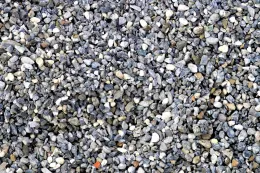
Fact: it may seem counterintuitive, but it does exactly the opposite. This myth is widespread and just won’t die. This is probably because we know that water flows readily through larger pieces of material. That’s true except when finer material like soil butts up against coarser particles like gravel or rocks. Water moves through soil by way of capillary action and gravity but when it hits the soil boundary line, it stops moving and saturates the layer above the gravel instead of flowing out like we think it should. Moisture will collect above the gravel and stay there until the oxygen holding capacity of the soil is exhausted and waterlogged. When plant roots reach that area, they won’t survive for long.
Solution: Fill your pots and planters with good quality potting mix from top to bottom. Look for mixtures containing perlite and other ingredients that promote drainage. Make sure your container has a hole and cover the opening with a small piece of screen instead of a rock or pot shard. Elevate the pot slightly with “feet” or shims to allow excess water to run out freely.
Myth: “Newly planted trees must be firmly staked.” Fact: Keeping trees immobile creates thin, weak trunks and top-heavy crowns. Allowing trees to move promotes strong root and trunk development and makes them less vulnerable to breakage and toppling over. Most nursery trees come attached to a stake, which may be the origin of this myth.
Solution: Once a tree is planted, stakes should be removed. Staking may be necessary in certain situations such as when a tree is top heavy relative to its root ball or if planted in areas with strong, persistent winds.
If a newly planted tree requires staking, position the top of the stakes lower than the top third of the tree and far enough away to avoid damaging the root ball. Use flexible ties that are long enough to allow the entire trunk to move easily. Remove all stakes and ties after one growing season.
Myth: “Add eggshells to the garden to improve calcium and prevent blossom end rot.”

Fact: Eggshells take a long time to decompose, and the calcium is very tightly bound in the shell matrix. It stays put even when shells are finely ground. In order for calcium to leach into the ground, it must be extracted with an acidic solution. Bottom line: eggshells are not going to help prevent blossom end rot.
Also: calcium is usually adequate in home garden soils, so although the condition known as blossom end rot in tomatoes, squash and other vegetables is related to calcium deficiency in the plant itself, it is almost always due to uneven watering. When there is not enough moisture in the soil, plants will not be able to utilize the calcium that is already there--even if there’s plenty of it.
Solution: keep plants evenly moist, especially as they begin to bloom. Resist the urge to add bone meal and other calcium-rich additives, which could tip the chemical balance in the soil and lead to other problems. If in doubt, the best course of action is to have your soil tested to know what you have. Meanwhile, feed your growing tomatoes with plenty of compost and top the surrounding area with a thick layer of mulch to conserve moisture.
Myth: “Bananas are great for fertilizing your garden.”

Fact: Bananas and their peels contain potassium which plants need for growth and to promote flowering. However, putting bananas and/or peels directly into the garden does more harm than good. This is because as bananas decay, they take up nitrogen from the soil and in the process, deprive your plants of much-needed nutrients.
Solution: Add bananas and peels to the compost and let them decompose properly before spreading in the garden. Composted bananas and peels will add valuable nutrients and organic material to the soil which will benefit your plants.
More about bananas: Another popular use of bananas is to make a kind of “tea” by steeping the peels in water for several days. Proponents claim that this process extracts the good stuff in the peels which can then be used as a liquid fertilizer for your plants. Fact: potassium is water-soluble and easily released into the water. Most of the other nutrients are more tightly bound and will remain in the peels.
Solution: Watering your plants with banana “tea” or water will add a bit of potassium and won’t do any harm. Composting the peels when you’re done will be even better.
Myth: “Pruning cuts should be sealed to protect the tree.” Fact: trees don’t need our help with this. They heal themselves by forming barriers that inhibit decay, a process known as “compartmentalization.” Using an asphalt emulsion or other sealing material to coat exposed cuts gets in the way of the tree’s healing process by trapping moisture and thereby, increasing the potential for decay.
Solution: Let the cut area dry naturally. If pruning has exposed portions of the trunk and branches, a thin layer of water-based paint may be applied to protect the bark from sun injury.
At the end of the day, it’s good to know that plants want to grow. If you’ve tried some of these gardening myths and your garden is doing well, you are probably doing a lot of other things right. Science-based knowledge is the most effective tool in the garden shed. Arm yourself and watch what happens!
Continue to Great Gardening Myths: Part 2
To find out more about testing your soil, see: Soil Tests to Evaluate Your Soil
For more on April gardening and to see a video on growing vegetables, go to: https://smsf-mastergardeners.ucanr.edu/resources/By-Season-Spring-Season-in-Your-Garden/
Author: Maggie Mah
Maggie Mah is a UC Master Gardener of San Mateo and San Francisco Counties.
UC Master Gardeners of San Mateo-San Francisco County are volunteers who are trained under the auspices of the University of California to provide science-based information on plants, horticulture, soil, and pest management at no charge to the public. For more information and to find out about classes and events in your area, visit our website where you can also sign up for our newsletter and contact our Helpline: https://ucanr.edu/site/mgsmsf