
The newborn calf has a naïve immune system and depends on the feeding of adequate amounts of colostrum. When calves do not consume enough colostrum during the first 12 hours of life - or they consume low colostrum quality, it can lead to a condition called failure of passive transfer (FPT), which makes calves more susceptible to diseases during calfhood.
The biggest risk for FPT is dystocia, or difficult birth.
Calves may have low vigor after a long calving. Check the suckle reflex by inserting a finger into the calf’s mouth and feel the strength with which the calf suckles. If a calf does not have a good strong suckle reflex 10 minutes after it is born, it will likely need help with colostrum uptake.
A decision tree outlines when to intervene if calves are not seen suckling their dam after birth. Click on the link below for a printer-friendly version.
> When to Intervene: Ensuring Colostrum Consumption After Calving (UC ANR resource)
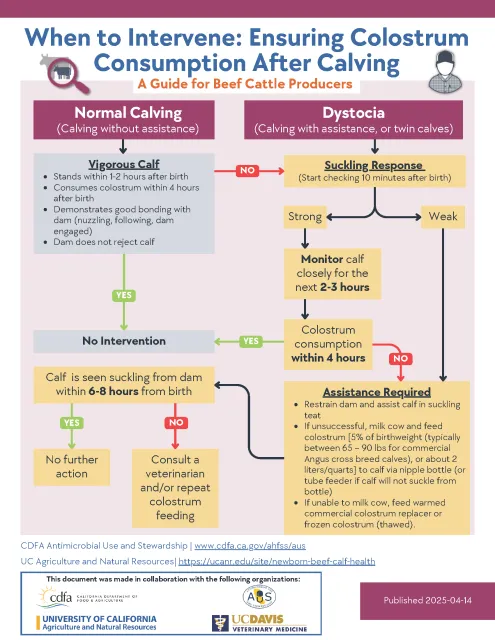
Try these options to get a calf its colostrum:
- Guide the calf to the dam and encourage it to nurse from her udder.
- Convenient, if cow is still in the chute after pulling the calf.
If unsuccessful:
- Feed a commercial colostrum replacer with at least 150 g of IgG as stated on the package.
- Calves need 200 – 300 g of total IgG – calves may need a second feeding before they are 12 hours old if they aren’t seen drinking from the dam after the first feeding.
- Try a nipple bottle first.
- If the calf refuses the bottle or takes too long, use an esophageal feeder.
UC ANR YouTube video on the proper use of an esophageal feeder in calves:
Important for using an esophageal tube feeder:
- Keep the calf’s head in a neutral position rather than letting it stretch its heads up.
- The tube is less likely inserted into the windpipe which would drown the calf.
- Feel the neck to ensure the rigid tube can be felt.
To learn more on FPT and esophageal tube feeding:
>Using an Esophageal Tube for colostrum feeding (UC ANR resource:)
Watch a UC ANR webinar on Neonatal Calf Health:
Additional resources available on the web:
Website on ways to prevent dystocia and what to do during a difficult calving** ..
*from the Agriculture and Horticulture Development Board (AHDB) in the UK.
**from Iowa State Unversity’s Iowa Beef Center
***from the University of Nebraska