UC ANR is committed to providing an accessible and inclusive web experience for all users. If you encounter an accessibility barrier or need content in an alternative or remediated accessible format, please contact anraccessibility@ucanr.edu.
UCIPM Press Release: New UC IPM photo repository shows plant damage from herbicides January 9, 2015 Davis, California Identifying nontarget crop and ornamental plant damage from herbicides has become much easier, with the launch of a new online photo repository by the Statewide IPM Program, Univers...
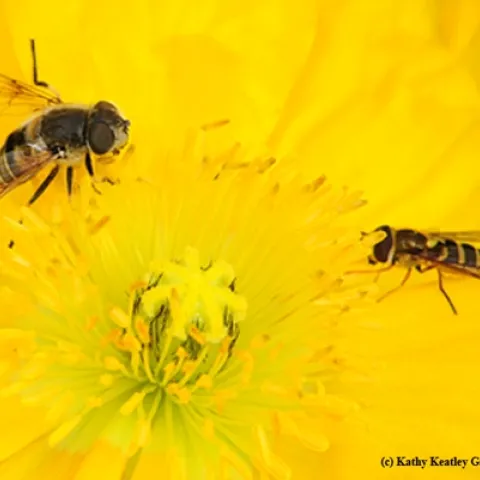
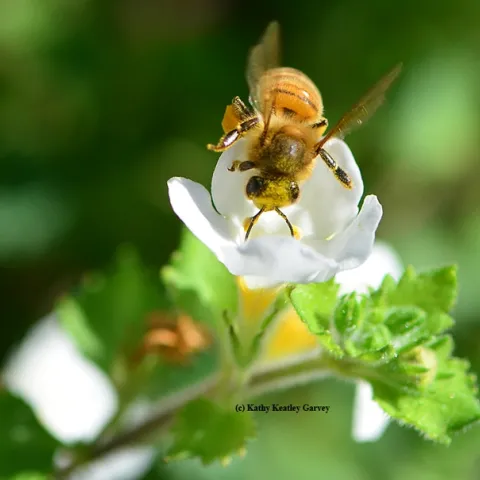
Gordon Frankie a bee biologist at UC Berkeley and I are doing a study to ultimately identify what plants could grown in avocado orchards to attract more honeybees, as well as other pollinators and potential biocontrol agents.
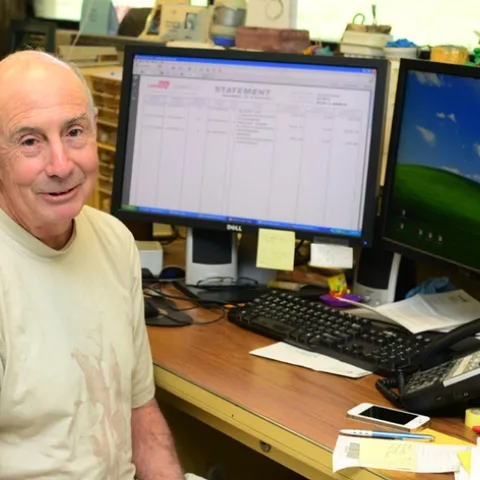
He is an EHH: Entomologist Helping Humankind. Bruce Hammock a distinguished entomology professor at the University of California, Davis, began his career trying to figure out how to control pests.
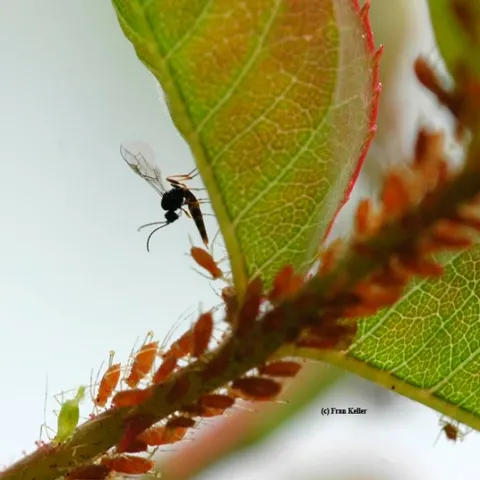
What's it like to be parasitized? Say you're a caterpillar or an aphid and a wasp comes along and lays her eggs inside you. Her eggs will hatch and then her offspring will eat their way out. You, the host, are no more. Zero. Zip. Zilch.
It's a cold spell. As temperatures dip throughout much of California, and honey bees snuggle inside their hives, it's "bees-ness" in southern California this week.
It is weed season! There is a principle in weed management that weeds are often better competitors for resources. Competition begins as soon as seeds break dormancy. The seeds that germinate first are often the ones that obtain the most resources.
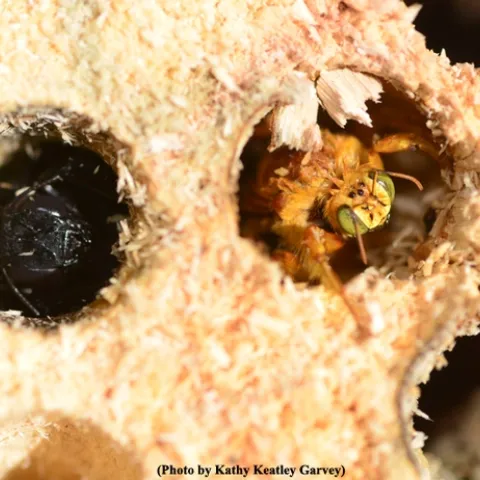
Thar's gold in them thar apple trees. Gold? When a rotten apple tree was cut down last week on private property in Davis, scores of eyes peered from the drilled holes.