UC ANR is committed to providing an accessible and inclusive web experience for all users. If you encounter an accessibility barrier or need content in an alternative or remediated accessible format, please contact anraccessibility@ucanr.edu.
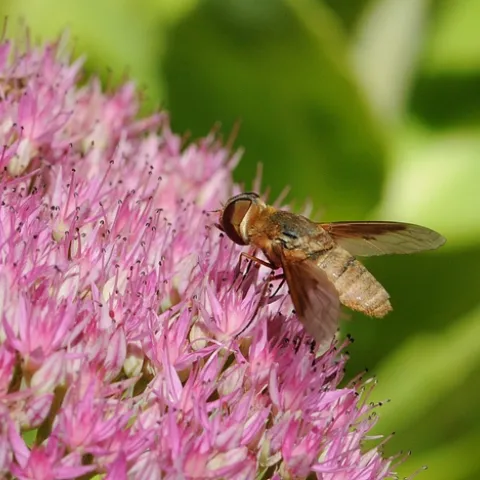
There are "bees" and there are "flies." And then there are "bee flies." Bee flies? They're so named because they look somewhat like bees. Order: Diptera. Family: Bombyliidae. We spotted a single bee fly, as identified by UC Davis forensic entomologist Bob Kimsey, foraging on our sedum yesterday.
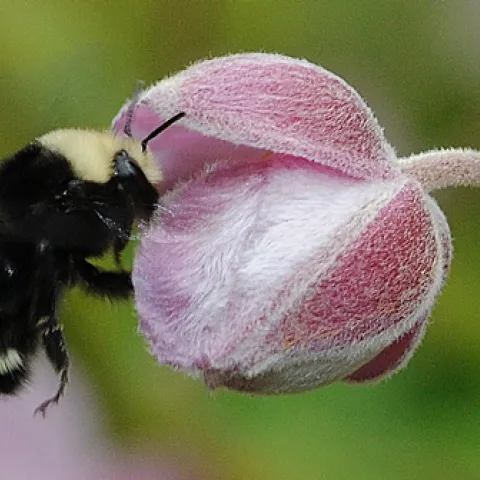
"A" is for anemone, "B" is for bumble bee and "C" is for coneflower. A visit to the Oregon state capitol grounds in Salem last Tuesday found scores of yellow-faced bumble bees (Bombus vosnesenskii) working the anemones and purple coneflowers.
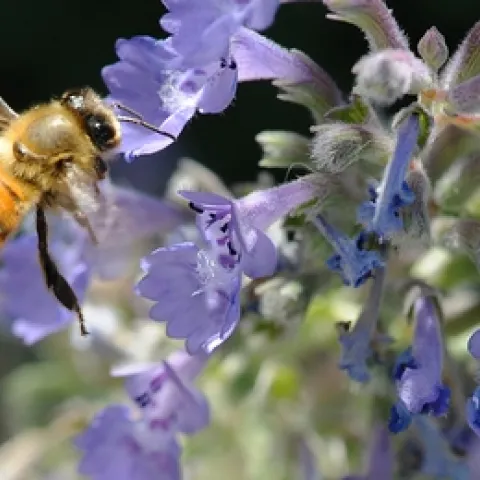
When the Hagen-Dazs Honey Bee Haven's grand opening celebration takes place on Saturday, Sept. 11, visitors can expect to see scores of flowers, including the ever-popular catmint (Nepeta). Honey bees love the mints. So do bumble bees, carpenter bees, butterflies and assorted other insects.
Combining low-pressure, overhead sprinklers with conservation tillage may become the new ag production model for the San Joaquin Valley. This combination of practices is quite common in many irrigated regions outside of California but are relatively new here in the Golden State.
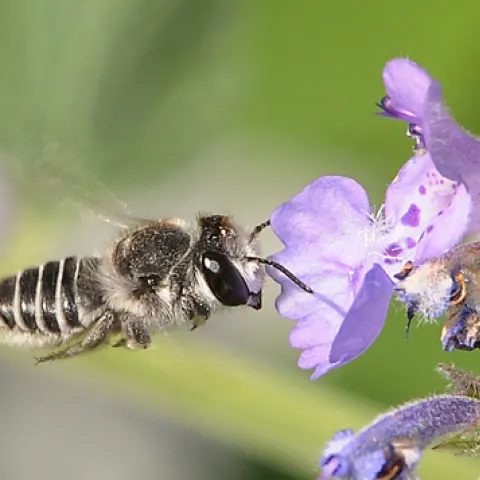
Leafcutter bees (Megachile spp.), so named because they cut leaves and petals to line their nests, are smaller than the honey bees but move faster. These native bees are easily recognizable by the black-white bands on their abdomen. Catching them in flight requires a lot of patience.
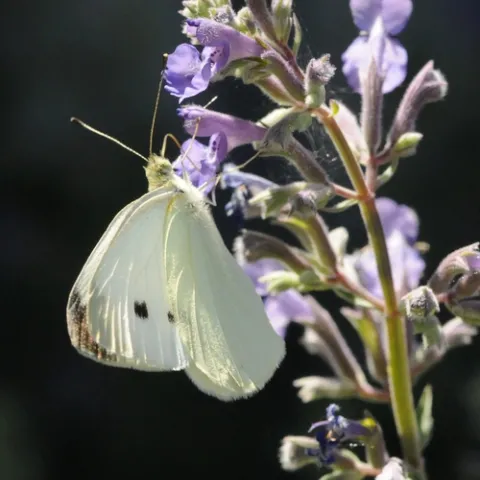
If we were to describe the cabbage white butterfly (Pieris rapae) in one word, it would be "lovely." Especially when it nectars from catmint (Nepeta) in the early evening, as the sun drops low in the horizon.
The female Greater Wax Moth (Galleria mellonella) is a sneaky creature. She flies around bee hives at night and when the opportunity presents itself--as it often does--in she goes to lay her eggs. The egg hatch into larvae, which munch and crunch just about everything in sight.
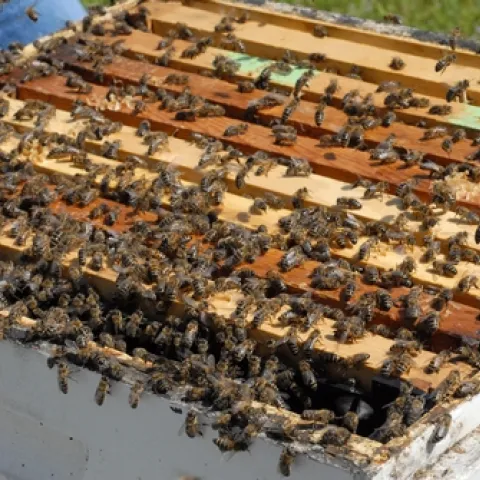
The peak bee season is winding down--along with the number of bee swarms. "There aren't that many bees swarming this time of the year," said Extension apiculturist Eric Mussen, member of the UC Davis Department of Entomology faculty.